Tasty Cakes: Scratch Foam Printing with Watercolor Markers

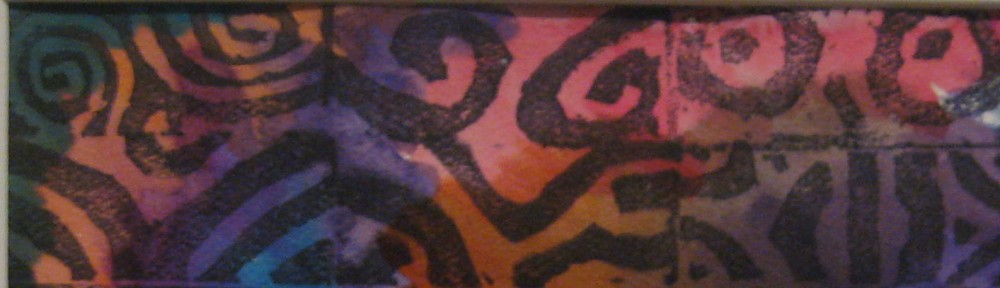
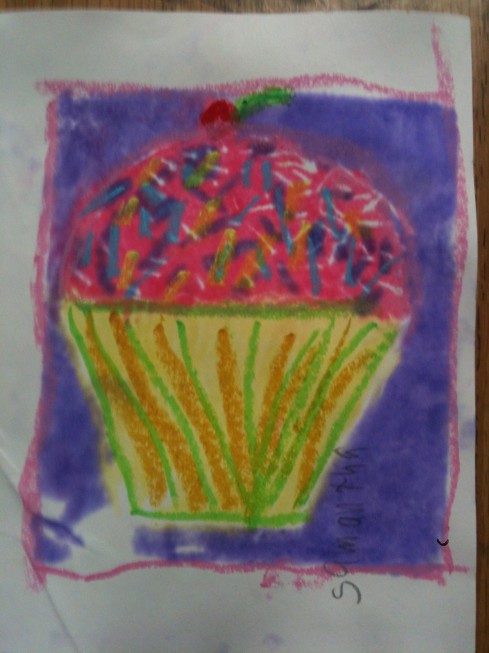
Maybe you have used scratch foam for printmaking in the art room. I’ve seen a lot of beautiful art work using scratch foam and printer’s ink applied with brayers. But did you know scratch foam prints can look like this?
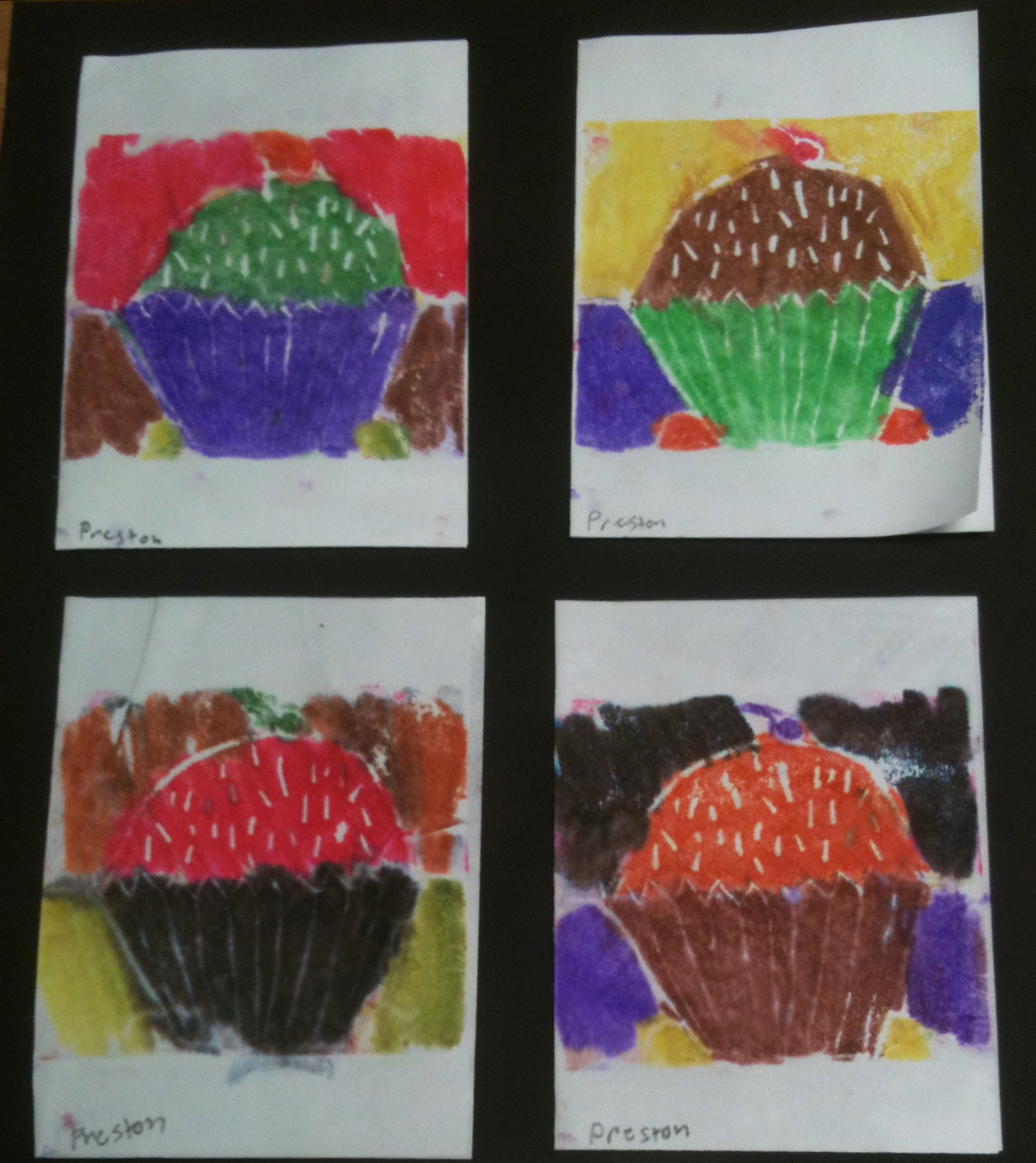
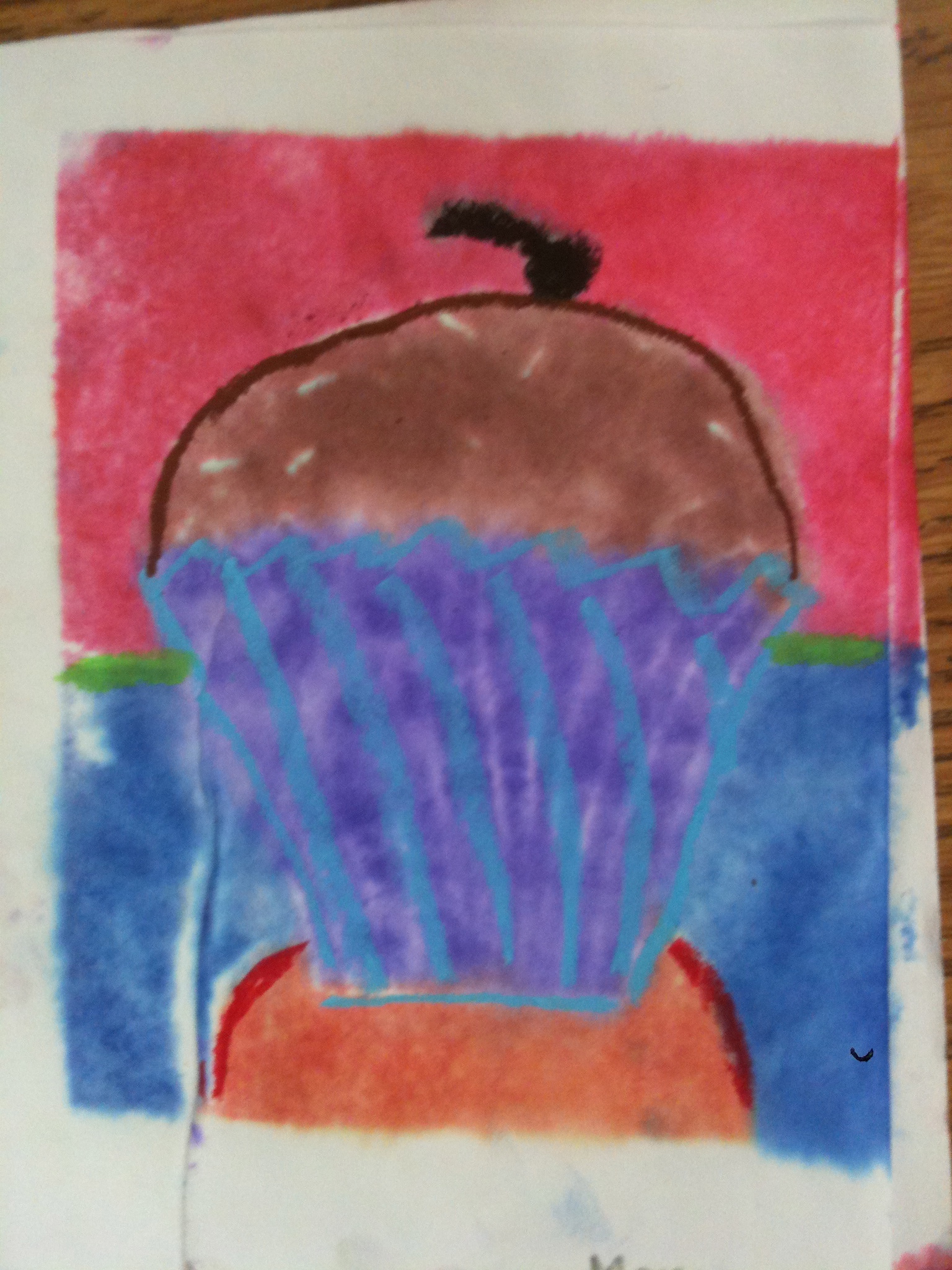
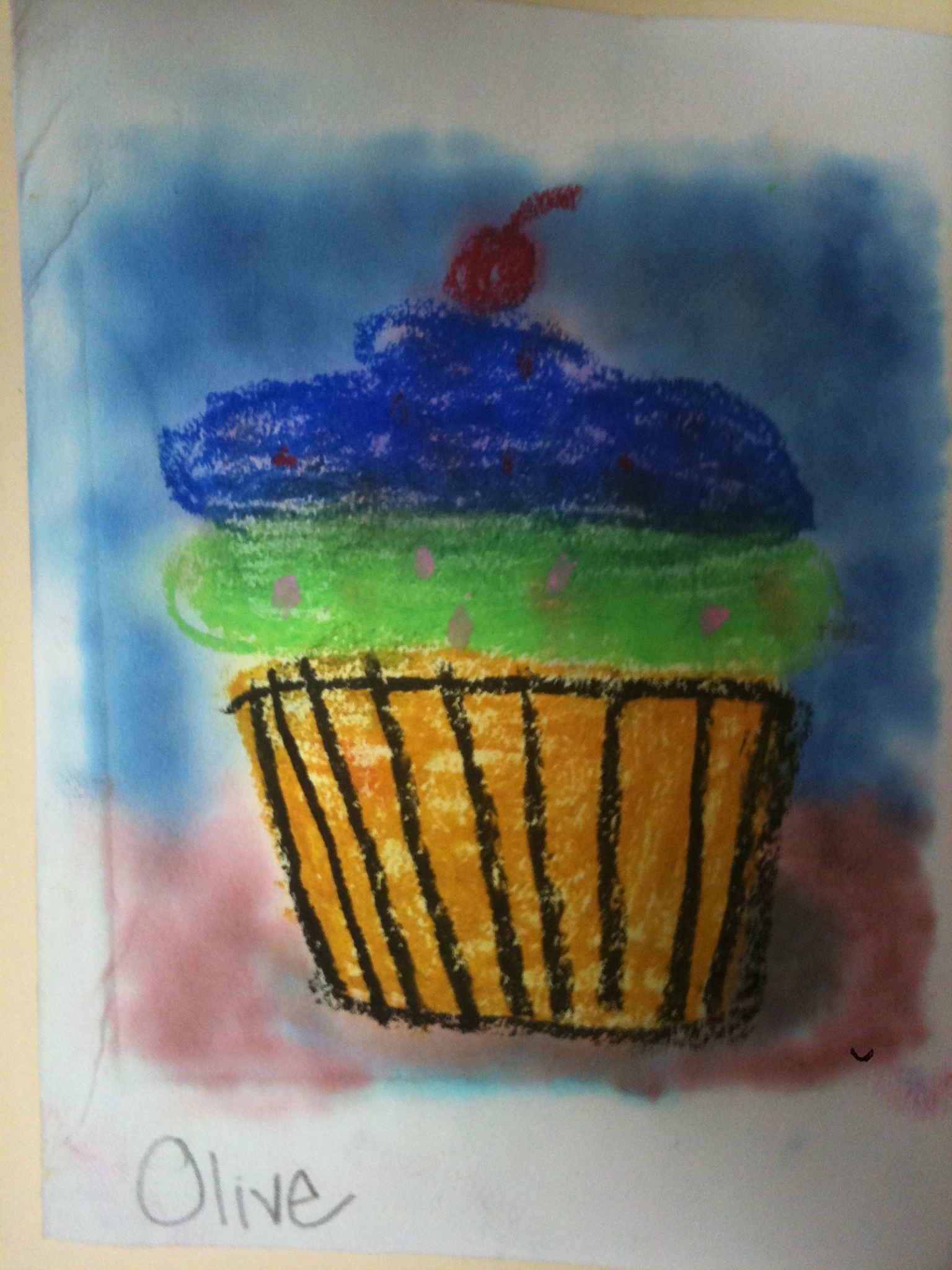
This set of four cupcake prints were all made from the same scratch foam plate during a single 40-minute class.

3rd graders used watercolor marker and scratch foam to create multiple prints. We did an easy directed drawing of a cupcake onto scratch foam, colored the foam with watercolor markers, and then printed the cards onto damp paper.

Materials:

  • Scratch foam, cut to desired size
  • sketch paper, cut to same size as foam
  • dull pencil
  • masking tape
  • watercolor markers in assorted colors (I use Mr. Sketch markers)
  • oil pastels or other embellishments (optional)
  • shallow tub (dishpan) of water
  • beach towel (several if you are teaching multiple or large classes)
  • plastic sleeve protectors for printing station
  • white construction paper for printing – cut larger than scratch foam

Prep:

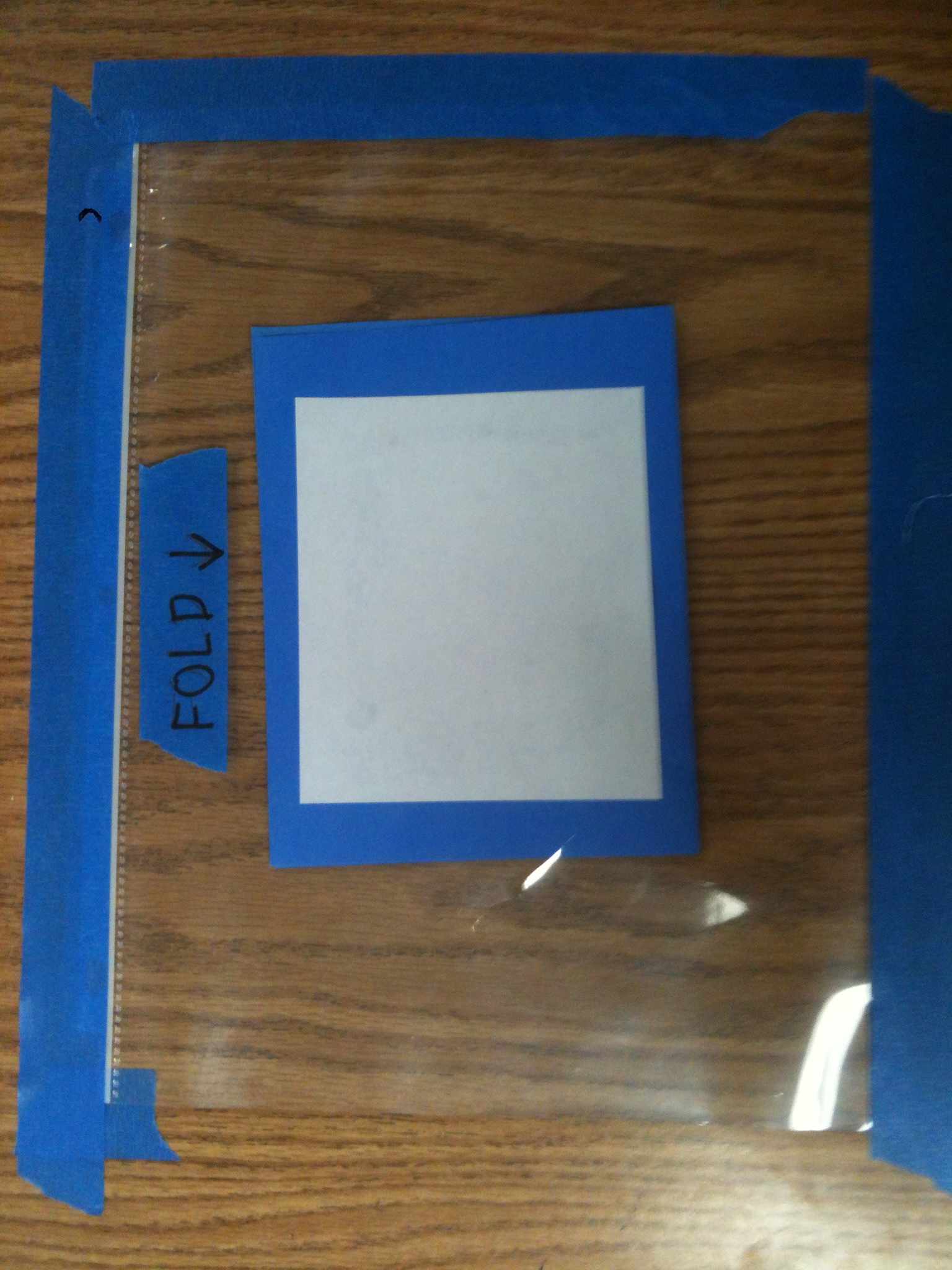
Set up a printing station. Fill tub with water depth of 2-3 inches. Set out a folded towel. Tape a sleeve protector to the table. Slide in an alignment sample (see below).  Cut a stack of printing papers, enough for each student to make at least 3 prints. Think about drying space (always an issue when printing multiples). Drying rack? Clothes line?


Drawing

  • draw cupcake onto sketch paper.  Click here for my step-by-step  how to draw a cupcake instructions.
  • Remind students: NO LETTERS, NO WORDS, NO NUMBERS.
  • tape sketch paper on top of scratch foam.
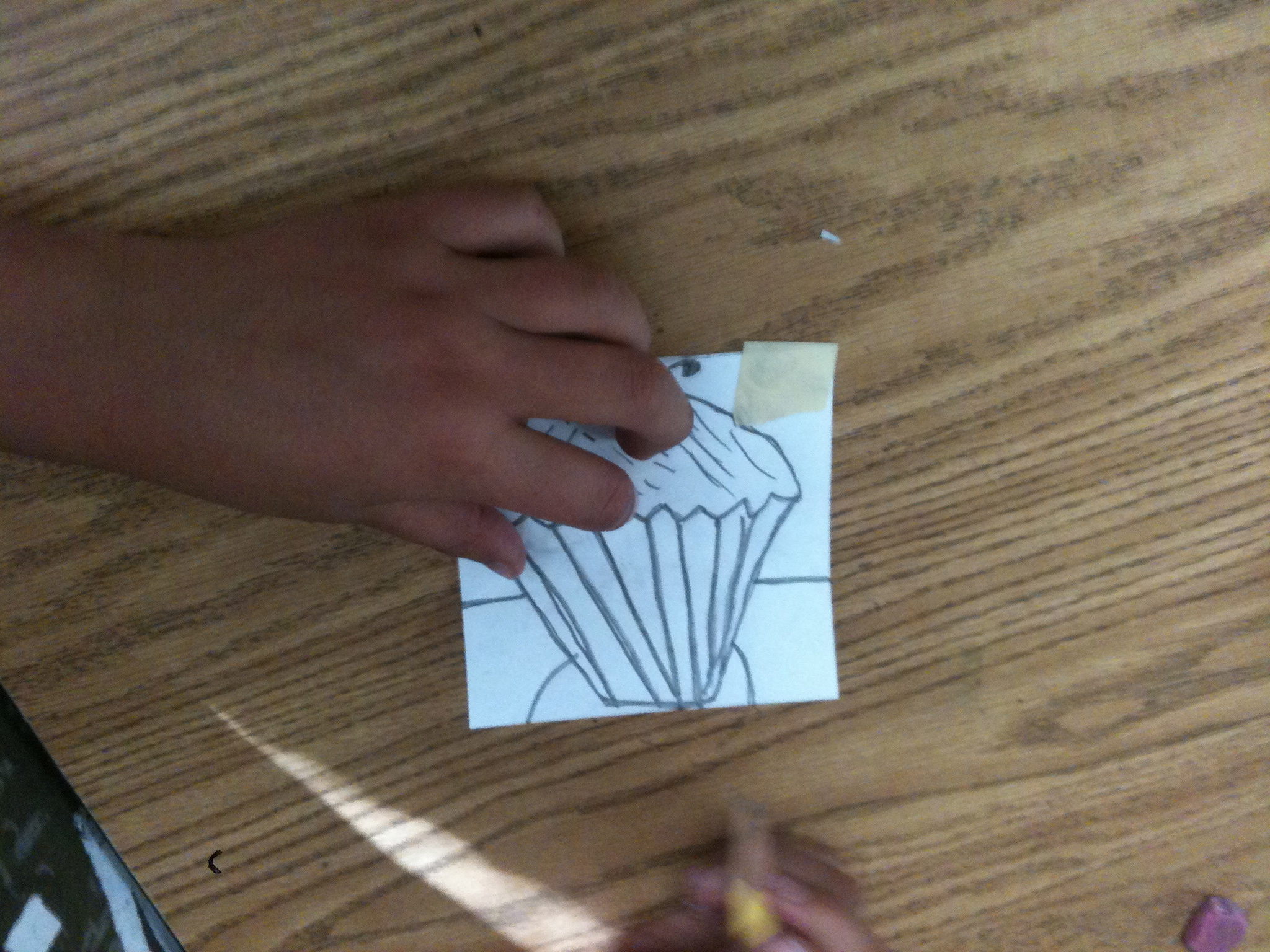
  • go over cupcake sketch with a dull pencil.  The lines should transfer to the scratch foam below.
  • pull up the paper.  Drawing directly on the foam, go over any lines you missed with the pencil.  You can also add sprinkles or other small lines at this time.
  • discard the sketch paper and tape.

Tape sketch on top of scratch foam. Go over lines with dull pencil to incise foam below.

Inking

  • use the watercolor markers to ink the scratch foam.  Students should use multiple colors.  Fill the scratch foam completely with color.
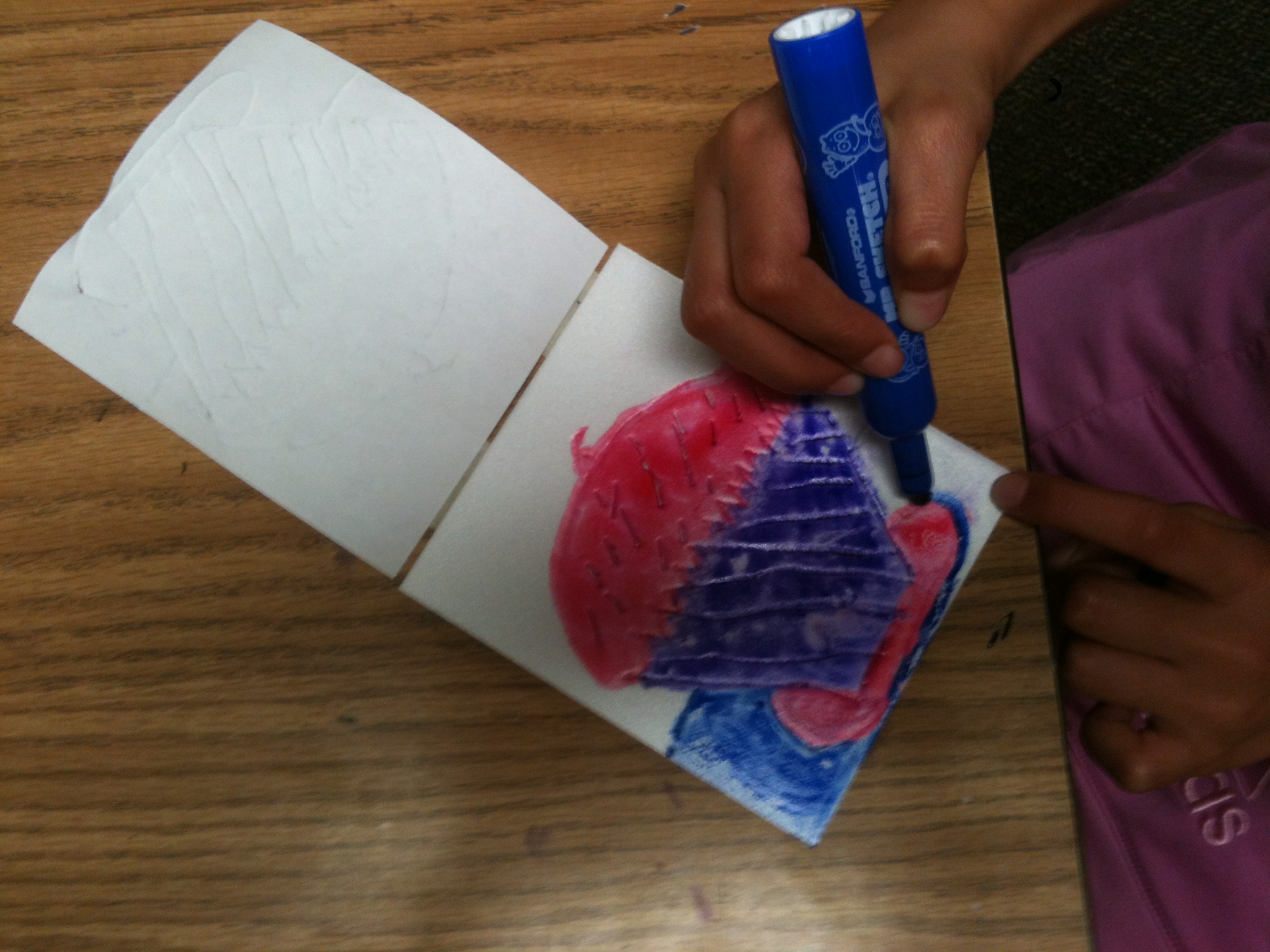
Color in the scratch foam with watercolor markers.


Printing

  • take your foam to the printing station.
  • write your name in small letters on white construction paper. Use pencil.
  • dip white construction paper in water
  • put wet paper in folded towel to blot
  • align inked scratch foam on sleeve protector INK SIDE UP
  • put damp white paper on scratch foam NAME SIDE UP (align using the sleeve protector)
  • rub paper firmly without wiggling
  • PULL THE PRINT

Printing station. Students align foam with white rectangle, damp paper with blue rectangle.


http://www.youtube.com/watch?v=sAY0pGj7c7g&rel=0

The third graders were amazed!!!! Vibrant colored cupcakes for their beautiful birthday cards.

ARE YOU READY FOR EVEN MORE FUN?????

Re-inking

  • Students re-ink the scratch foam plates using a different color scheme.  It doesn’t matter if the plate still has a little color on it – go right over the plate with a different color.

Print again!

Students should carefully sign their name on the back of the foam plate WITH PENCIL. Write small.


A word of caution: as always, test this project out yourself before attempting with your students.

1) The degree of dampness of the printing paper is critical.  Too dry and the ink won’t transfer to the paper.  Too wet and the ink will bleed and blur as the paper dries. For blotting, a fresh beach towel is ideal. My towel was too damp by the third class of the day. I wish I had a couple of fresh dry ones with me. Next year!

2) Size of drawing matters. Tiny drawings the size of a thumbnail just won’t look good.

Day 2: Embellish Prints with Oil Pastels

Students have the option of embellishing their dry prints.  These cupcakes are decorated with oil pastel. This is a great way to rescue students less-than-perfect prints. Can you imagine these with a little clear glitter and/or a sequin?
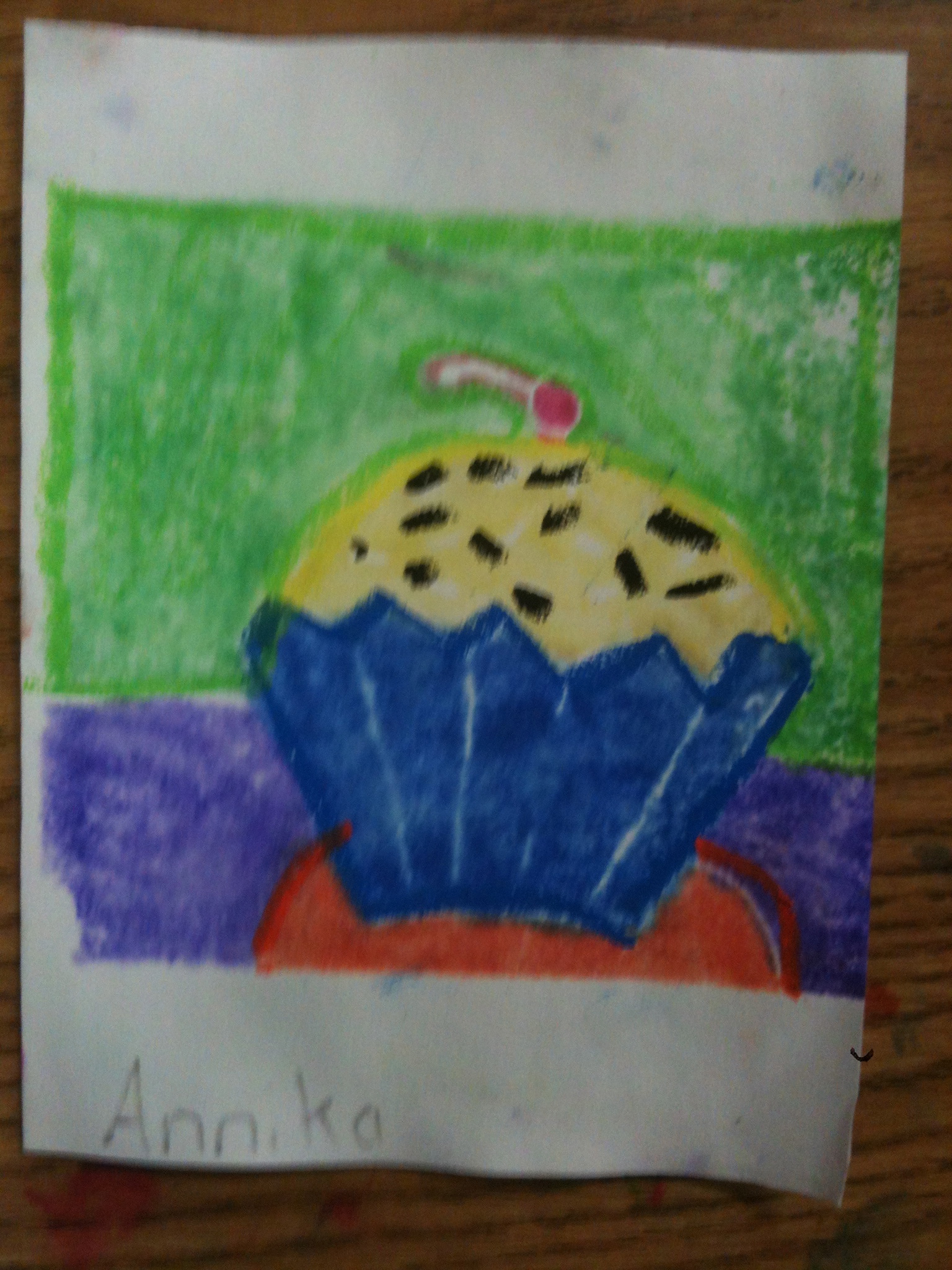
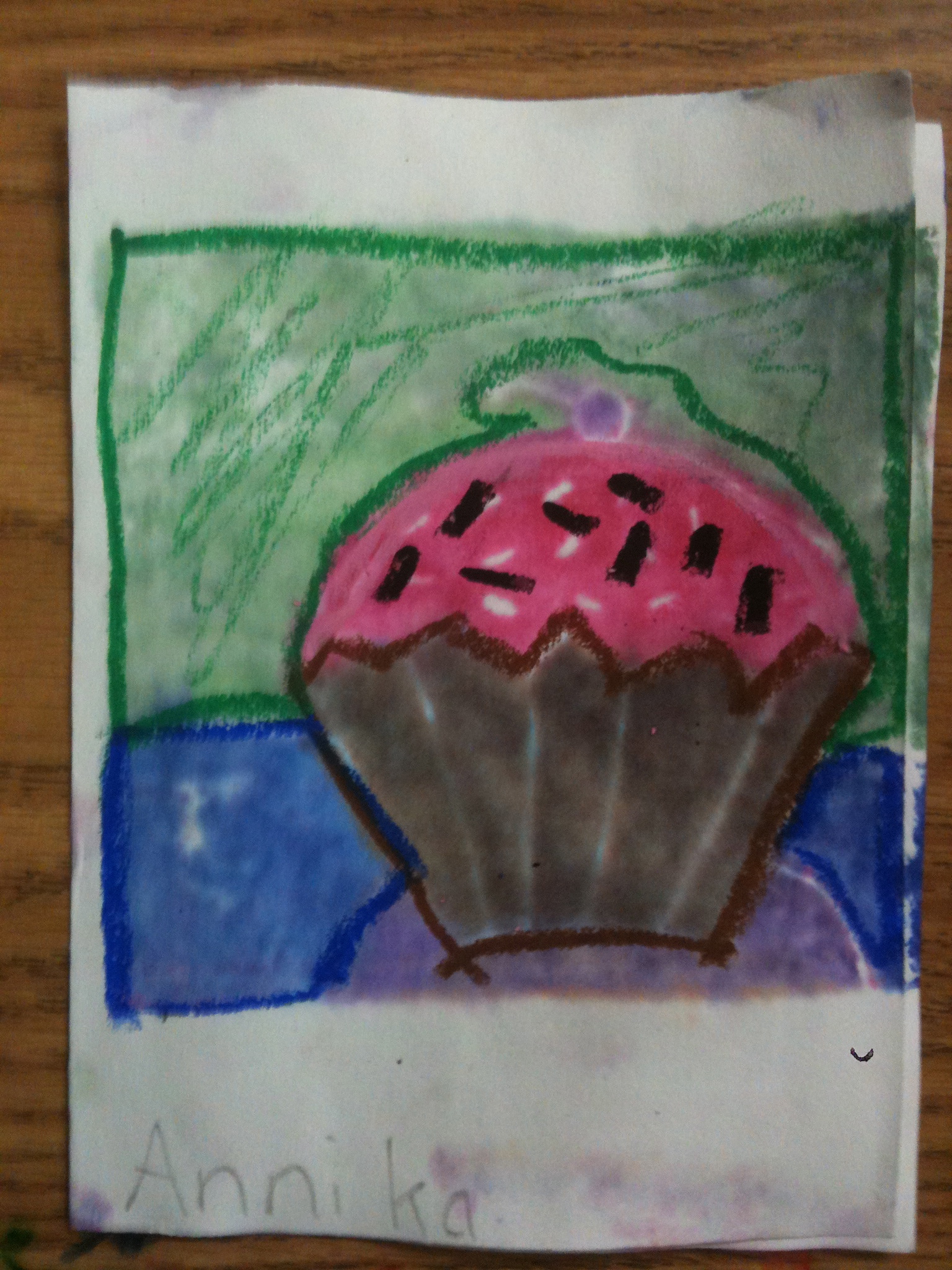
Next we trim our cupcake prints and glue them onto colored construction paper. What fabulous birthday cards for all our family and friends.


Fun – colorful – successful – easy to clean up!

This would be a great Wayne Thiebaud lesson plan – it relates to his dessert paintings in terms of subject matter and repetition.
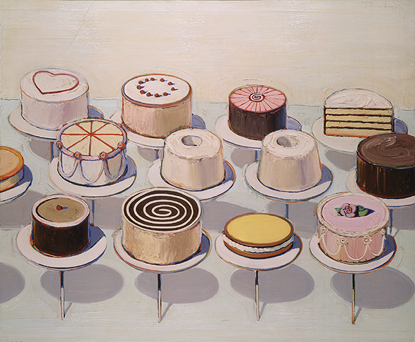
Wayne Thiebaud. Cakes. 1963


A huge thank you to Carol Catelano Webb, master art teacher, who taught this printing process at a San Diego Art Educators workshop back in 2005.
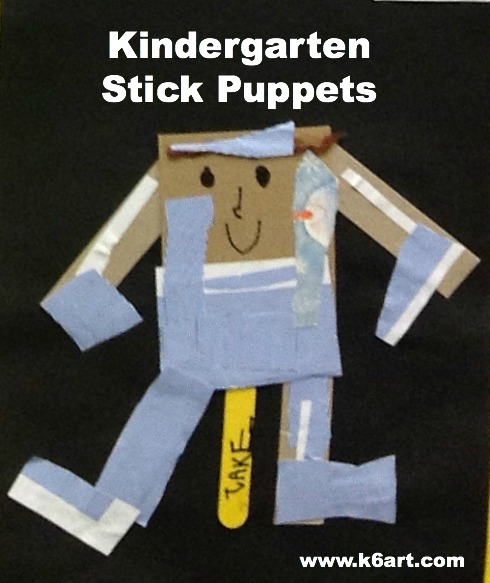


Kindergarten Stick Puppets

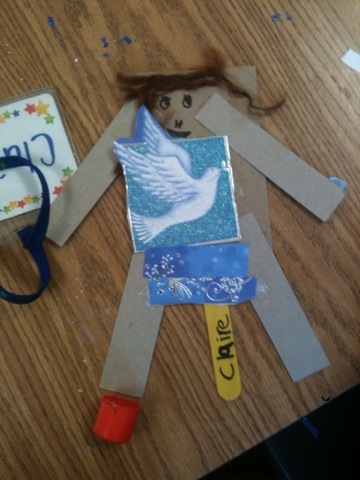
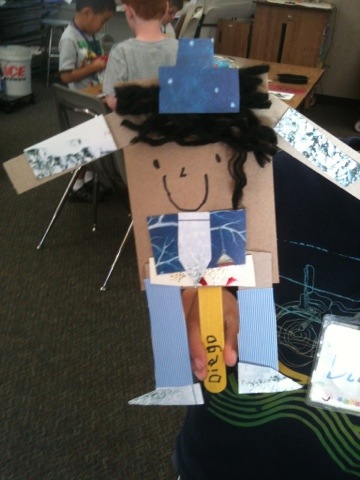
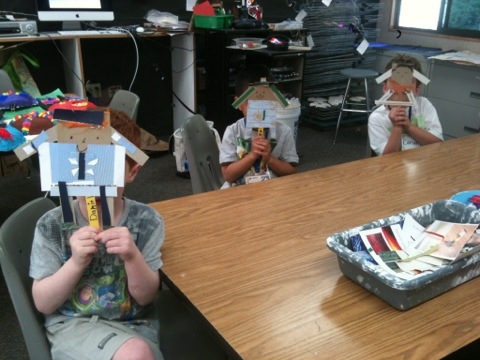
kindergarten stick puppetsKinders are making stick puppets. This is their first project using white (Elmer’s) glue, and the whole project is designed to teach gluing skills.

Students first practice opening and closing the (orange) tip of the glue bottle. They learn the bottle is closed when the hard white tip peeks up from the bottle. Then I pass out cardboard.

Day 1

Materials

  • White (Elmer’s) glue
  • Cardboard :  1 (3″x5″)  and 4 (1″x5″) per child
  • Sharpie
  • Yarn
  • Scissors

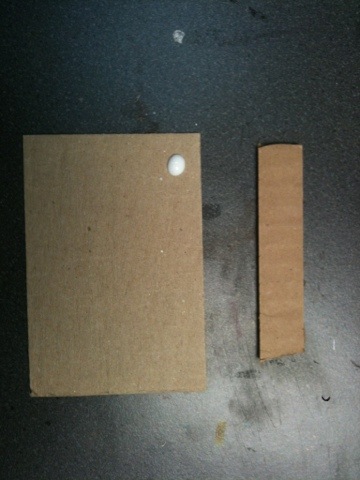
Take large cardboard and one small cardboard. Put a dot off glue on a corner of the large cardboard, top with the small piece. Press hard to stick pieces together.

We use the ’10 second gluing’ technique. Students press the pieces hard against the table while counting aloud to 10 (is there anything cuter than a class of 5 year olds earnestly counting together?).

We test our gluing by waving the glued pieces in the air while counting to three. Result: 95% hold together. The one or two that come apart provide the opportunity for more glue practice.


20111231-142336.jpg

We glue on all four cardboard ‘limbs’. Next students write their names on a Popsicle stick and glue it on for a handle. Kids will need to use 2-3 dots of glue and count to 20 to get that stick stuck on.

Add a bit of cut yarn for hair and draw on a face with sharpie.

Day 2:

Materials

  • Stick puppets
  • Glue sticks
  • Scissors
  • Colored patterned papers (origami, scrapbook or wallpaper) cut into 4″x6″ pieces

Cut out paper and glue on to make clothes for puppets. Instruct kids to apply glue stick to both papers they are stick together. This might sound like a waste of glue, but there is a much stronger bond. Don’t want any puppet wardrobe malfunctions!

 20120105-182650.jpg


20120105-182740.jpg

20120105-182826.jpg

Cool Color Monet Water Lilies

cool color monet waterlilies

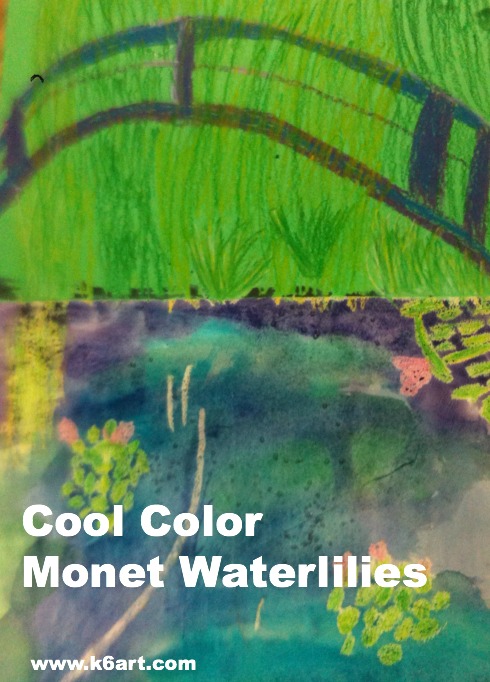
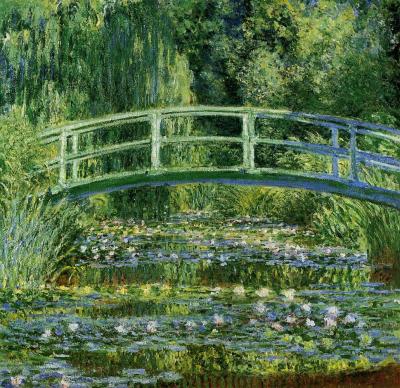
Second grade is studying the cool colors.  After watching the excellent elementary color theory DVD Getting to Know Color in Art  we looked at photos of Monet’s beautiful garden and pond in Giverny, France. Students could imagine themselves at the pond on a summer day, feeling the willows sway, listening to frogs as they rested on the lily pads, resting in the cool shade, even floating in Monsieur Monet’s ‘art boat’ as it passed under the Japanese bridge.

“Le Bassin aux nymphéas” 1899. One Monet’s many water-lily paintings.

We looked at several of Monet’s waterlily paintings, focusing on his use of cool colors and short, quick strokes of paint. You can download my Powerpoint of Monet’s garden here.

We then created an oil pastel and watercolor art work.

Allow three 40-minute sessions for this project.

Materials:

  • 12×18 construction green construction paper
  • 9×12 watercolor paper
  • glue sticks
  • oil pastels in blues, greens, and purples plus white, yellow and pink
  • watercolors in blue, green and purple
  • kosher salt (optional)

Discuss Monet’s art, his pond and garden. Review cool colors. View powerpoint or photos of Monet’s garden.

Fold green construction paper ‘hamburger’ (the short way). Glue watercolor paper to lower half of green paper.

Students use oil pastel to draw bridge, water lilies and foliage.

Review painting of pond and Japanese bridge.

Oil Pastel:

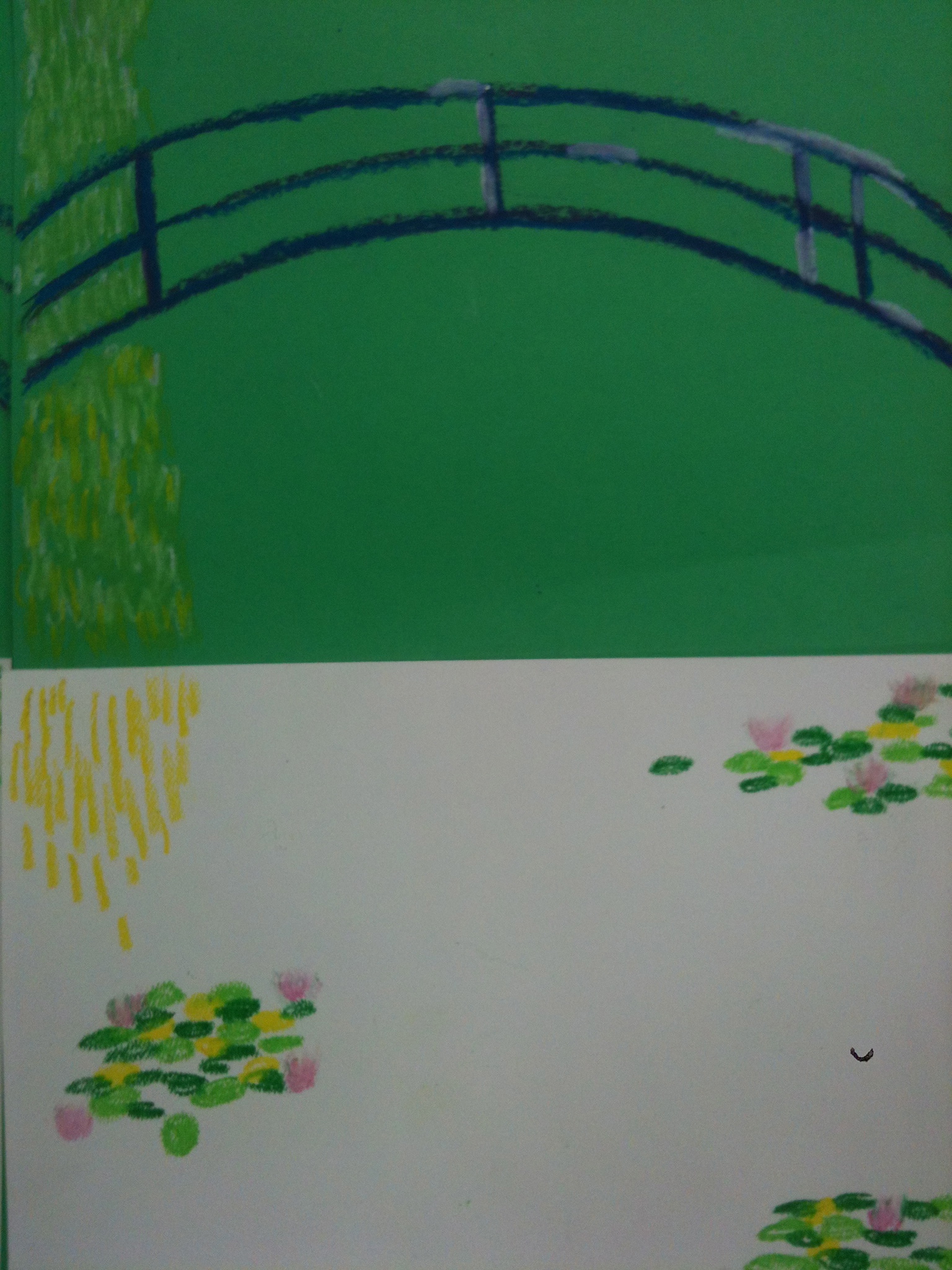
Using oil purple and blue oil pastels, draw three arcs (‘rainbows’) for the Japanese bridge. Add some vertical lines to the bridge to finish. Blend and highlight with white oil pastels.

Review photos of water lilies.

Using various green and yellow oil pastels, draw clusters of lily pads on the watercolor paper. The lily pads don’t have to be perfect – just ovals or quick strokes of pastel. They should overlap a bit. Add a few pink lily flowers, highlight with white.

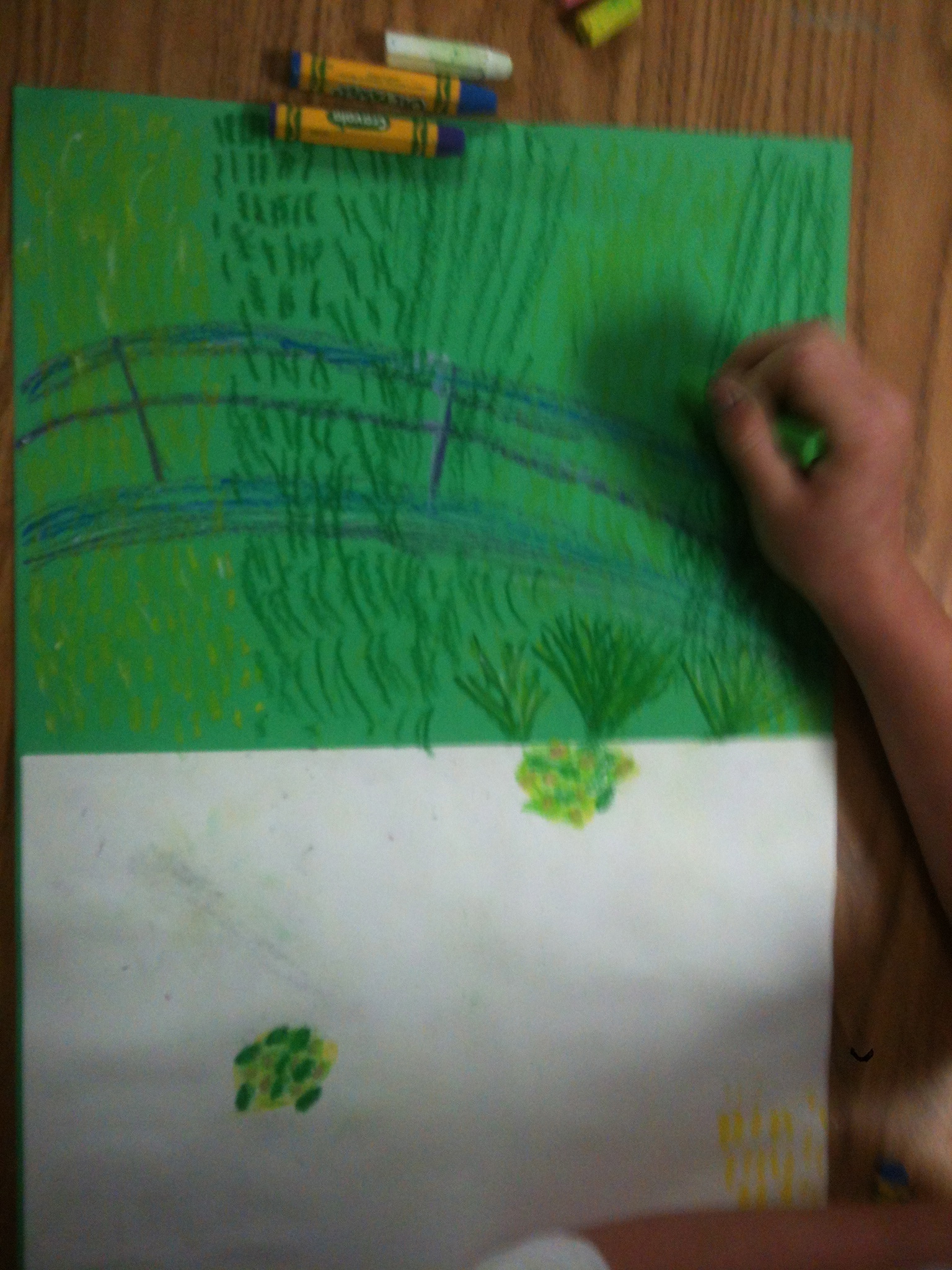
Fill the entire top half of the green paper with foliage in greens and yellow. Use short strokes. Add a downward cascade of short lines for the weeping willow.  Tell kids to ‘go behind’ the Japanese bridge.

Use short strokes of oil pastel to completely fill the green paper with foliage.

Painting:

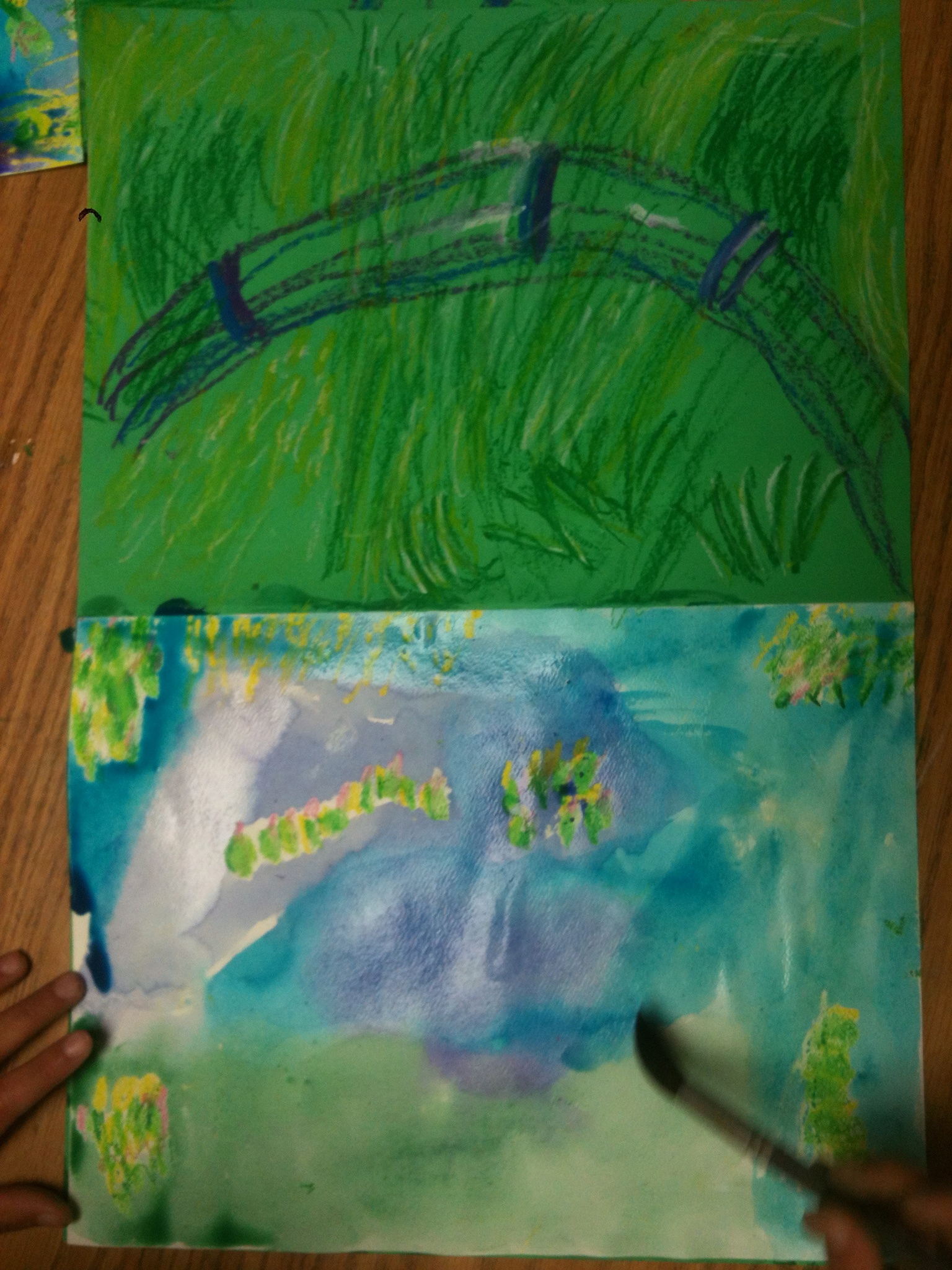
Using the cool colors (blue, green and purple), paint the watercolor paper using long horizontal strokes.  Colors can overlap and blend.  Go right over the oil pastel lily pads.

Use purple, blue and green watercolors on the lower half of artwork

Students may add a small pinch of Kosher salt to the wet watercolor. The salt absorbs a bit of color and an additional dimension to the pond. Brush off salt when dry.

Wow!!! This project was a hit! We learned about a famous artist, reinforced color theory, experienced the joy of painting on watercolor paper and blending pastels. All kids were very proud of their artwork. Success!


Enjoy!


(Note: post updated 12/22/13)

5th Grade Plaster Masks Update

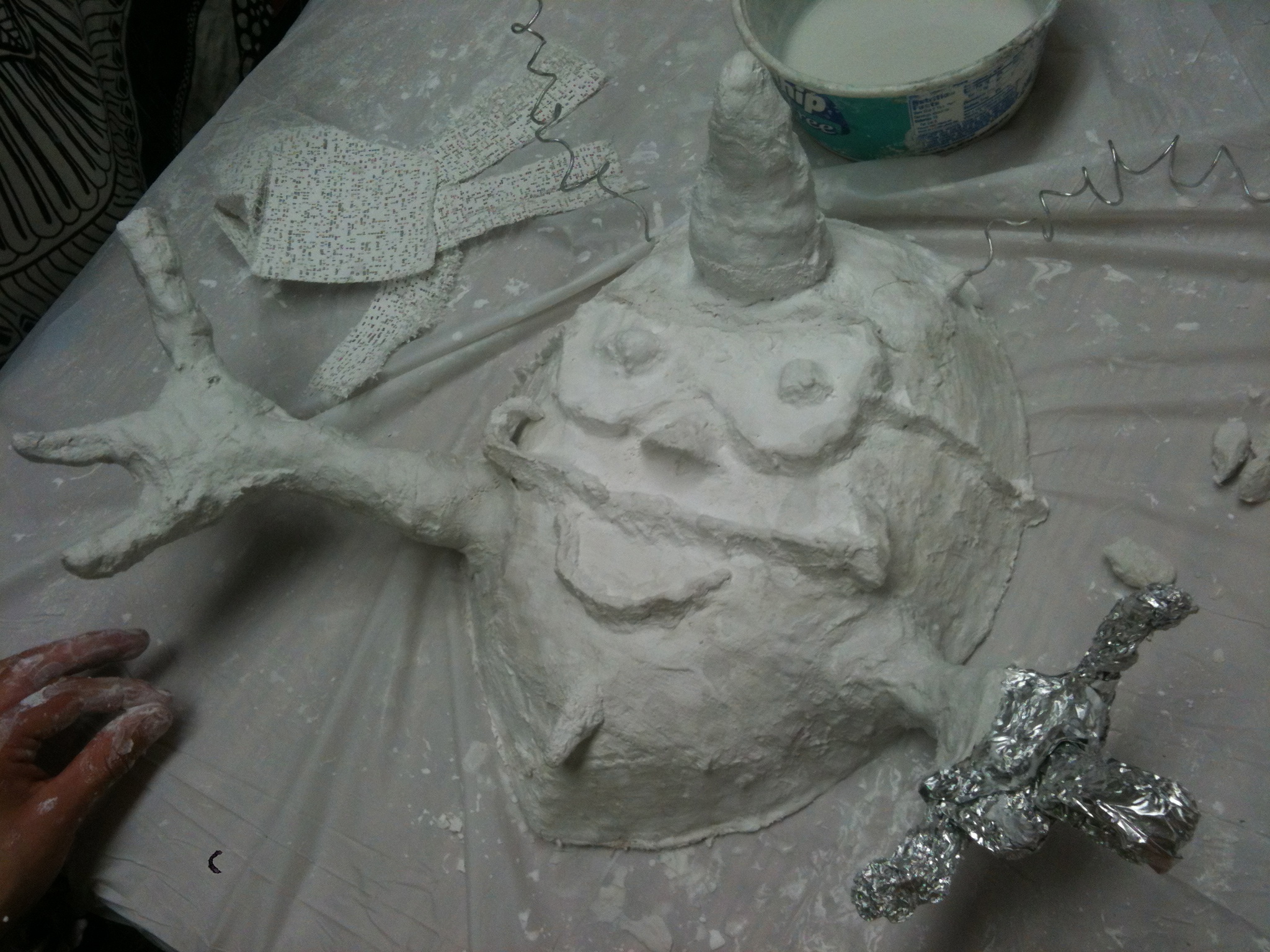
The 5th grade is just about finished with the annual mask project.  I wrote about it earlier in this post.

Some students used sculpted foil under the plaster.  Wow! The effect is fabulous and rock hard.

This mask uses foil as an armature. Student also added wire antennae.

After completing the sculpture, we sealed the masks with matte medium and painted them with tempera.

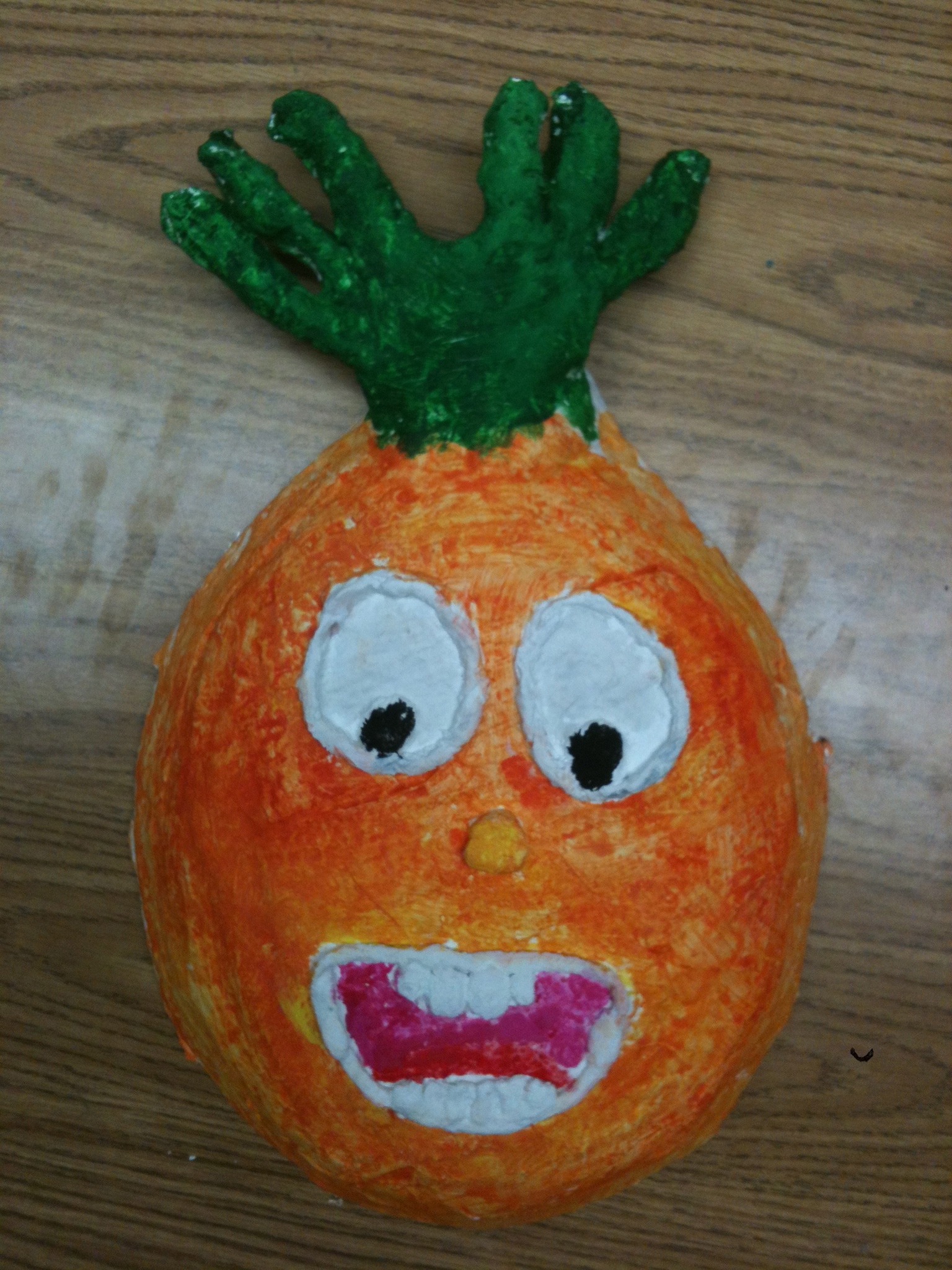
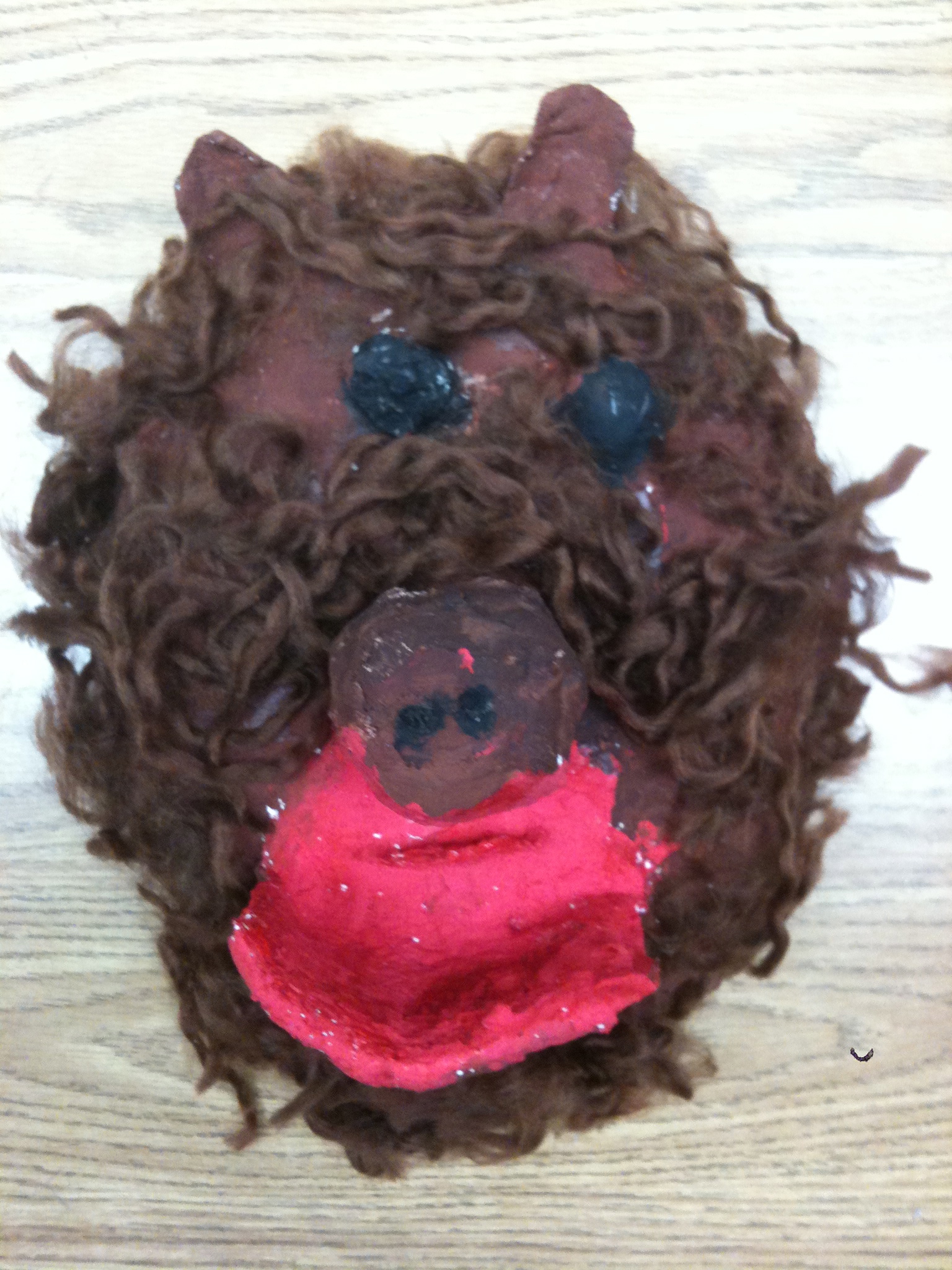
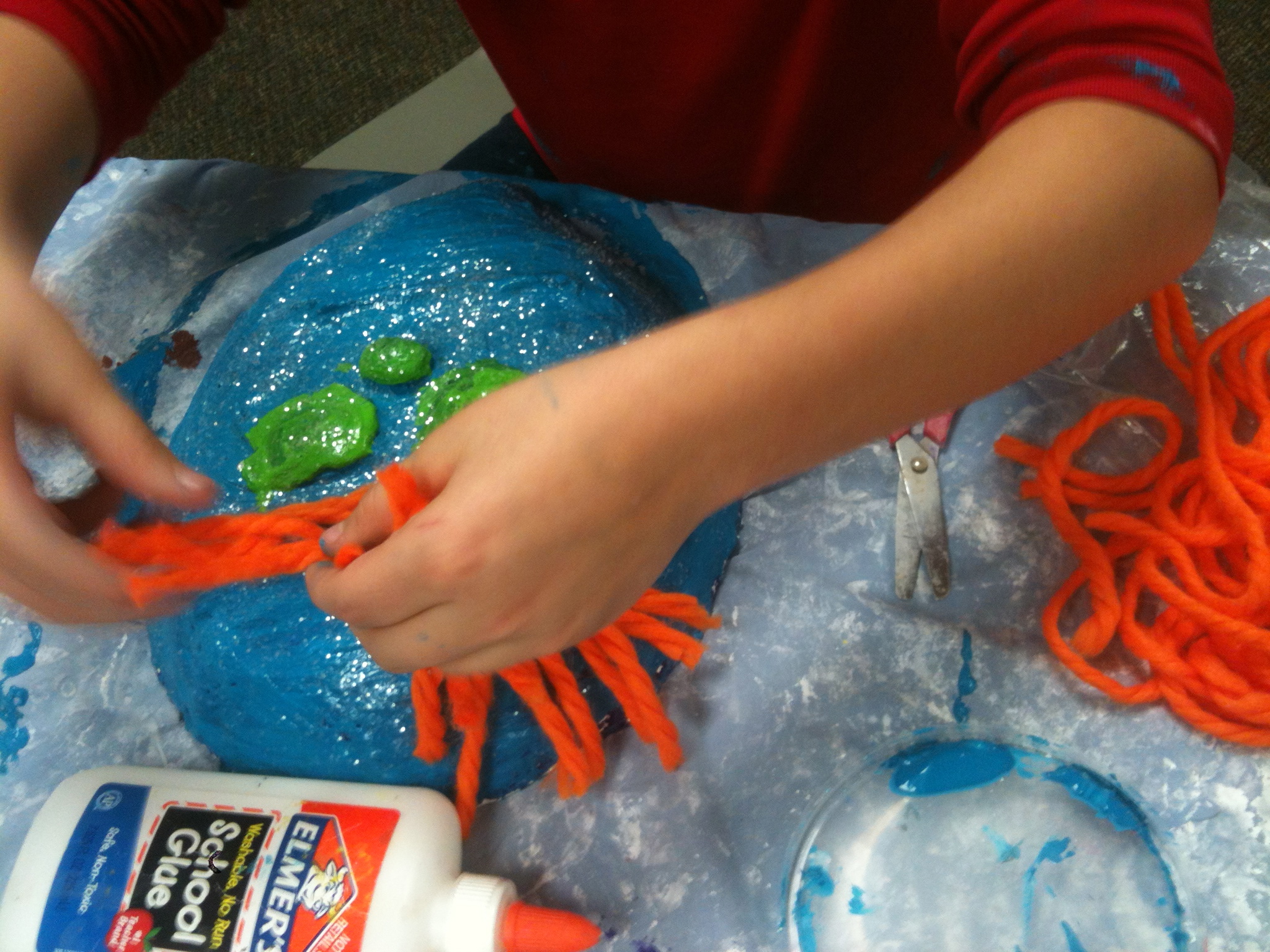
Here are some more 5th grade masks:

Pineapple 'hair' made of sculpted foil covered in plaster wrap.


Student separated strands of roving yarn to make fur.


Elmer's Glue works great for adding yarn hair.


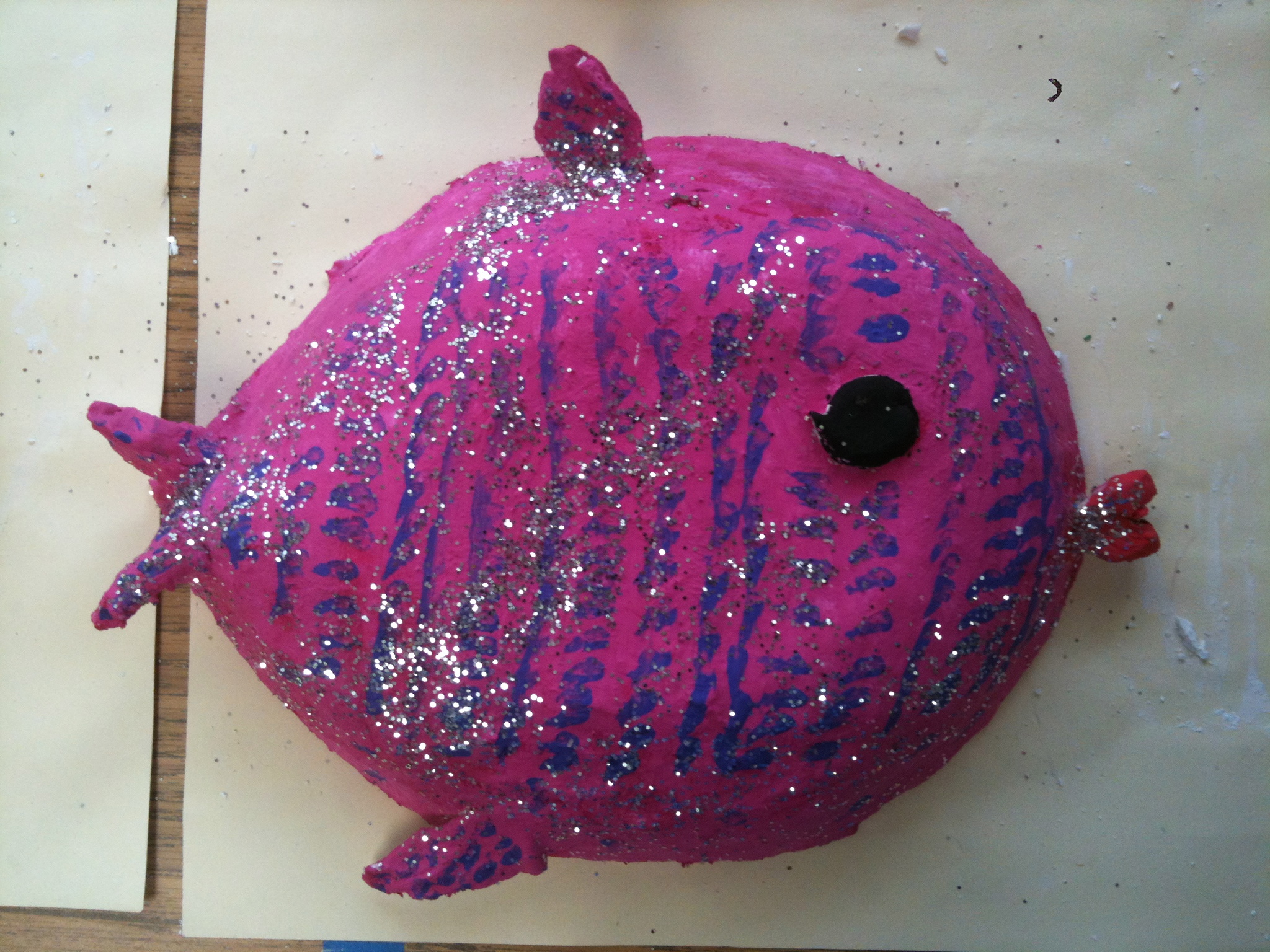
Glitter looks great on this fish.


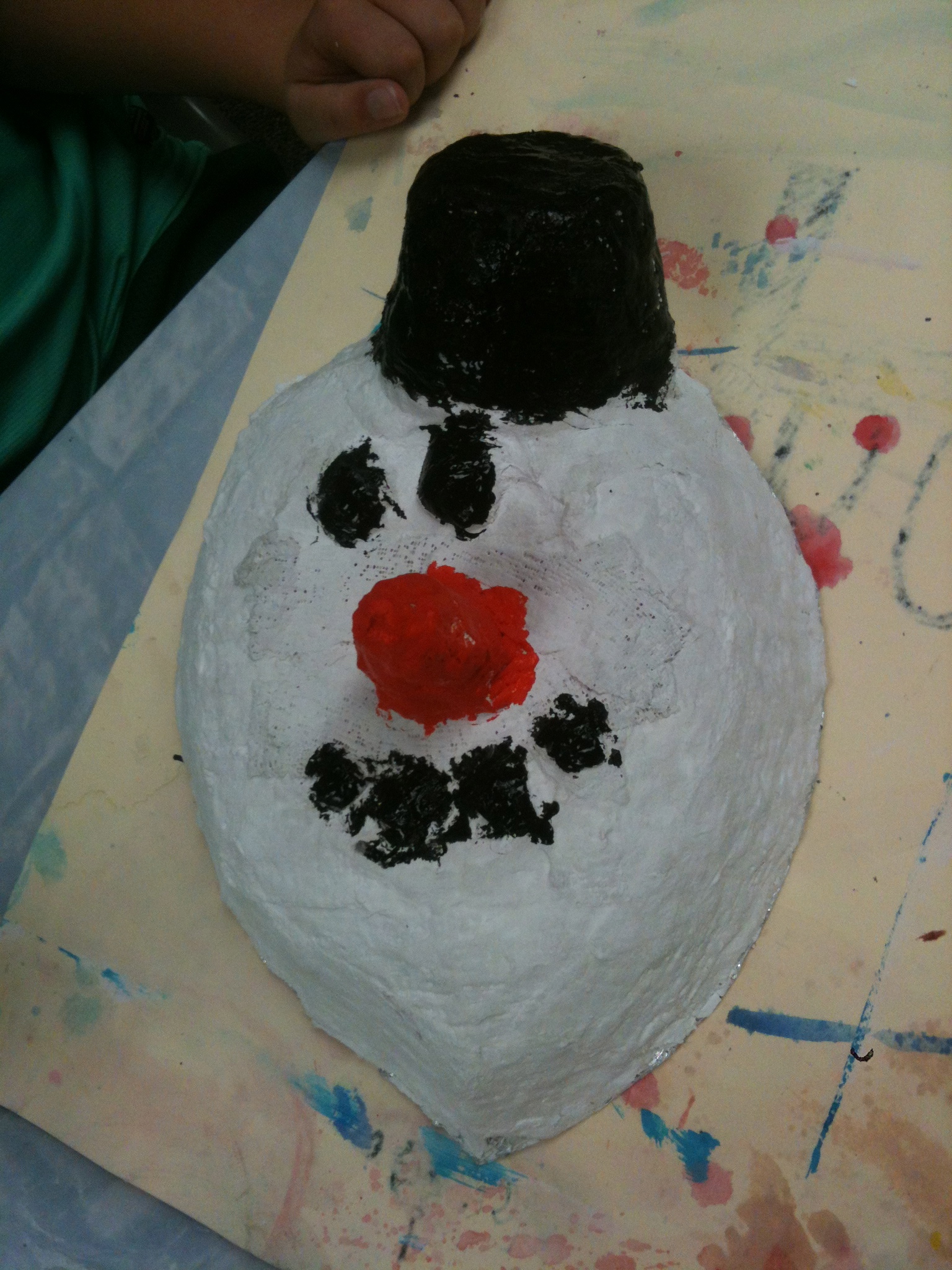
Snowman's hat is made from a yogurt cup.

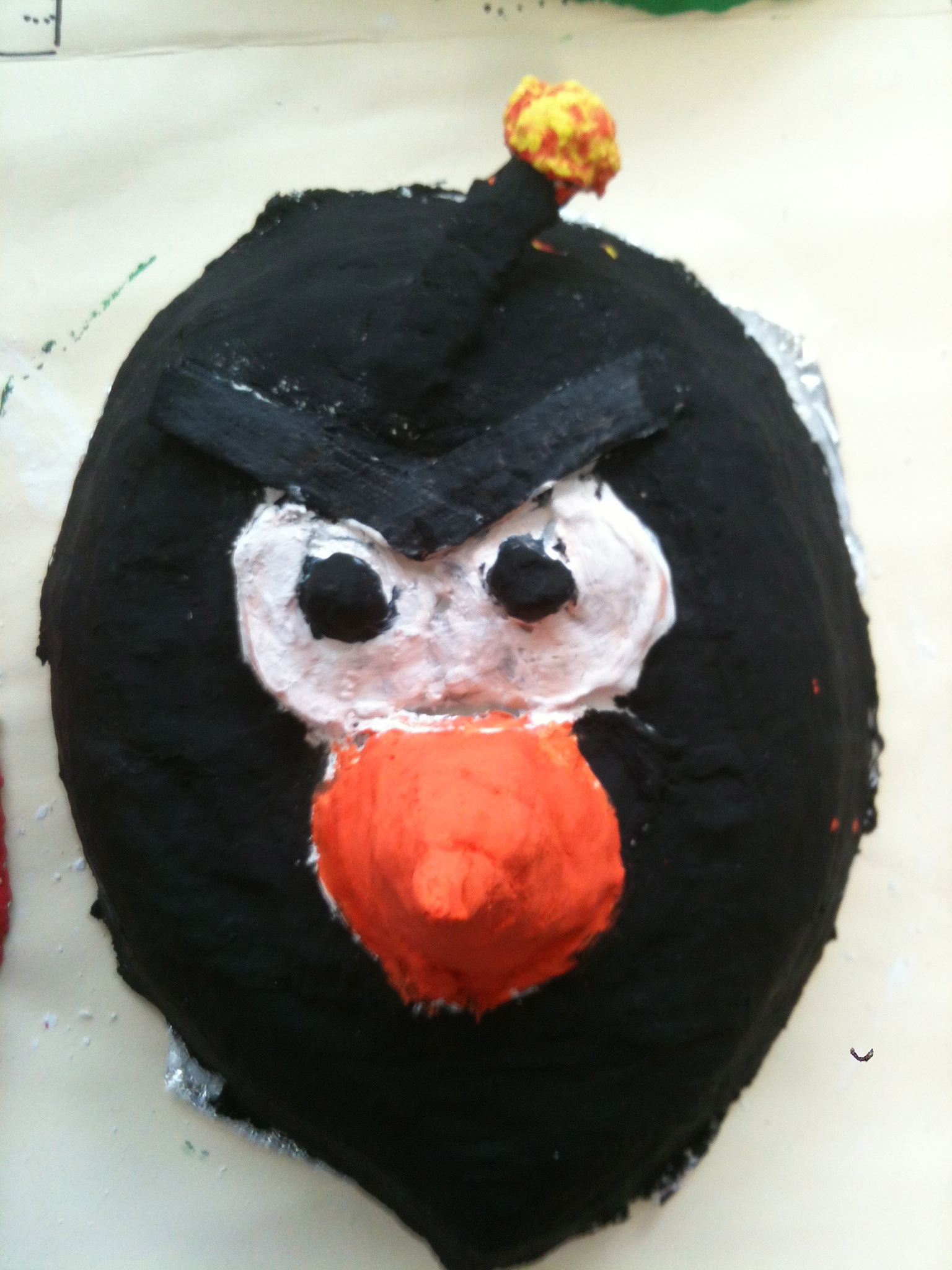
Angry birds are popular this year. Beak and antenna made of foil and plaster wrap.


Can’t wait till all 75 are up on the wall….

Update: Do you love plaster sculpture? New project now online! Click here and here for our plaster sport trophy posts.

Kindergarten Wheels Drawing

The kindergarten made their wheel drawings today.

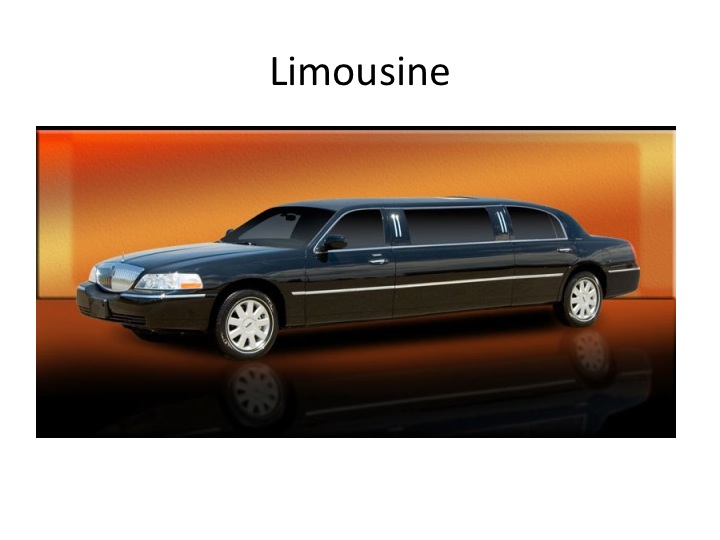
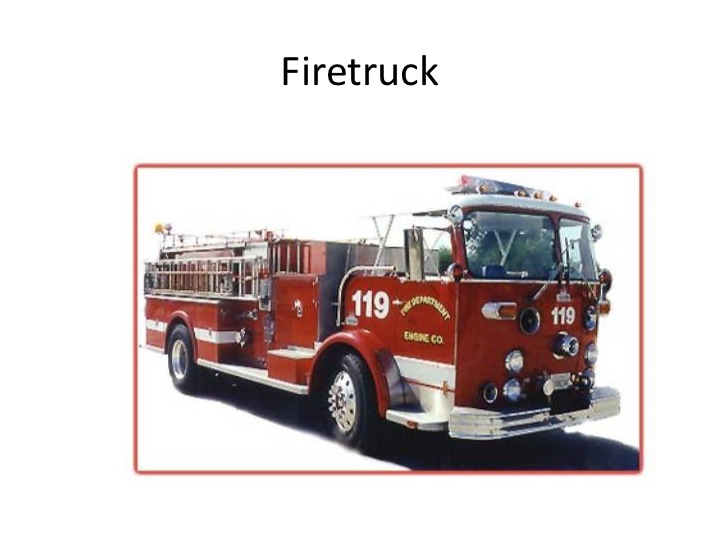
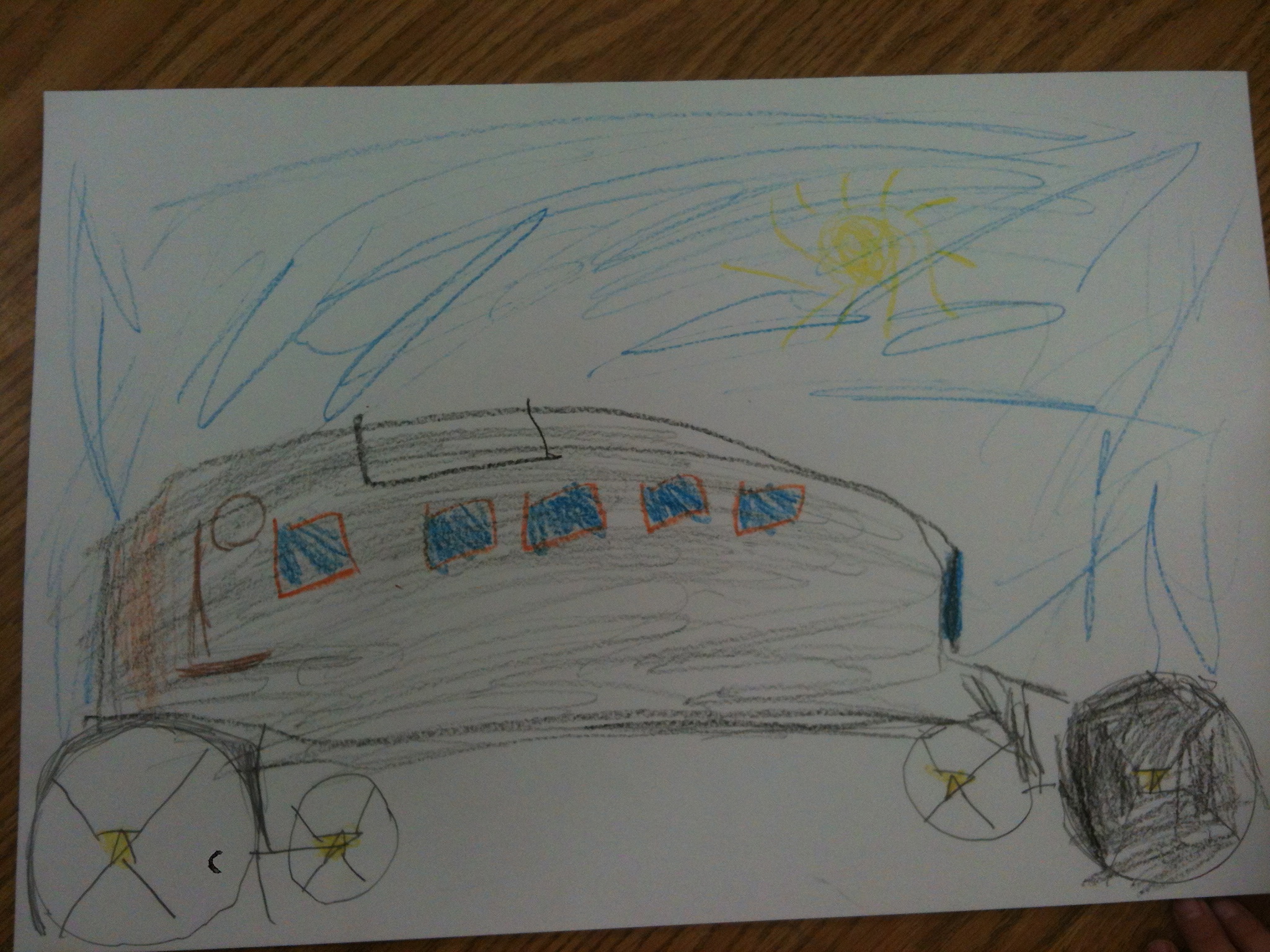
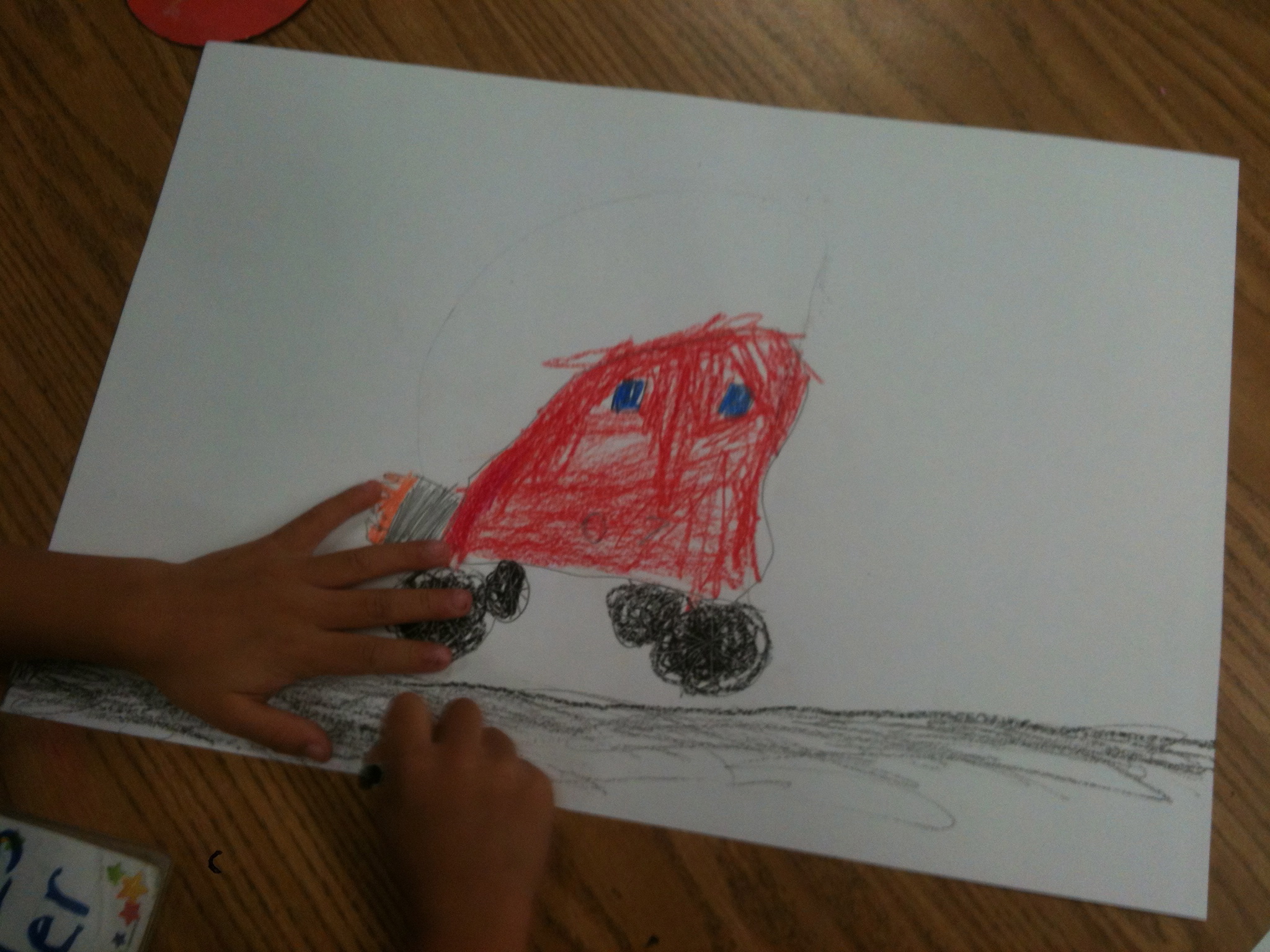
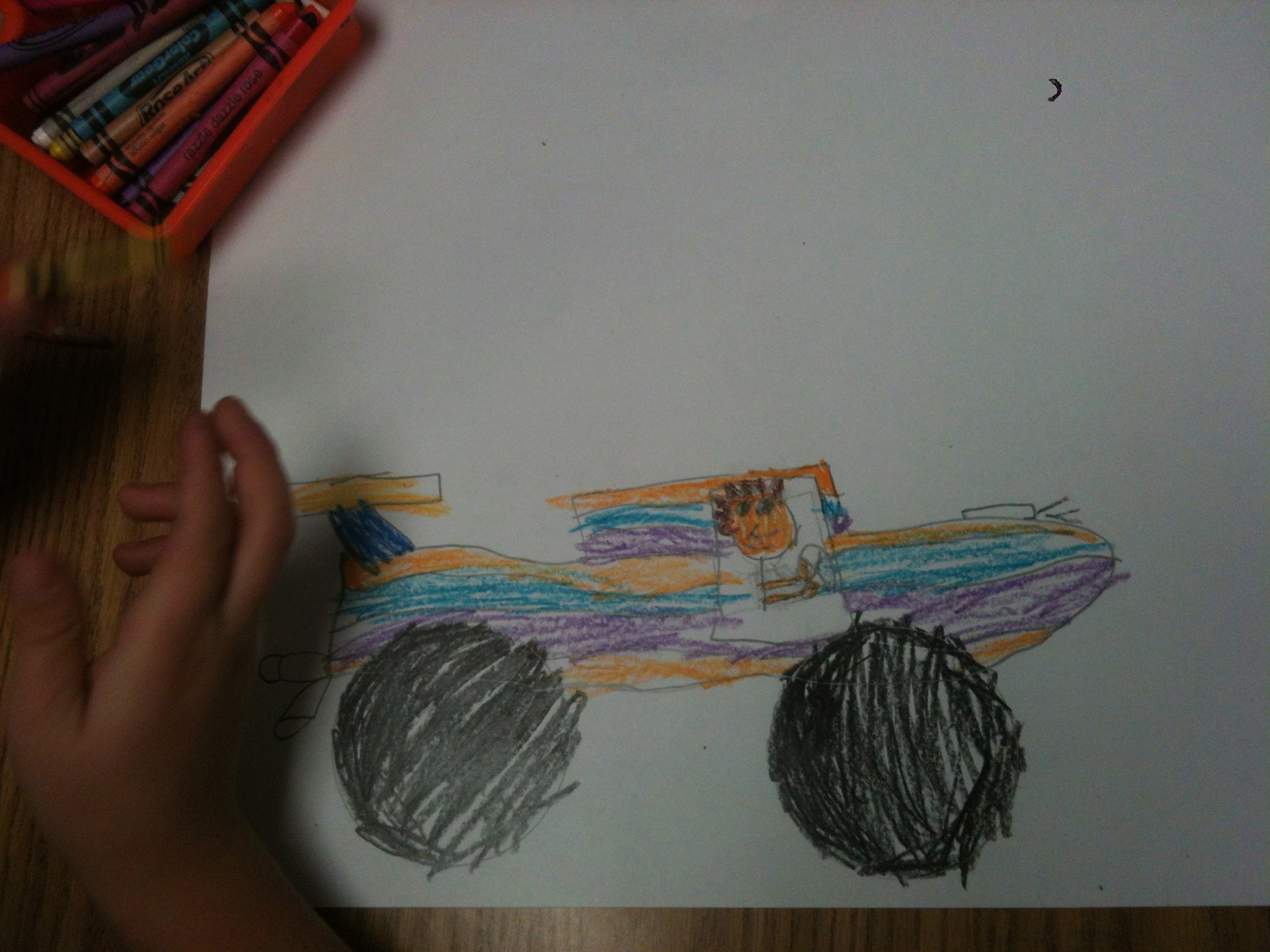
Kindergarteners use circle templates as a starting point for drawing wheeled vehicles.


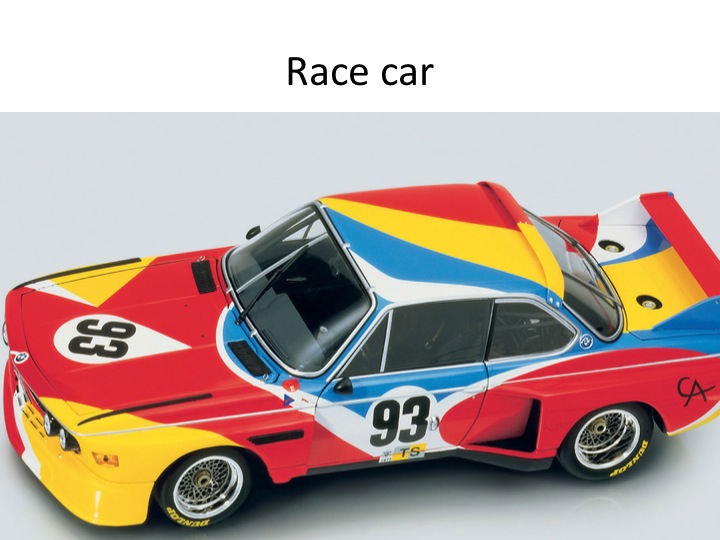
This is one of those lesson plans that is perfect for a single 40-minute kindergarten class.  It takes no prep or clean up. Kindergarteners love cars and trucks. The use of circle tracers (various sizes of jar lids) for the wheels makes this lesson highly successful.

Materials:

  • white drawing paper
  • pencils and erasers
  • circle tracers: assorted jar lids, old masking tape rolls, etc.
  • crayons
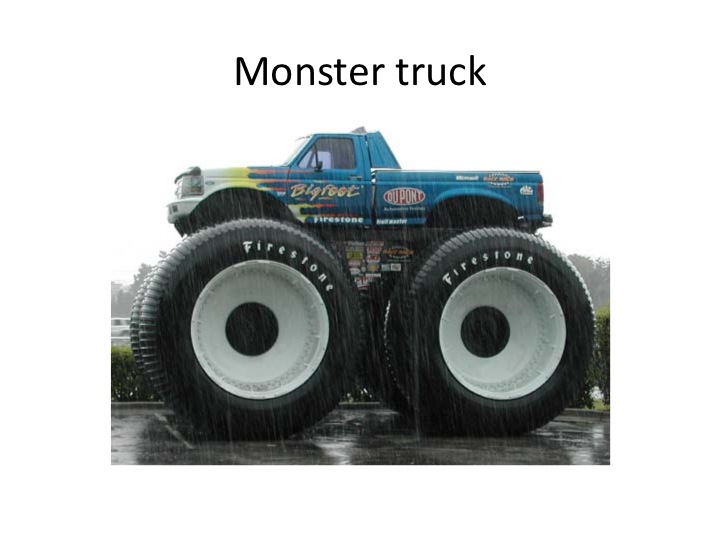
  • reference photos of things with wheels (cars, trucks, wagons, bikes, etc.)


Instructions:

  • Show pictures of things with wheels.  Discuss how wheels are circles.  Look for other shapes (squares, rectangles) in the pictures.

Pass out paper, pencils, erasers and various sizes of circle tracers.  Ask students to draw something with wheels.  Remind them to add a background or road. After 10-15 minutes, pass out crayons and allow students to color in their designs.


Kindergarteners often draw themselves and family members in the vehicles.


You may see drawings of all kinds of imaginary wheeled vehicles. Great!

I have a computer and projector in my art room and try to teach with powerpoints.  You can download my kindergarten wheels powerpoint here.

This would also be a great substitute lesson plan.

The kindergarten wheels lesson was inspired by this fabulous lesson on trucks and tractors at Deep Space Sparkle.

Related Posts Plugin for WordPress, Blogger...