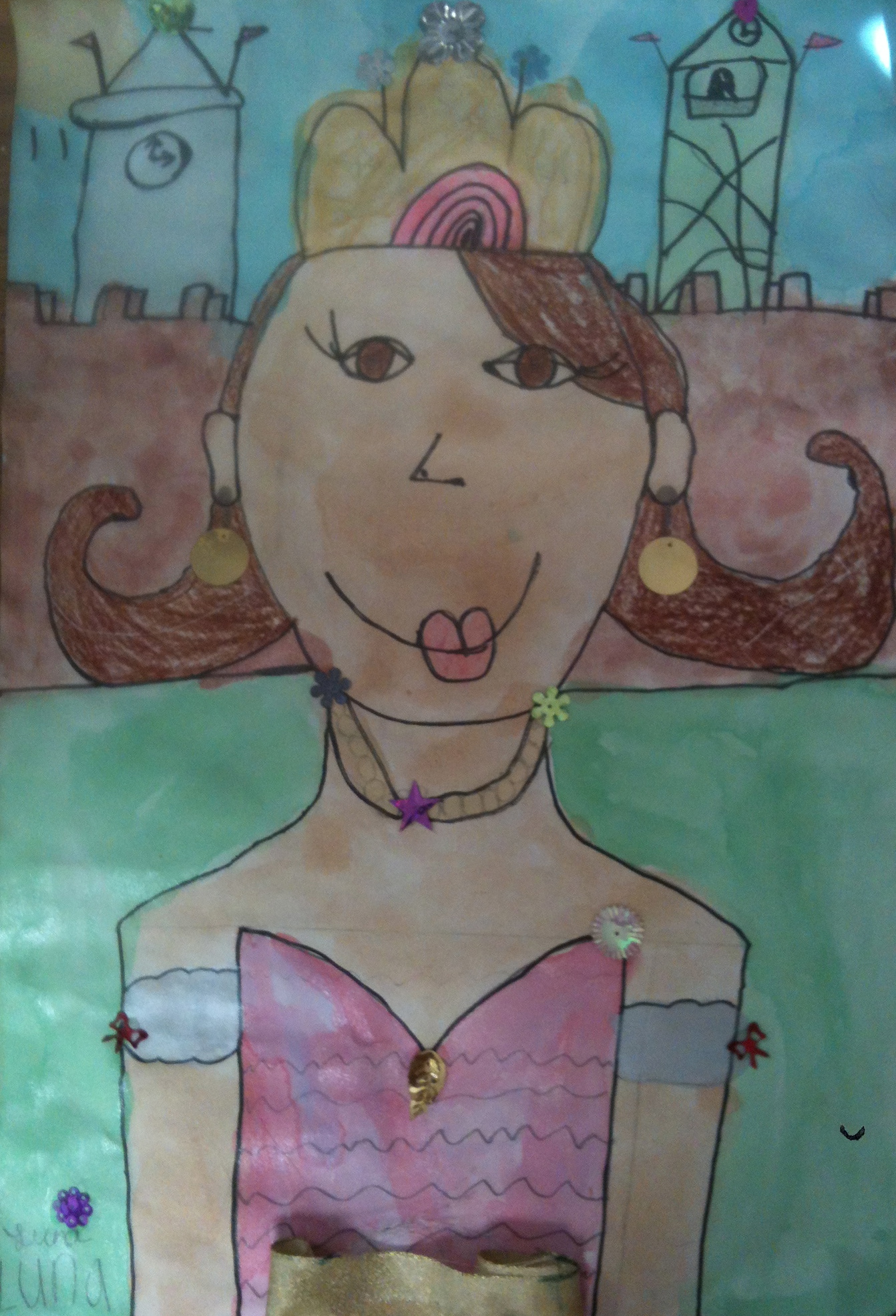
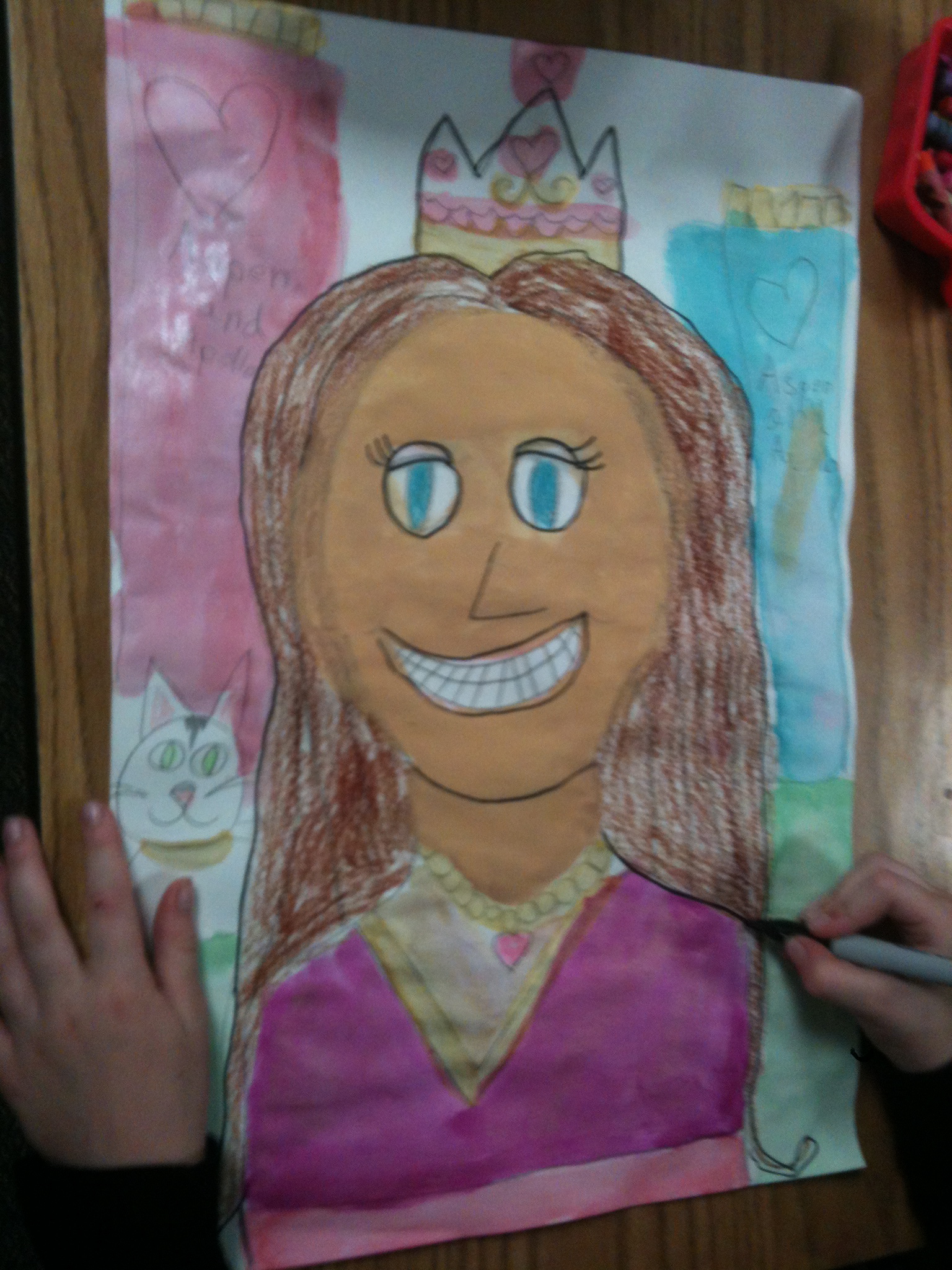
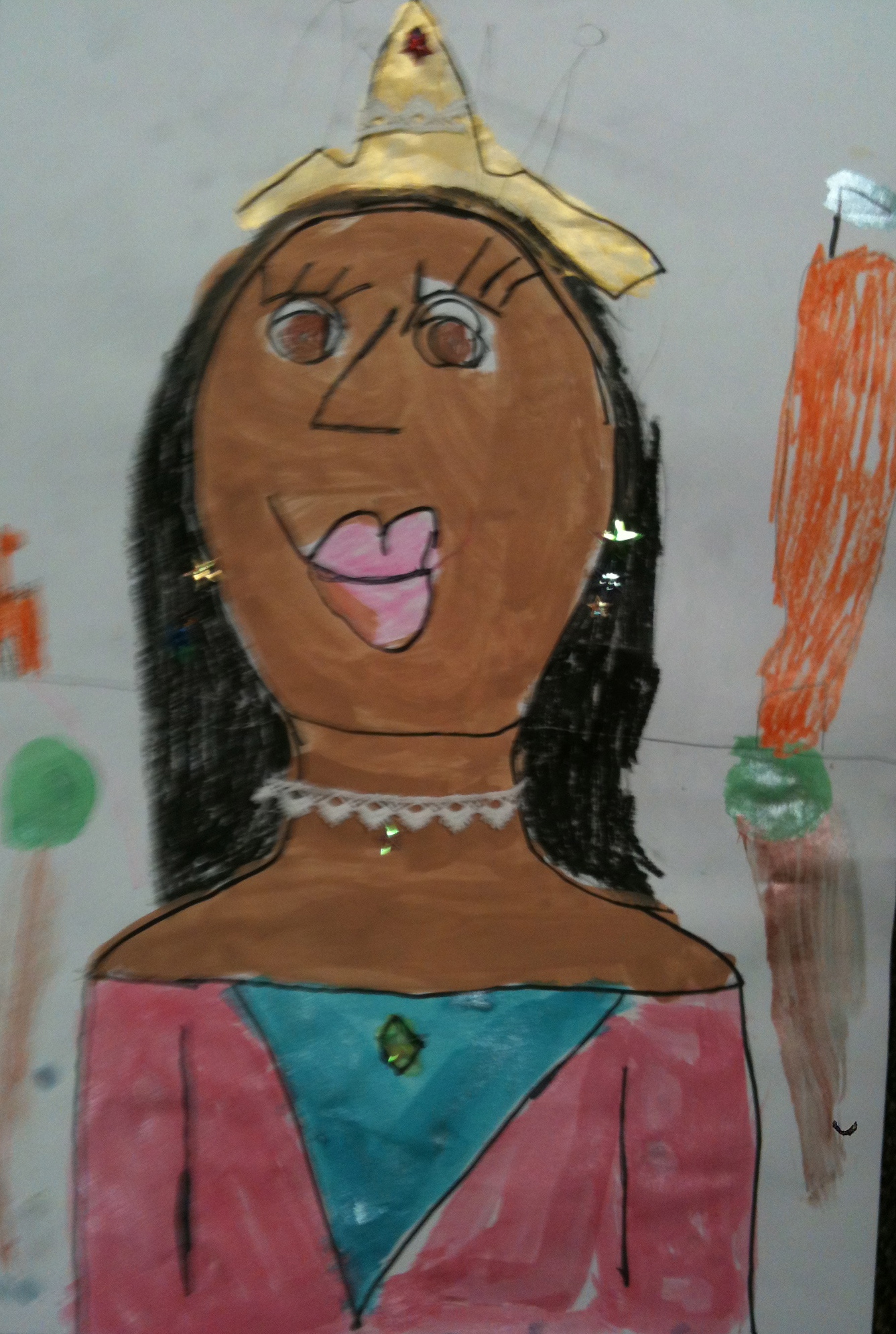
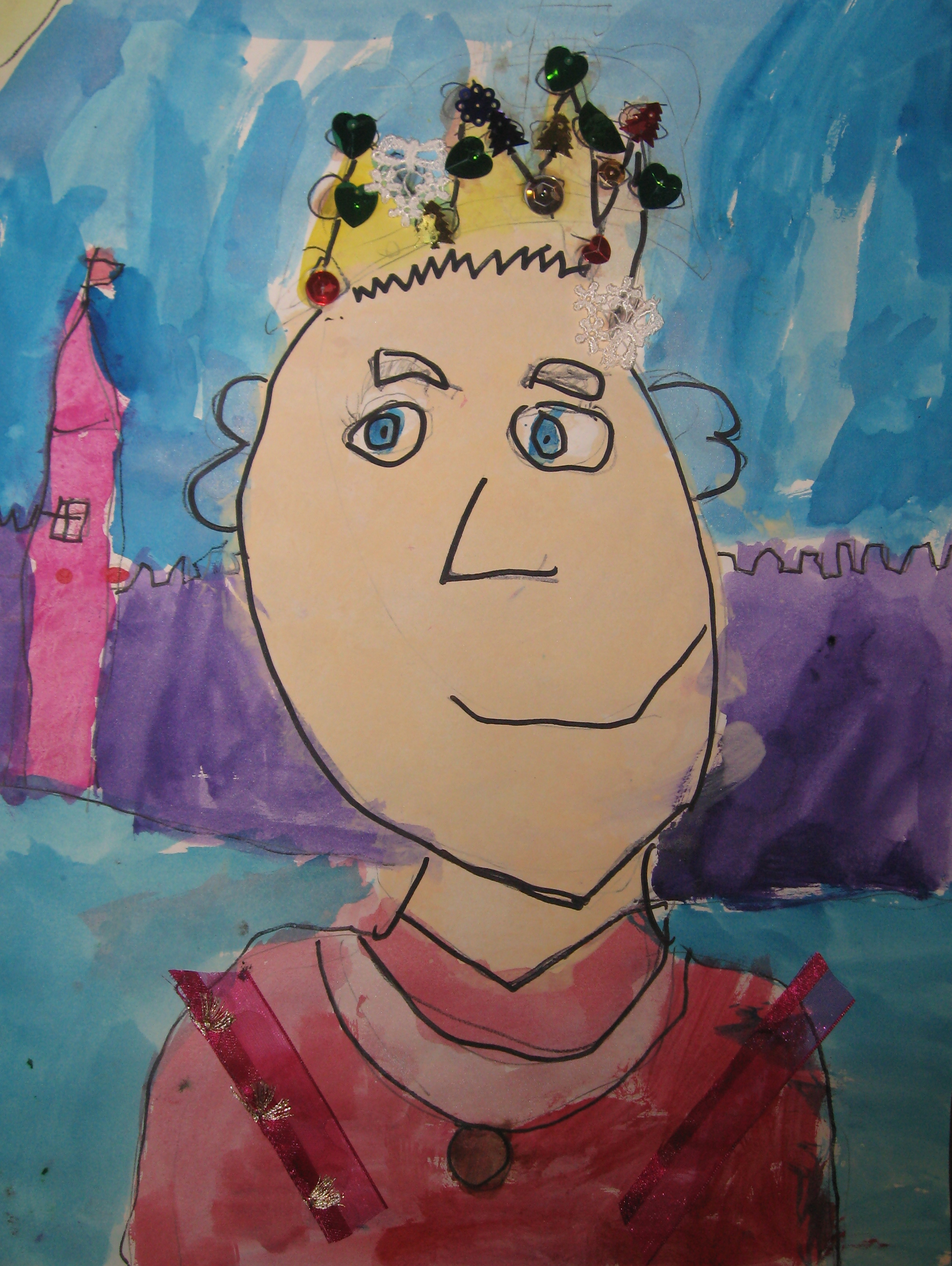
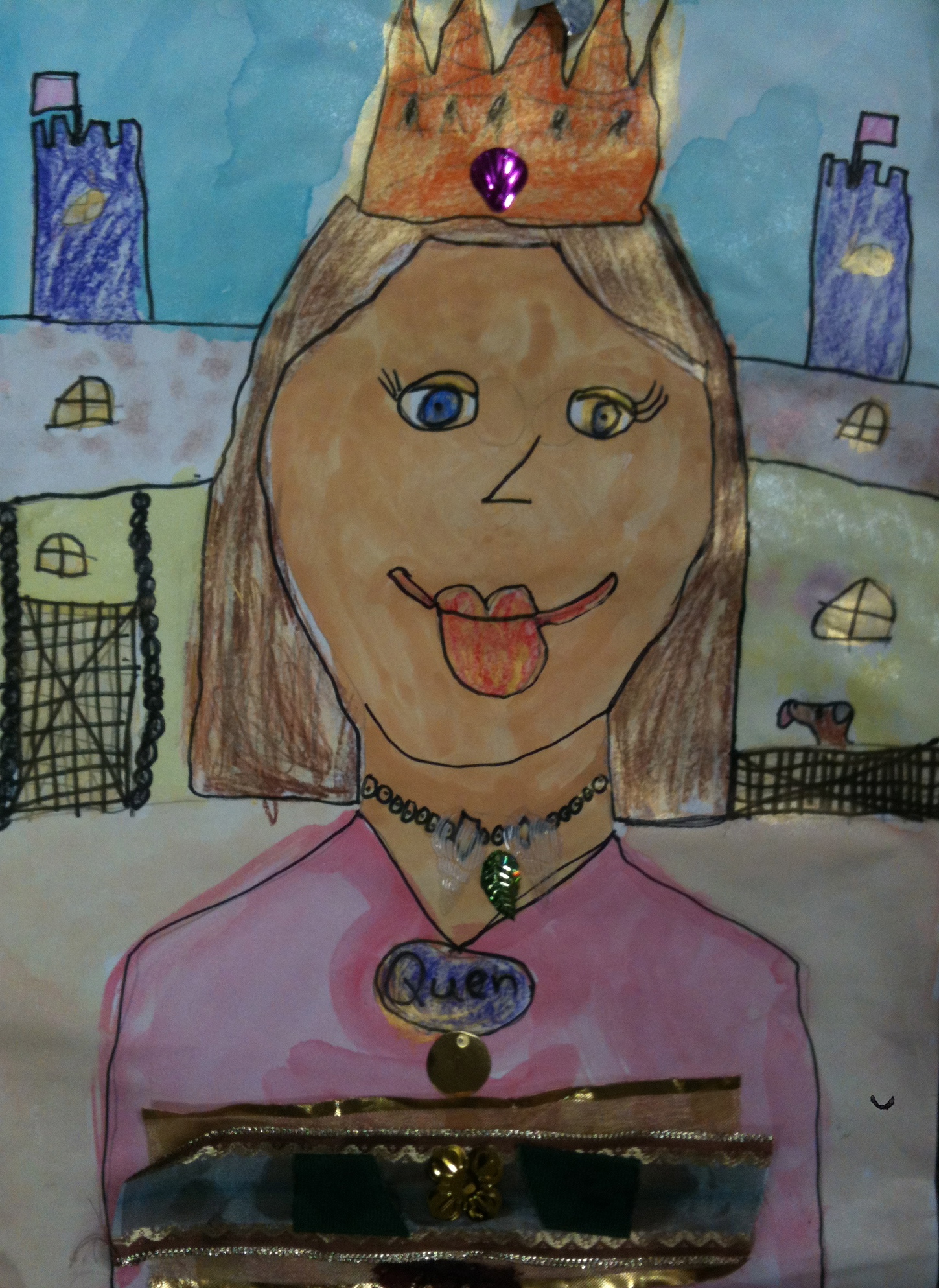
Welcome to the royal art room! The first grade recently finished their royal self portraits.
First graders create a portrait of themselves as princes or princesses. Allow 3-4 40-minute classes.
Materials:
white paper, 12″x18″
pencils and erasers
self-portrait template (optional)
several shades of skin-colored tempera (thinned with water)
watercolors
Sharpies
crayons
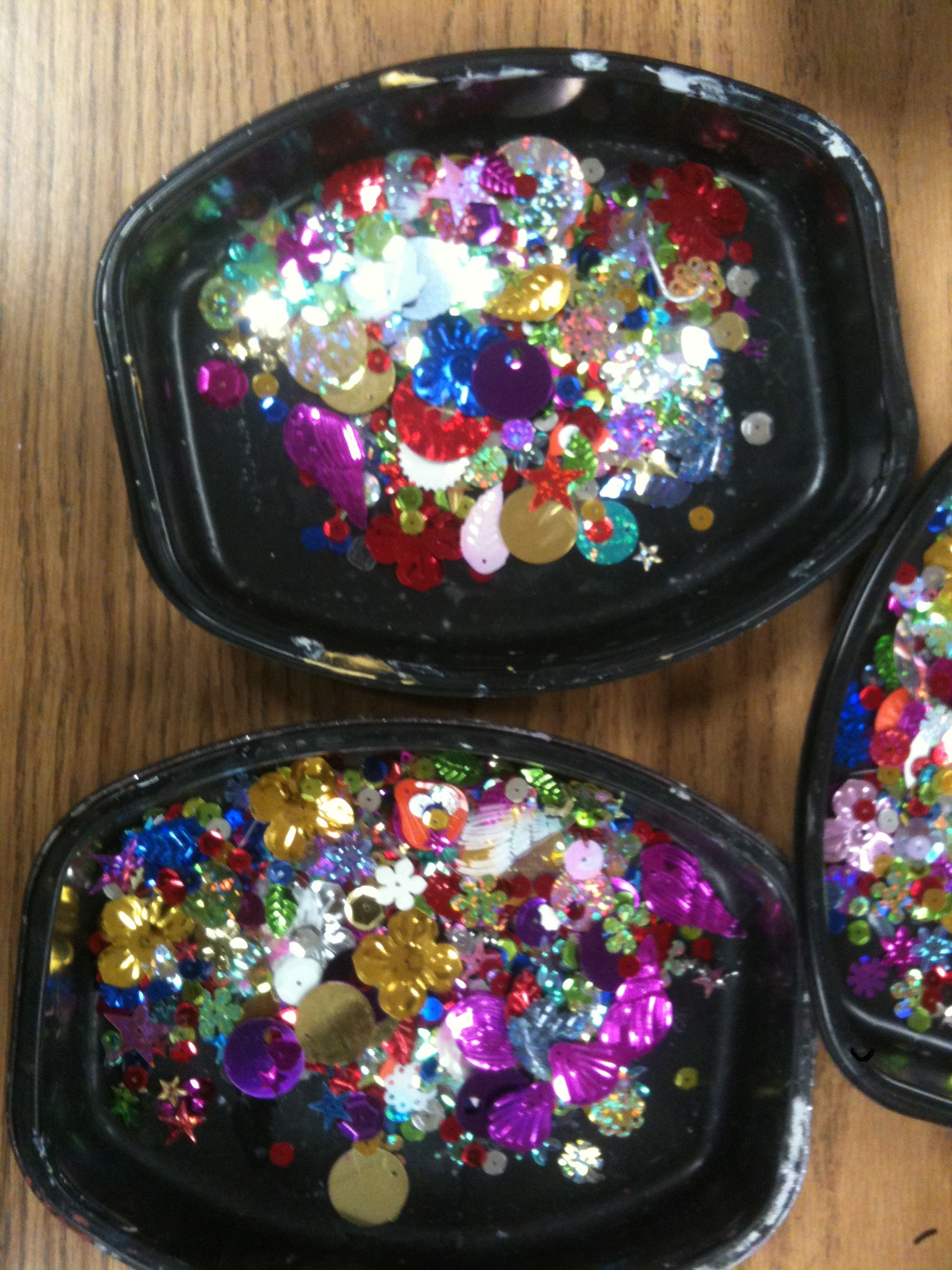
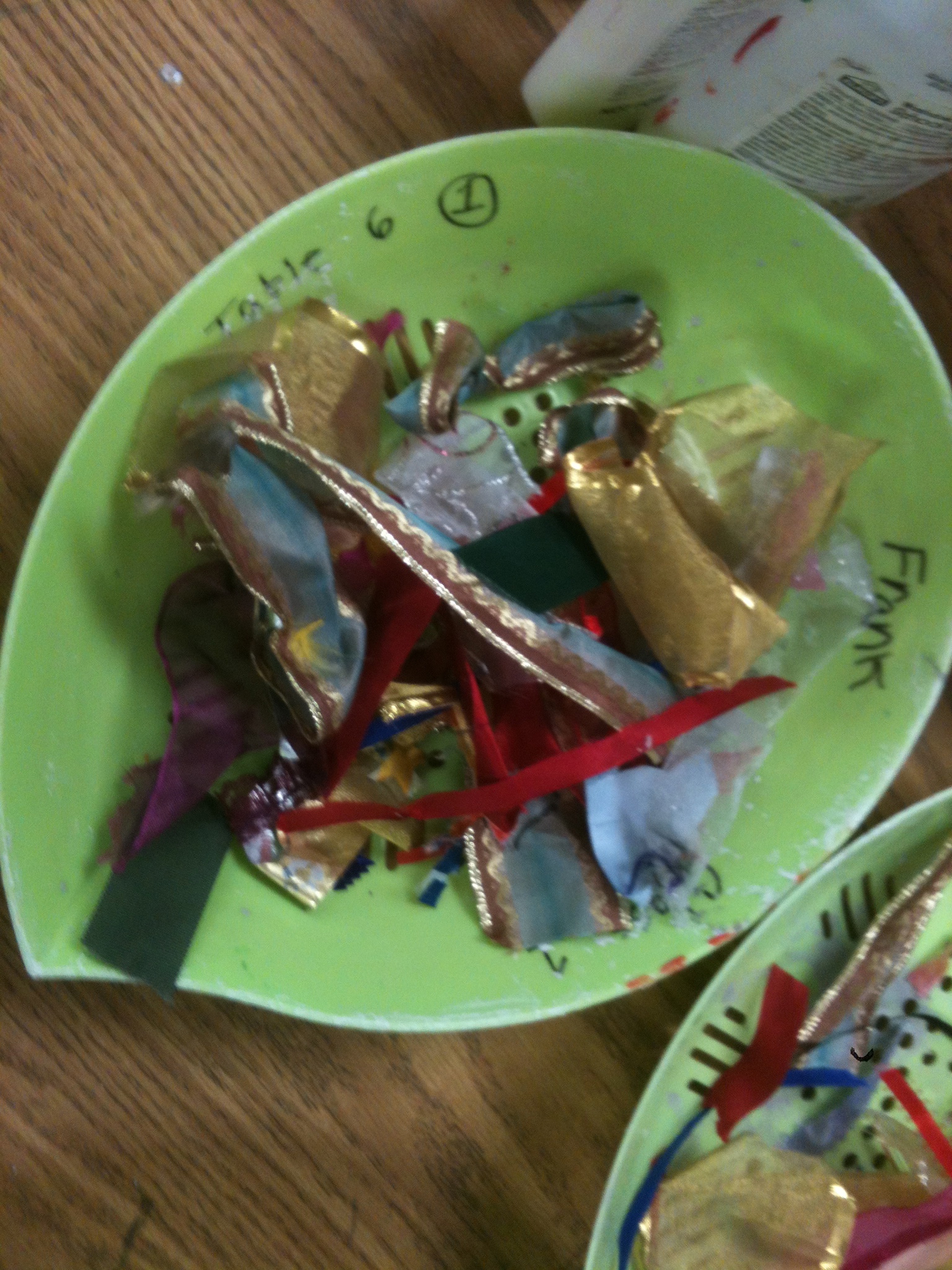
sequins, ribbons and lace
glue
Day 1:
We started out by looking at photos of royal gear: crowns, swords, jewels, and medals. Students began by drawing the face, neck and torso. Then they added crowns and fine clothes. Most drew castles in the background – some even added their ‘royal’ pets!
Day 2:
The skin was painted with thinned tempera. We painted the rest with regular and metallic pan watercolors. Tiny details (such as eyes) were colored in with crayon.
Day 3:
The students outlined the dry art with Sharpies. ‘Jewels’ (sequins), ribbons and lace were glued on for a final touch.
Students outlined their (dry) paintings with Sharpies.
Sequins make fabulous jewels.
Scraps of ribbon and lace make royal clothing extra fancy.
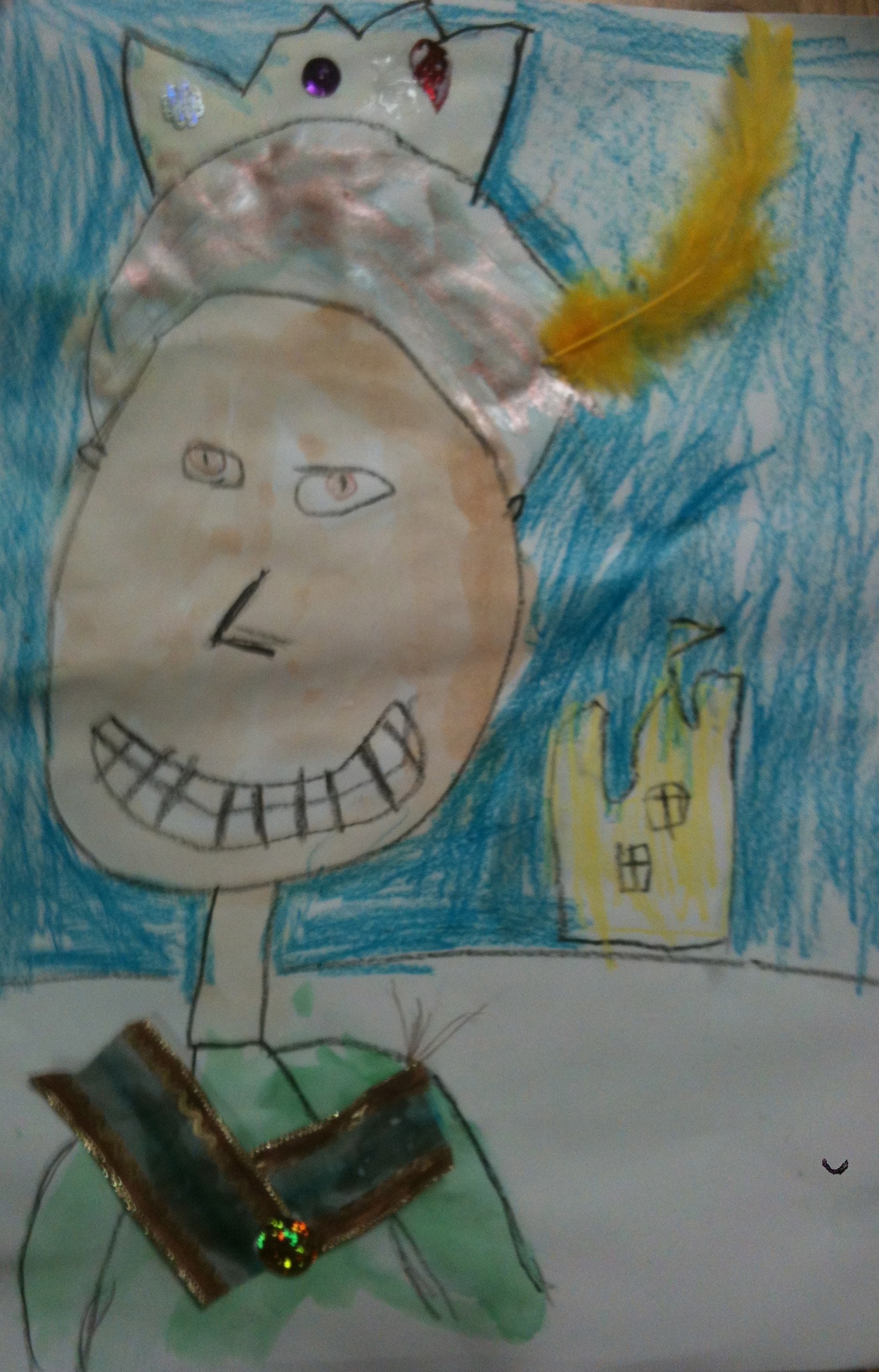
And here are the fabulous results!
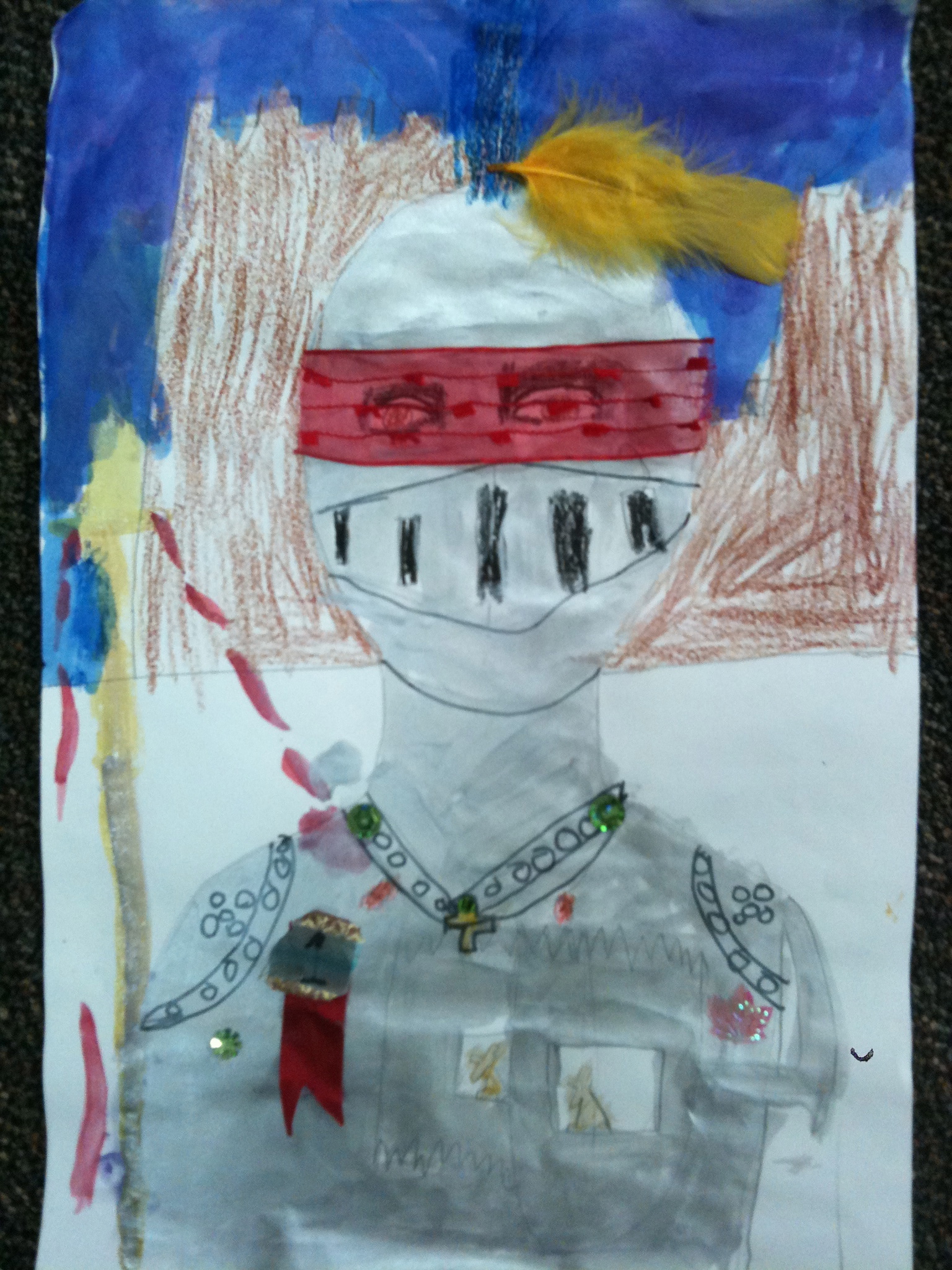
A royal knight.
Some students chose to draw themselves as knights. I wrote about it in this post.
This is it! The most beloved clay project of all. Second graders use clay, glaze and marbles to make glittering animal pinch pots. They visit a kiln and load it themselves. If you are looking for a truly memorable clay project, try this.
Day 1: Make an Animal Pinch Pot
Second graders use clay to make a pinch pot, then use the ‘scratch attach’ (score and slip) method to add head, legs, tail, etc. I let students make any animal they want, real, imaginary or extinct.
I let the clay dry and then bisque fire it.
Day 2: Glaze Day
On glaze day, students paint their pots inside and out with many colors.
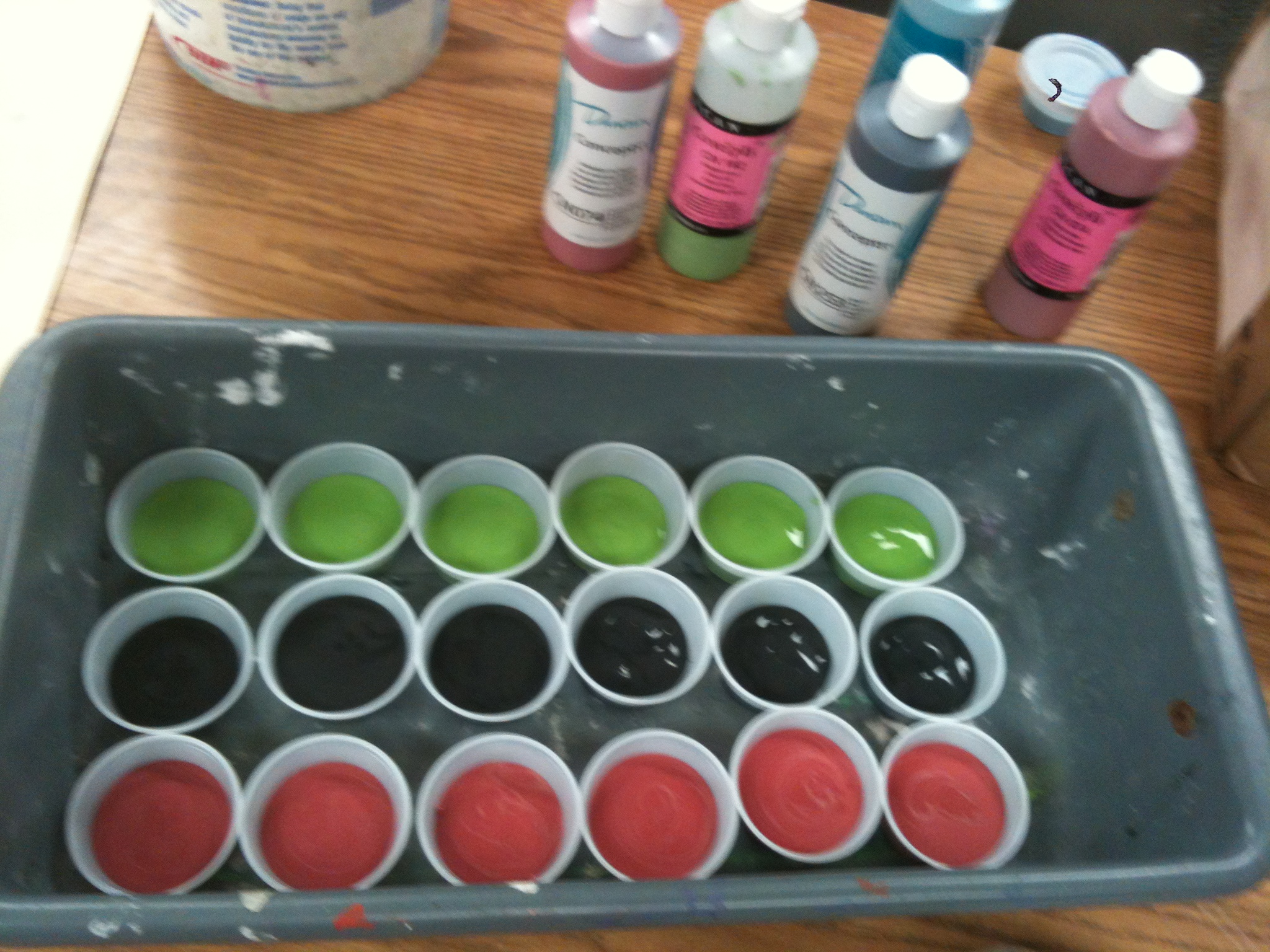
Glaze in 2 oz. ‘salsa cups’. I use one color per table and let students switch tables.
I put out one glaze color and several brushes on each of my tables. Students switch tables to get different colors. The brushes stay at the table and don’t travel (so I don’t need water on the tables). I use 2 oz. plastic portion cups and lids (also available at Costco) for my glazes. At the end of class I spray the leftover glaze cups with a little water and cap them.
Day 3: Marbles and The Kiln Field Trip!!!
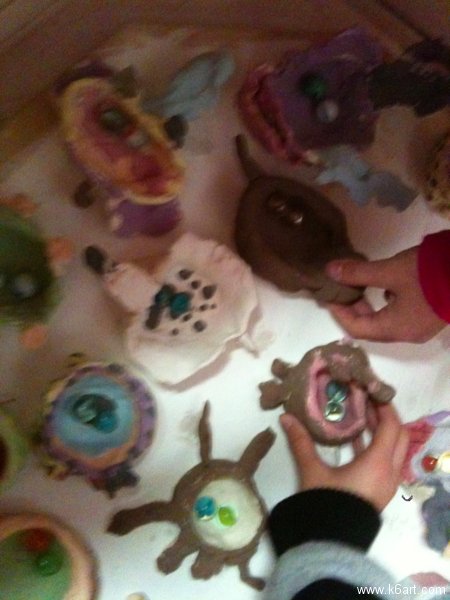
Oh boy! The kids come up to the marble tray and pick two marbles for their pots. There is much deliberation….which to pick? I tell them the marbles don’t have to match, and no matter which they pick, they will be very surprised at the result.
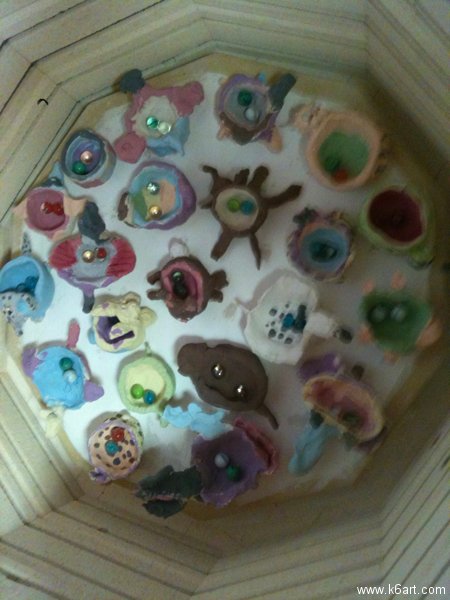
I tell the students we are going to the school kiln – a super-hot oven we use to fire their clay. We then load up the pots on my cart and walk as a group to our kiln (how fortunate we are to have a kiln on site!). I always have a parent (or 6th grade) volunteer help with this step.
Each student puts his or her own pot into the kiln.
Ready for the second firing!
(Note: I use low-fire clay and underglazes. I fire the glazed clay/marbles to cone 06).
Day 4: Return the Pots
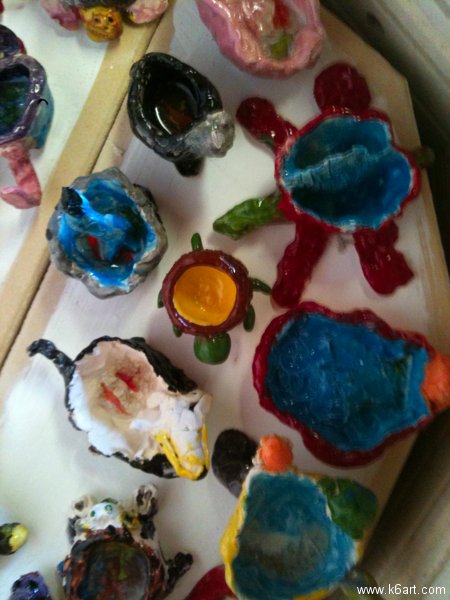
I pass back the fired pinch pots. Wow!
Students are amazed at the melted marbles. Kids describe them as ‘pools of glass’ or ‘pools of ice’. We have to see them all! So we take a ‘museum tour’ and examine ALL the pots.
You don’t have to pay a lot of money for marbles. Marbles are available at my local dollar store and in the toy section of my local drug store.
Caution: do not use this method on coil pots! You do not want molten glass leaking out of the pot onto your kiln shelf.
Kids love this project! I had some 7th graders visit the art room recently – they immediately smiled when they heard we were doing this project again. They said it was their favorite and that they still have their pots.
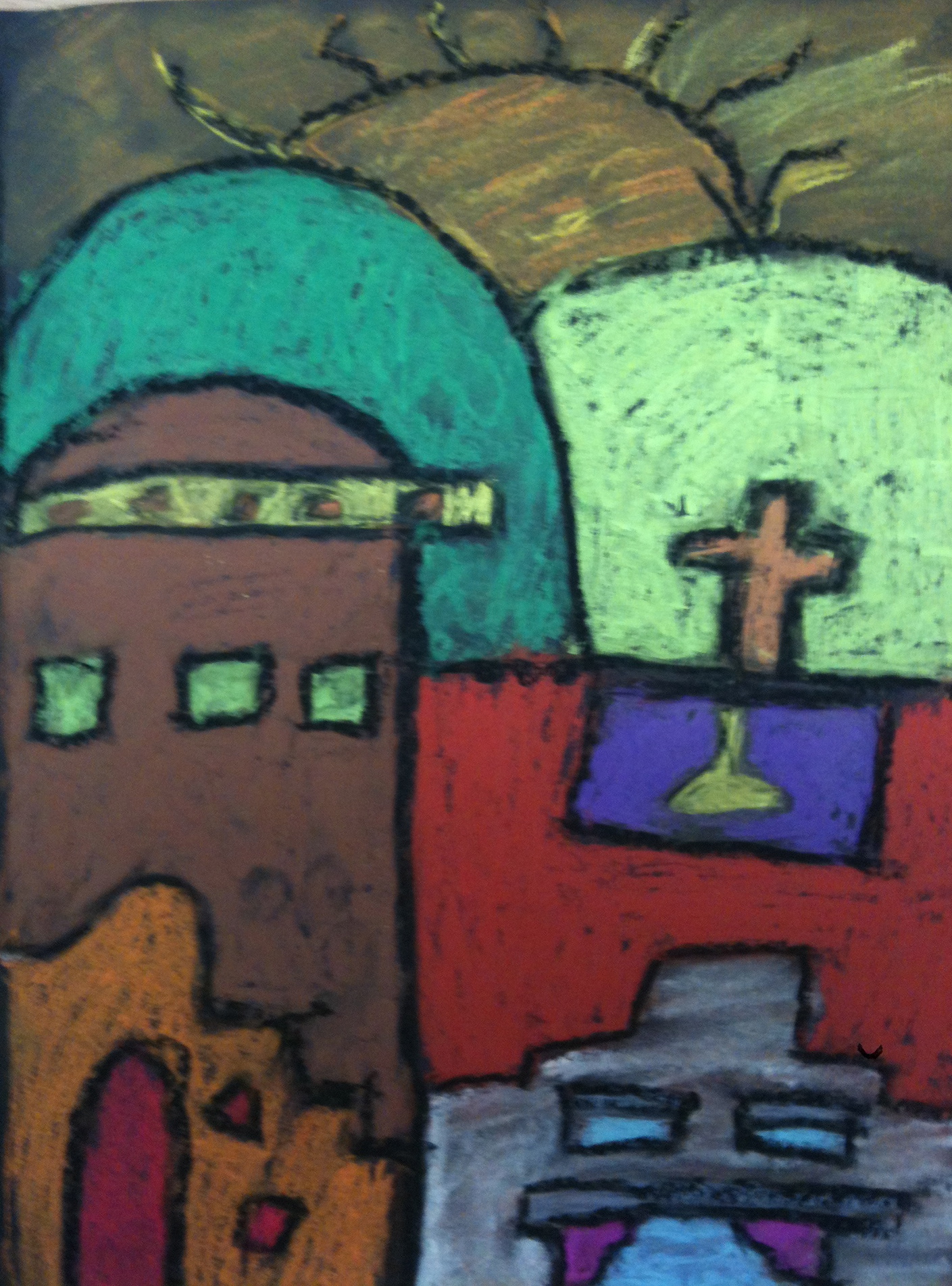
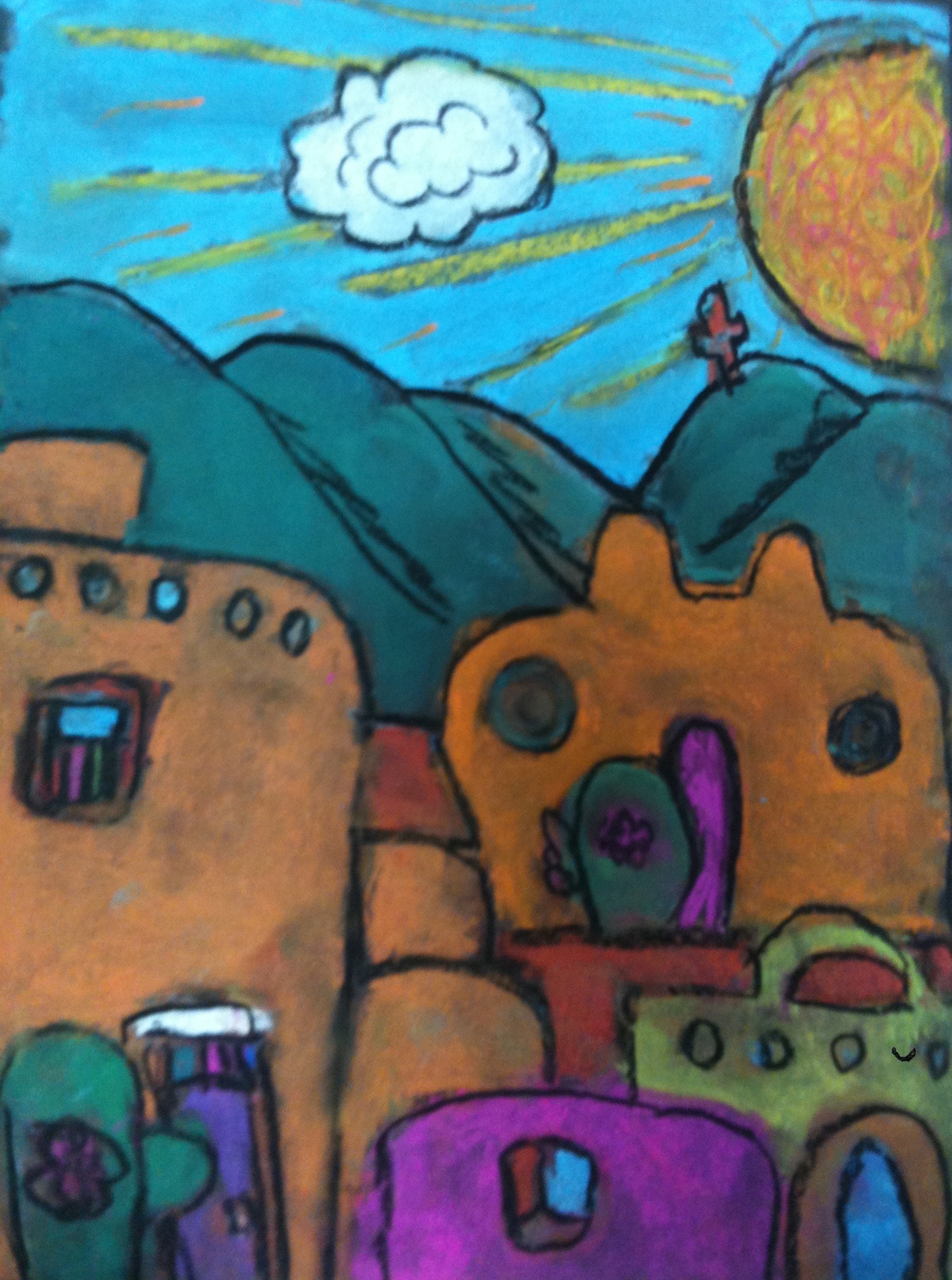
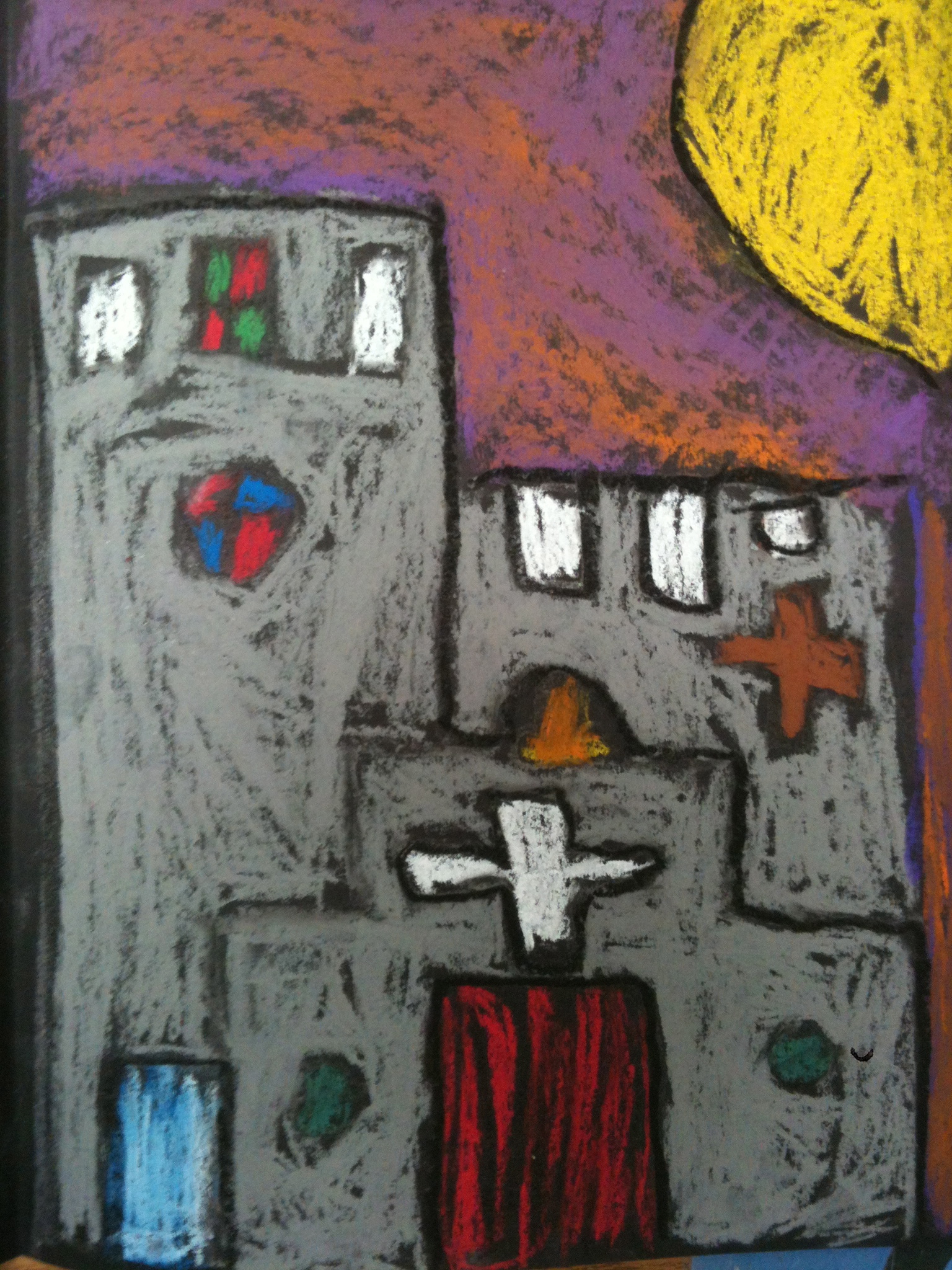
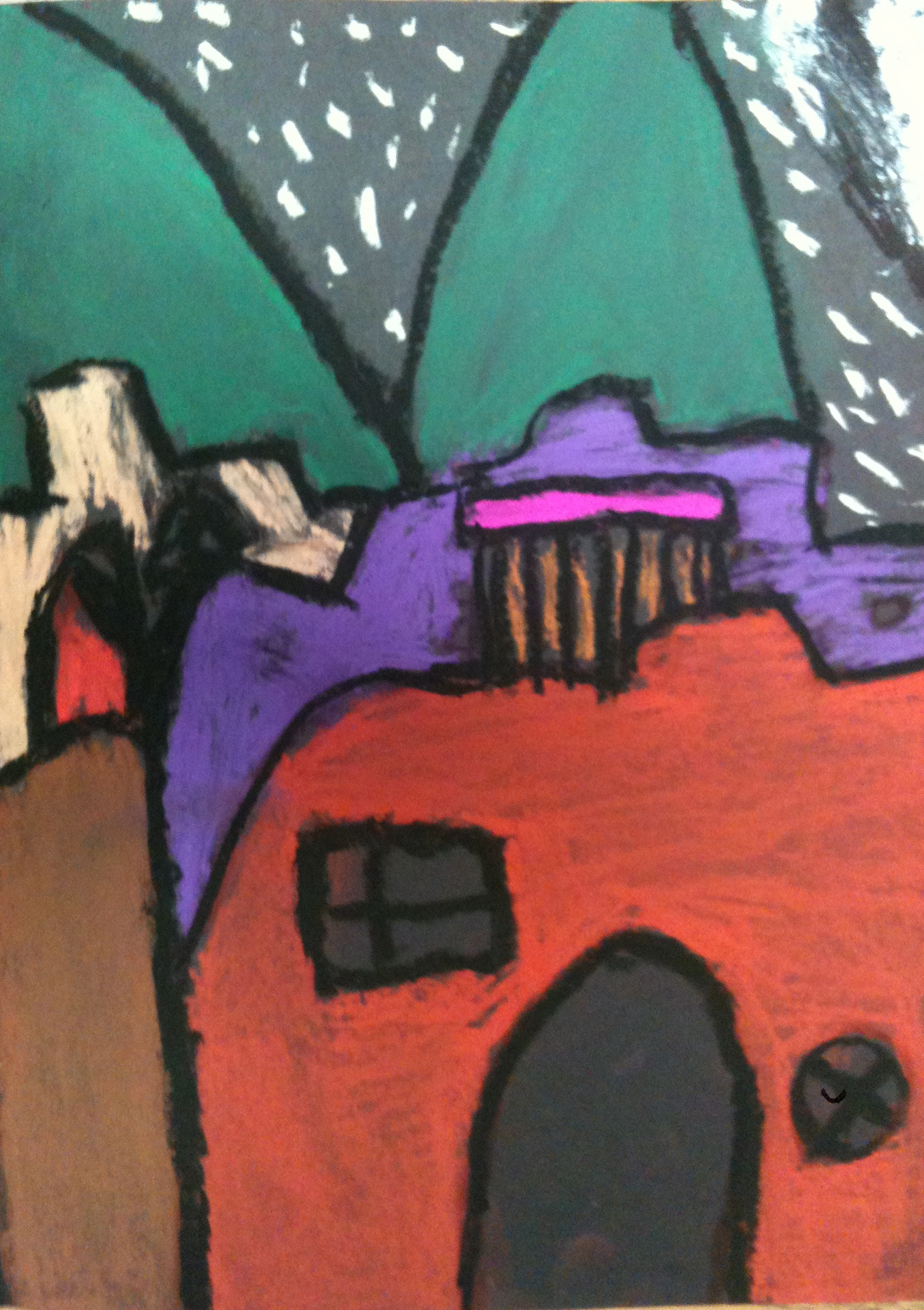
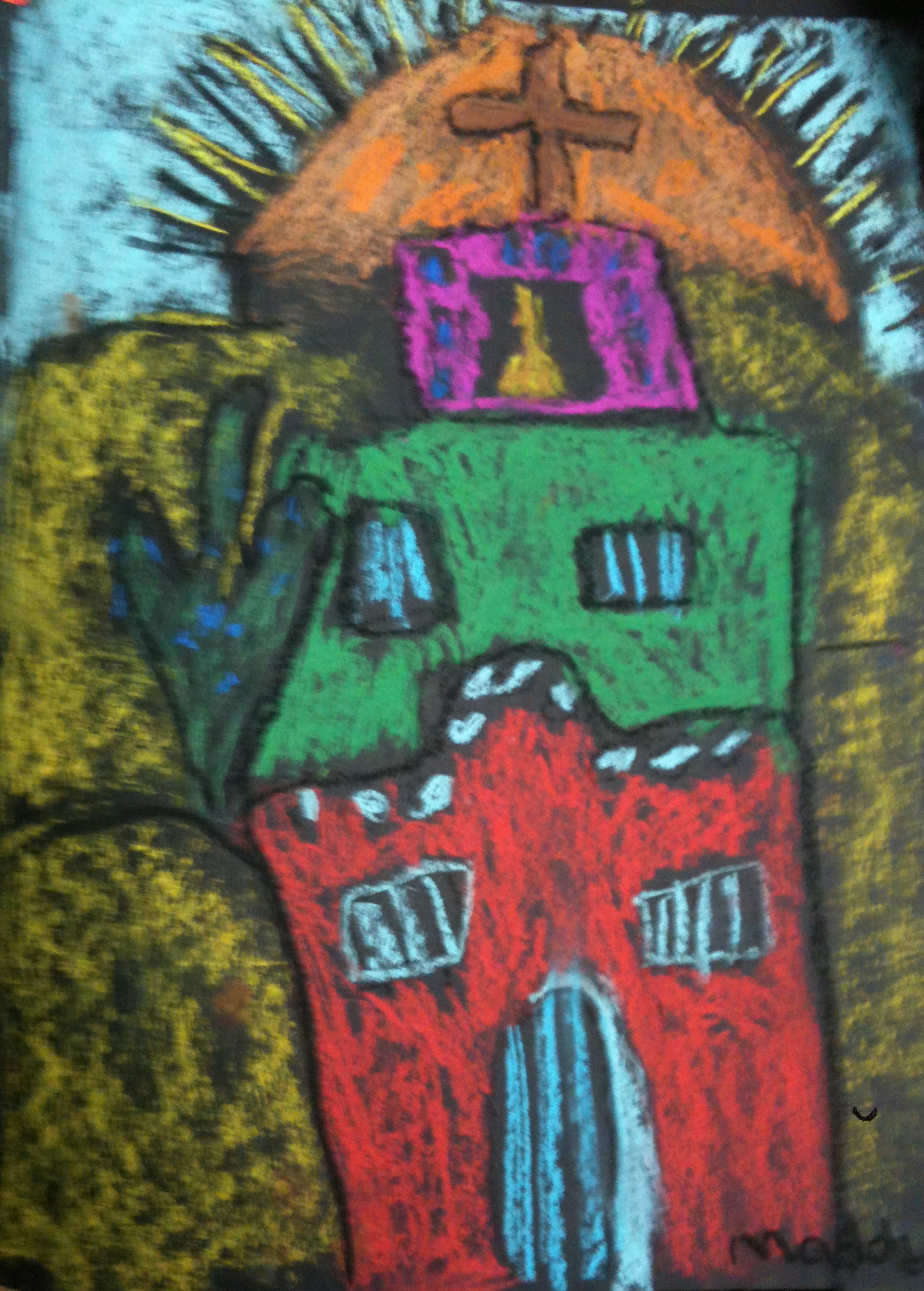
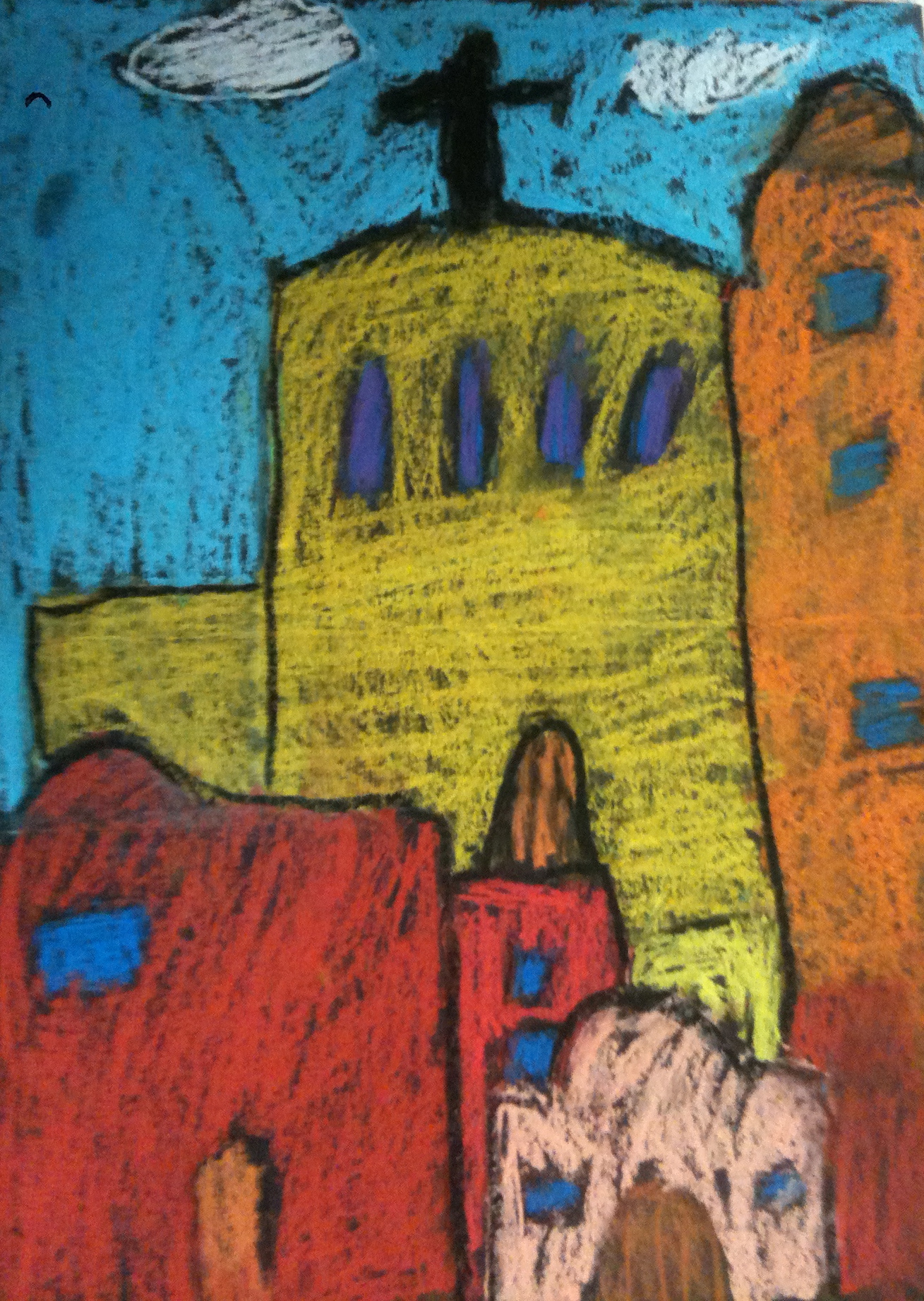
Fourth graders made chalk pastel drawings as a complement to their California history social studies unit. Allow two 40-minute classes.
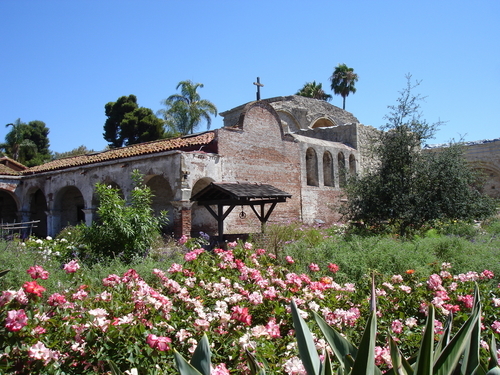
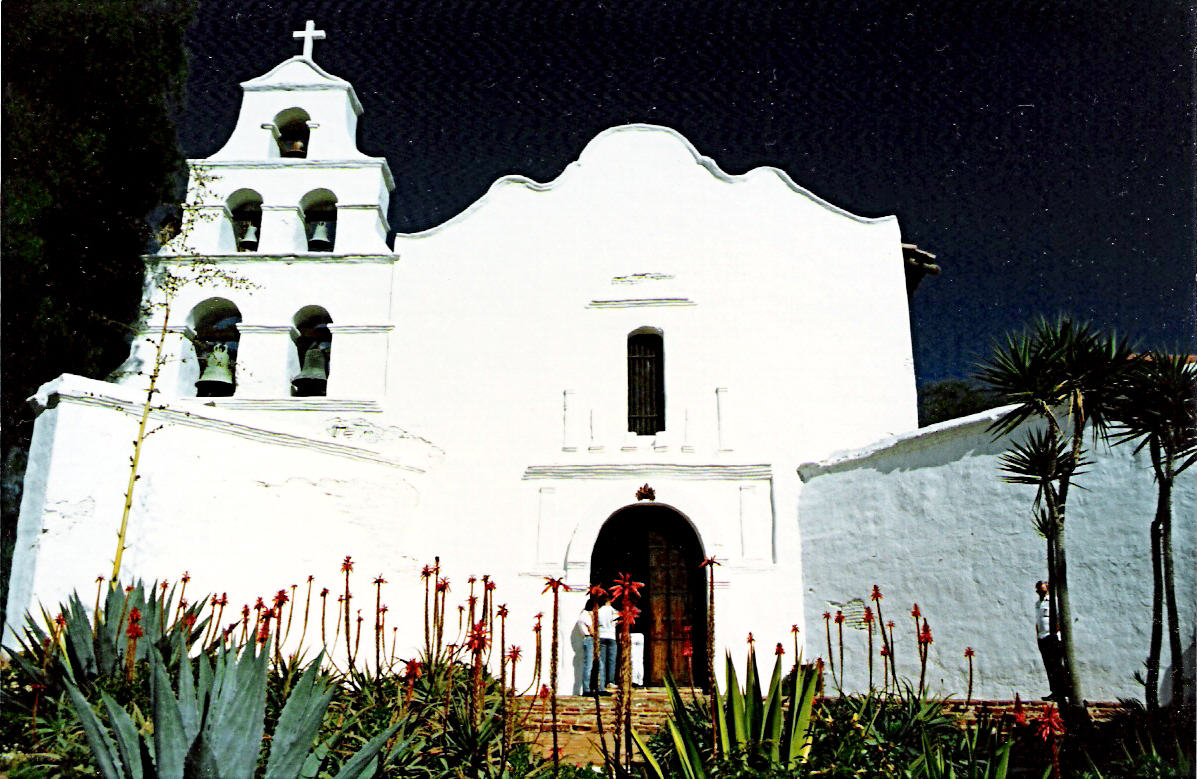
Thinking about a successful, fun art project for a 4th grade California Mission lesson? Try this art project from Deep Space Sparkle, easily adapted for a California Mission project.
Mission San Juan Capistrano
Mission San Diego de Acala, San Diego, California
Materials:
black, dark blue or purple construction paper
chalk pastels
black or dark blue oil pastel for outlining
hair spray (or other fixative) to keep completed artwork from smearing
Don’t let students blow excess pastel color. During class, provide a piece of newspaper so they can tap off the excess.
After class, I washed down the tables with a bucket of plain water and a large sponge. Expect to change the water and rinse the sponge out after just a few tables – they get really dusty – but it is worth it for such a successful project.
The completed artwork will smear unless you spray it with a fixative (I use ordinary unscented Aqua Net hairspray from the drugstore). Please spray the artwork outside!
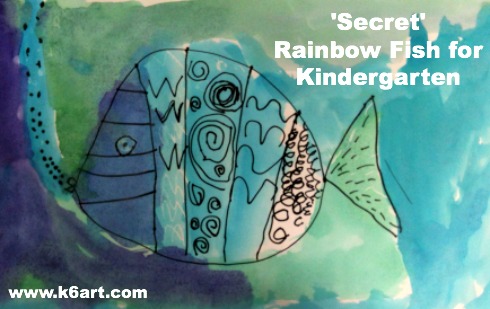
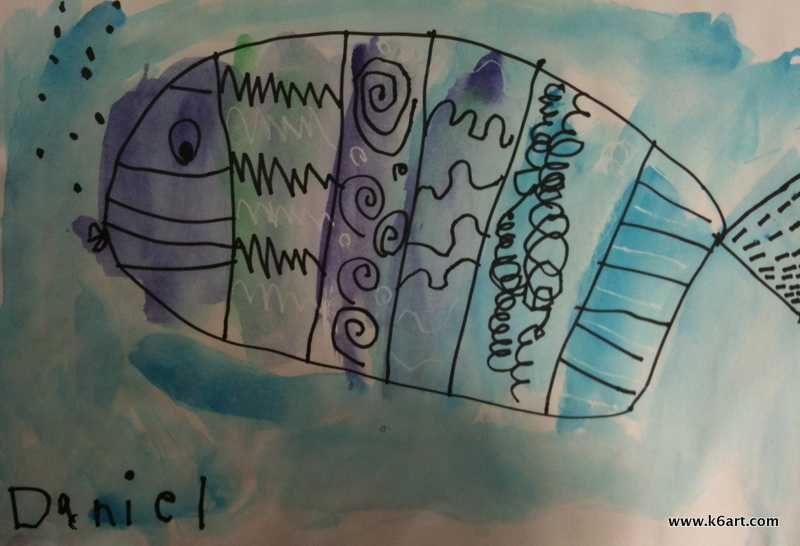
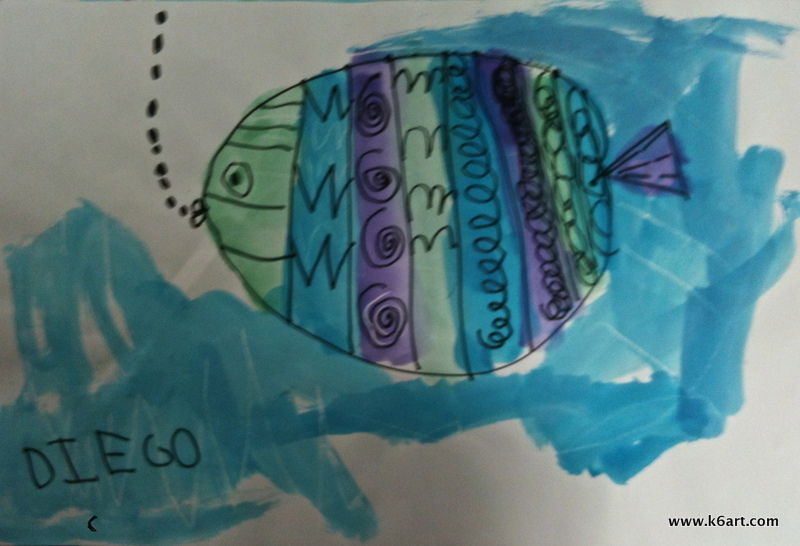
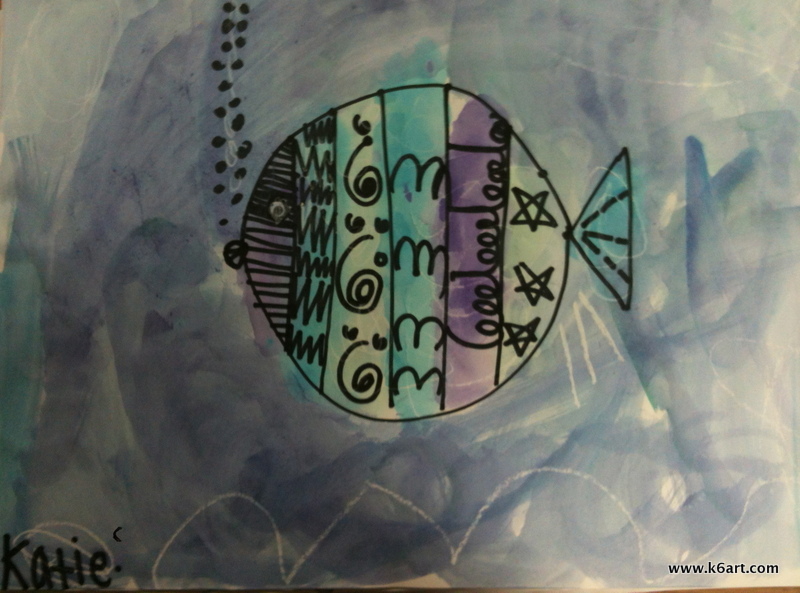
Using Sharpies, students draw the outline of the fish as a step-by-step. I tell students to draw a large ‘rainbow’ for the back, ‘smile’ for the belly, and triangle for the tail. We divide the body with a few vertical lines.
Kinds of Lines
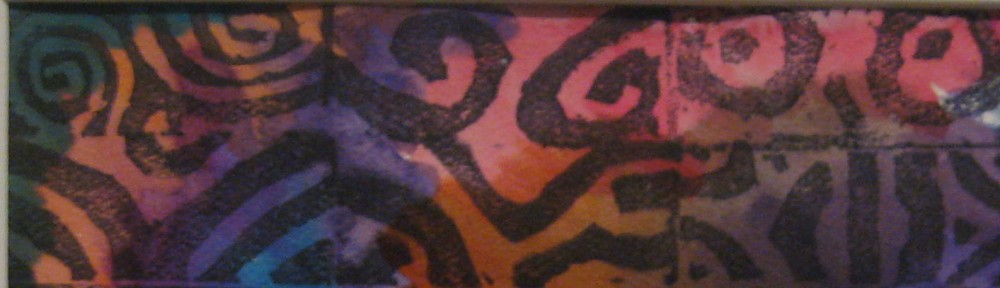
Each section is filled with a different kind of line. We use
spirals
diagonal
wavy
zig zag
vertical
horizontal
dotted
dashed
Add SECRET (white crayon) lines
Now for the SECRET! Use the white crayon to add more lines around and in-between your black lines (the white lines are hard to see and therefore ‘secret’). For best results, encourage students to press hard with the white crayon. Tell students you will tell them the secret when we paint the fish.
Day 2: Paint
Paint with purple, blue and green watercolors. Listen to the ‘oohs’ and ‘aahs’ as the SECRET lines pop out from the watercolor. It is OK for colors to overlap (the cool colors mix beautifully).
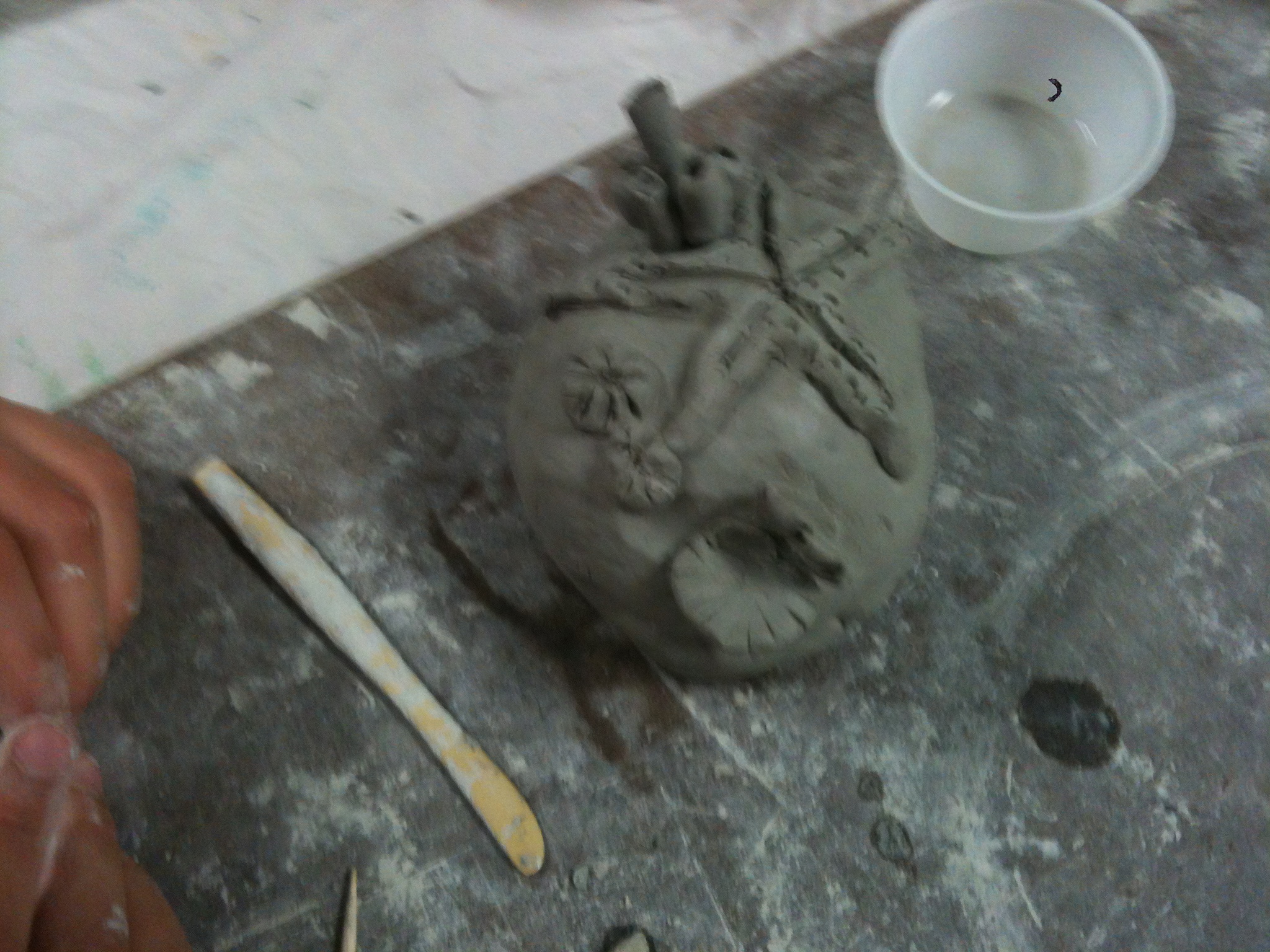
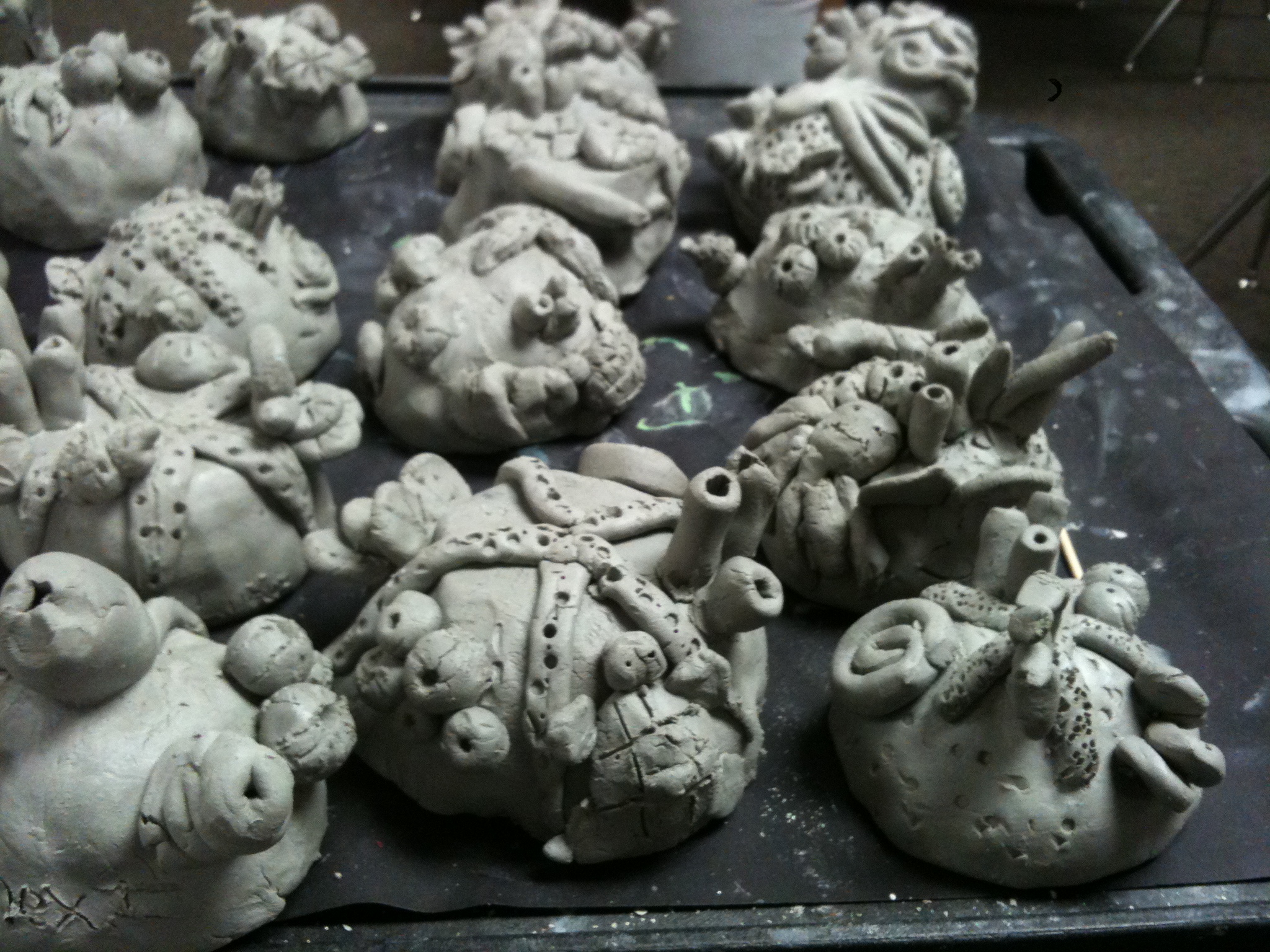
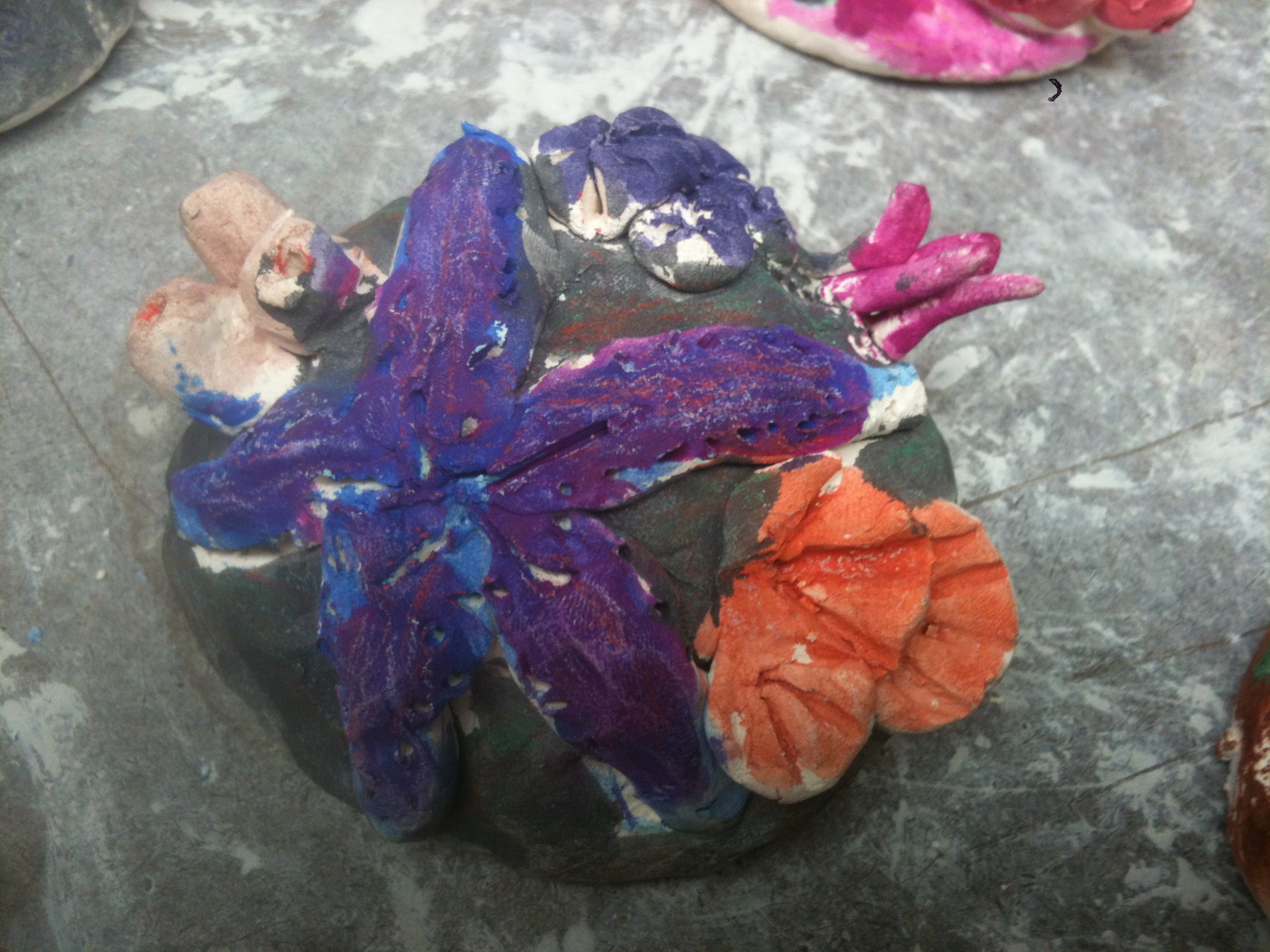
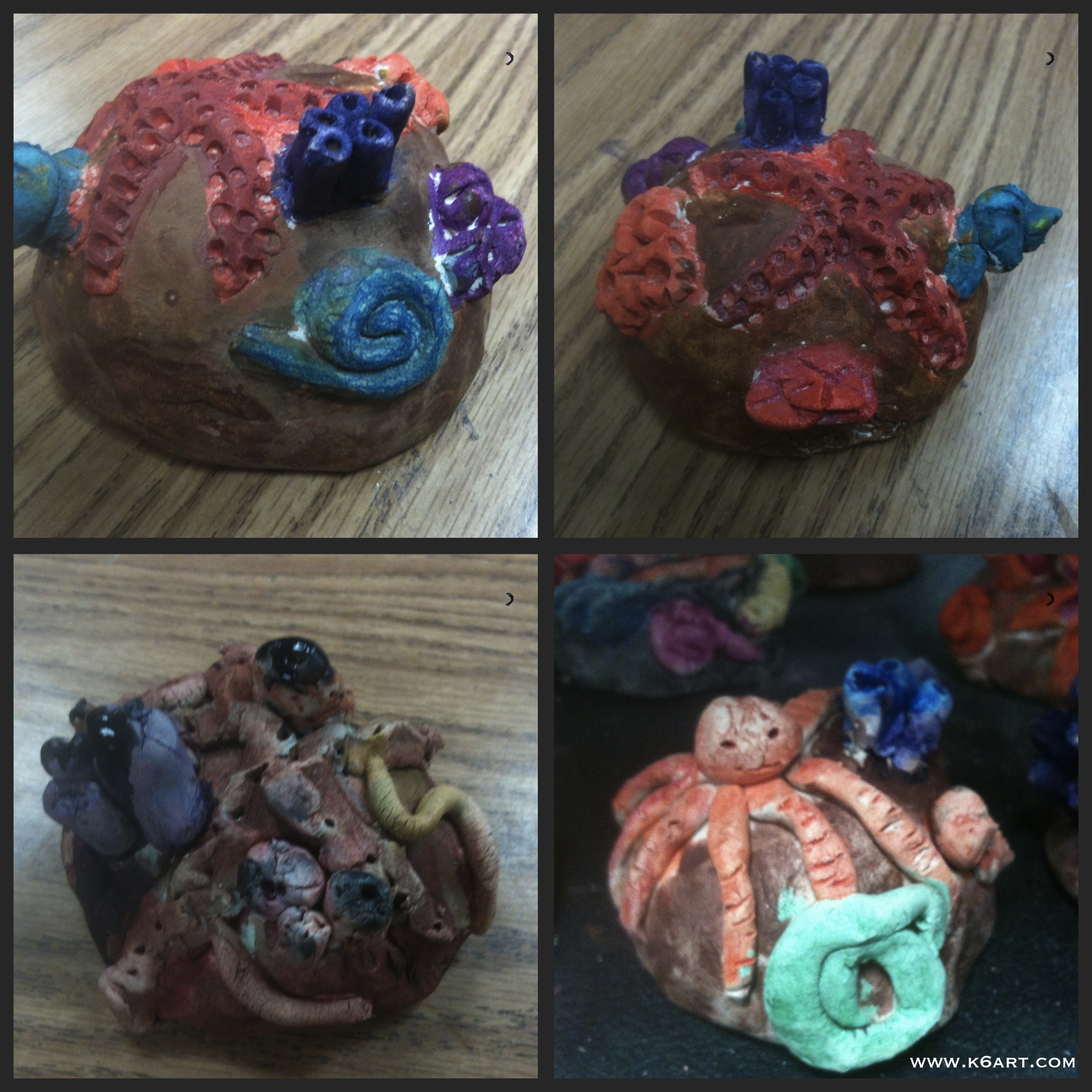
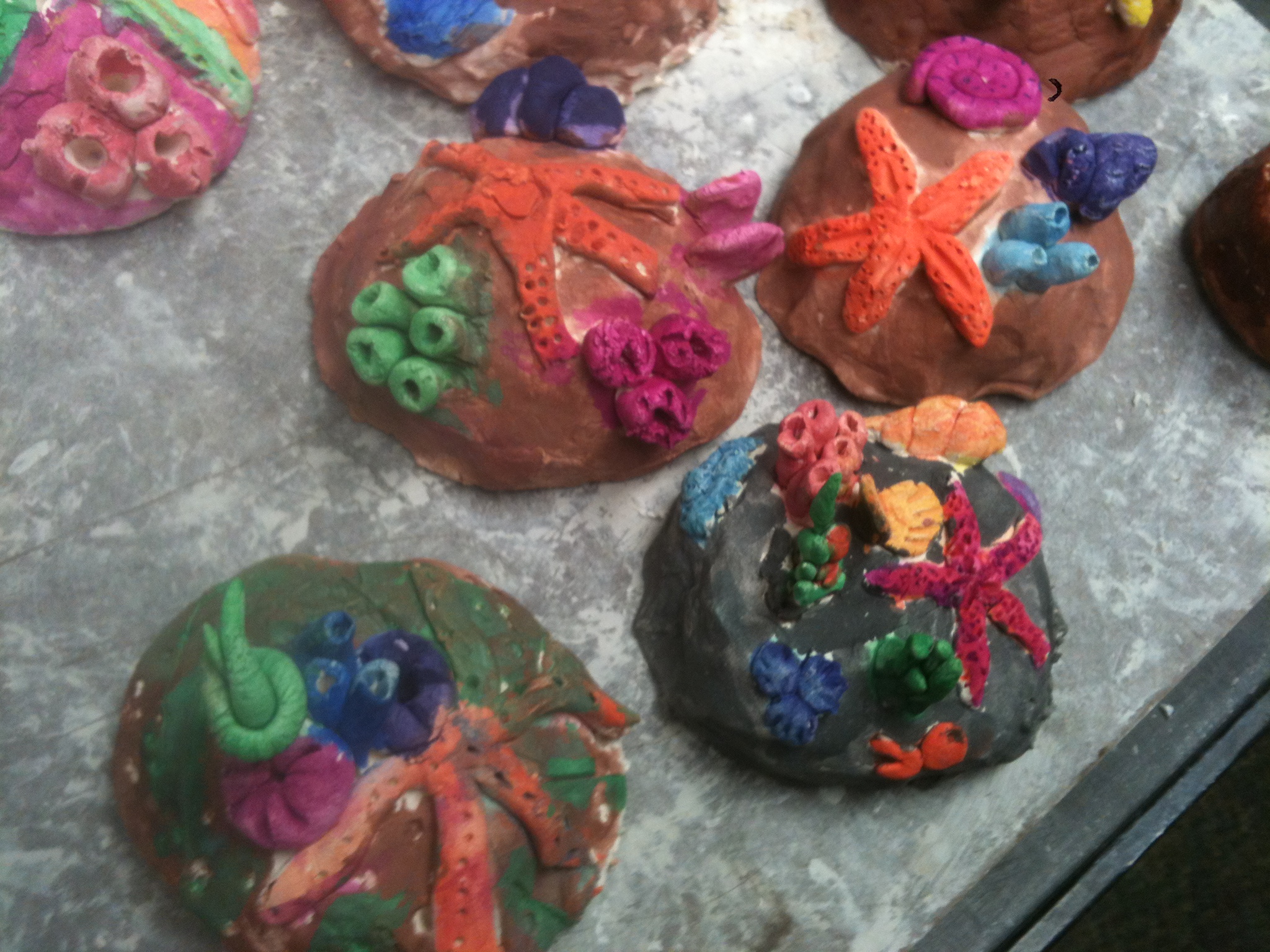
It all starts with a pinch pot. Stuff with crumpled newspaper for support and turn upside down. Apply starfish, urchins, coral etc. to top of rock using vinegar to attach.
Vinegar, clay tool, toothpick
http://youtu.be/TUuvmrJIXiQ
If you don’t finish, wrap clay in damp paper towels and seal in Ziploc bag.
Day 2:
Finish adding sea life to rock.
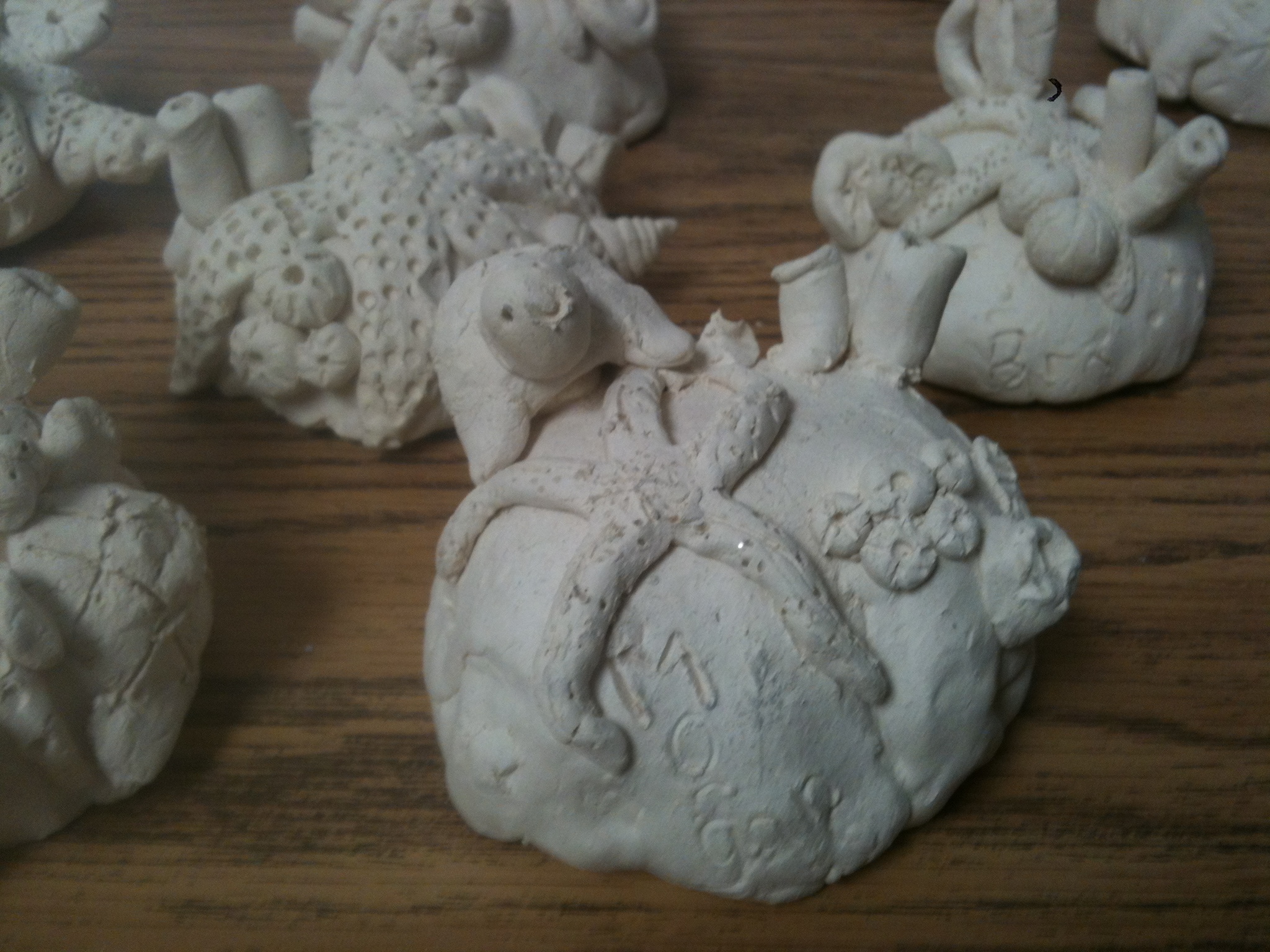
I let them dry for 12 days, then fired on slow setting.
Although no slip was used to attach decorations, only one decoration came off during bisque firing.
Day 3:
We painted with pan watercolors and tiny brushes. Students had option of rinsing off excess paint (they called this ‘fading’). Also could draw on painted ‘rock’ with colored pencil.
A huge thank you to SDAEA’s Carol Catalano Webb, who brought back this lesson from California state conference AND made the YouTube movie. A huge thank you to the clay teacher who created the Powerpoint (we think it was Barry Bernam-please leave a comment if you know Barry!).
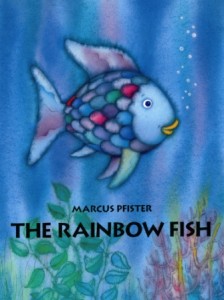
 by Marcus Pfister (or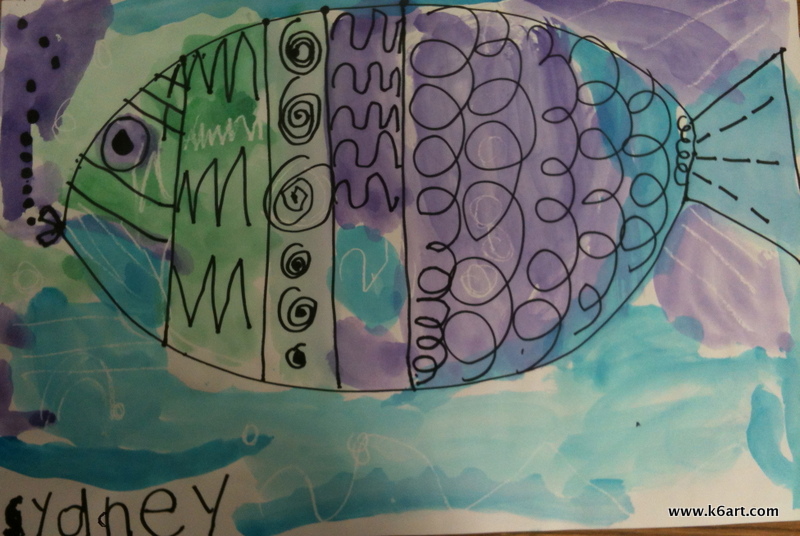
 ).
).
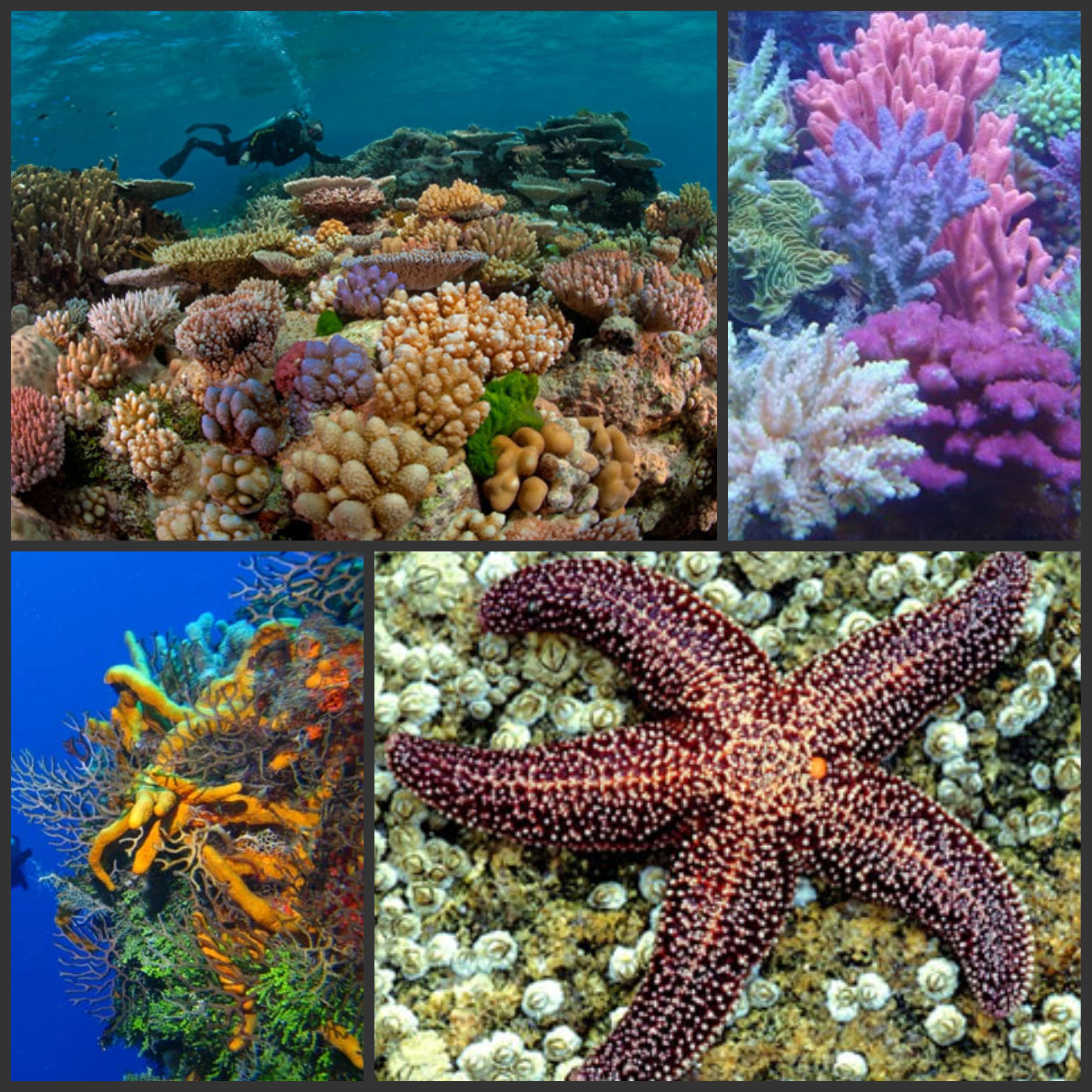
 . Look at the sea life on the ocean floor.