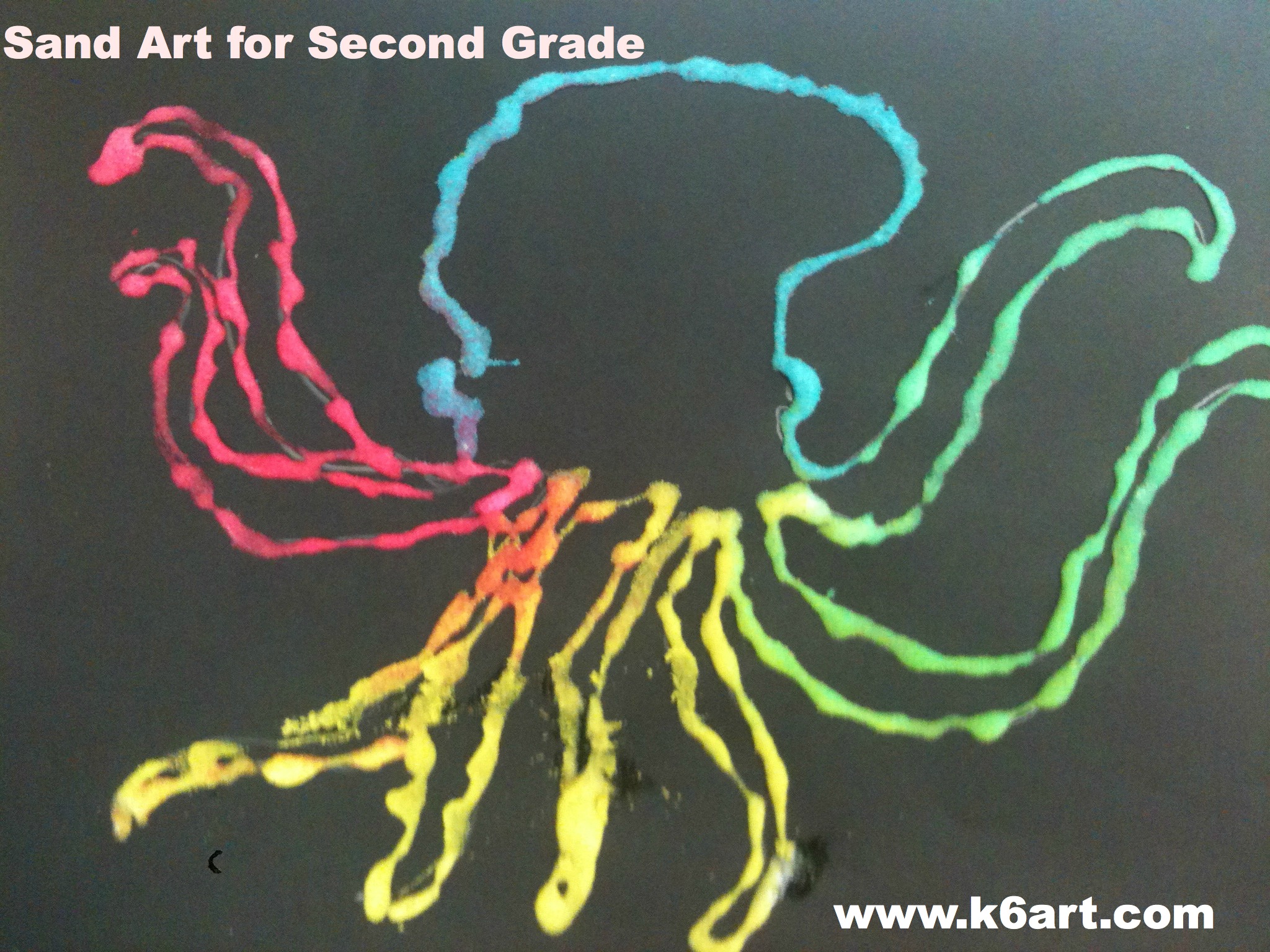
Sand Art for Second Grade

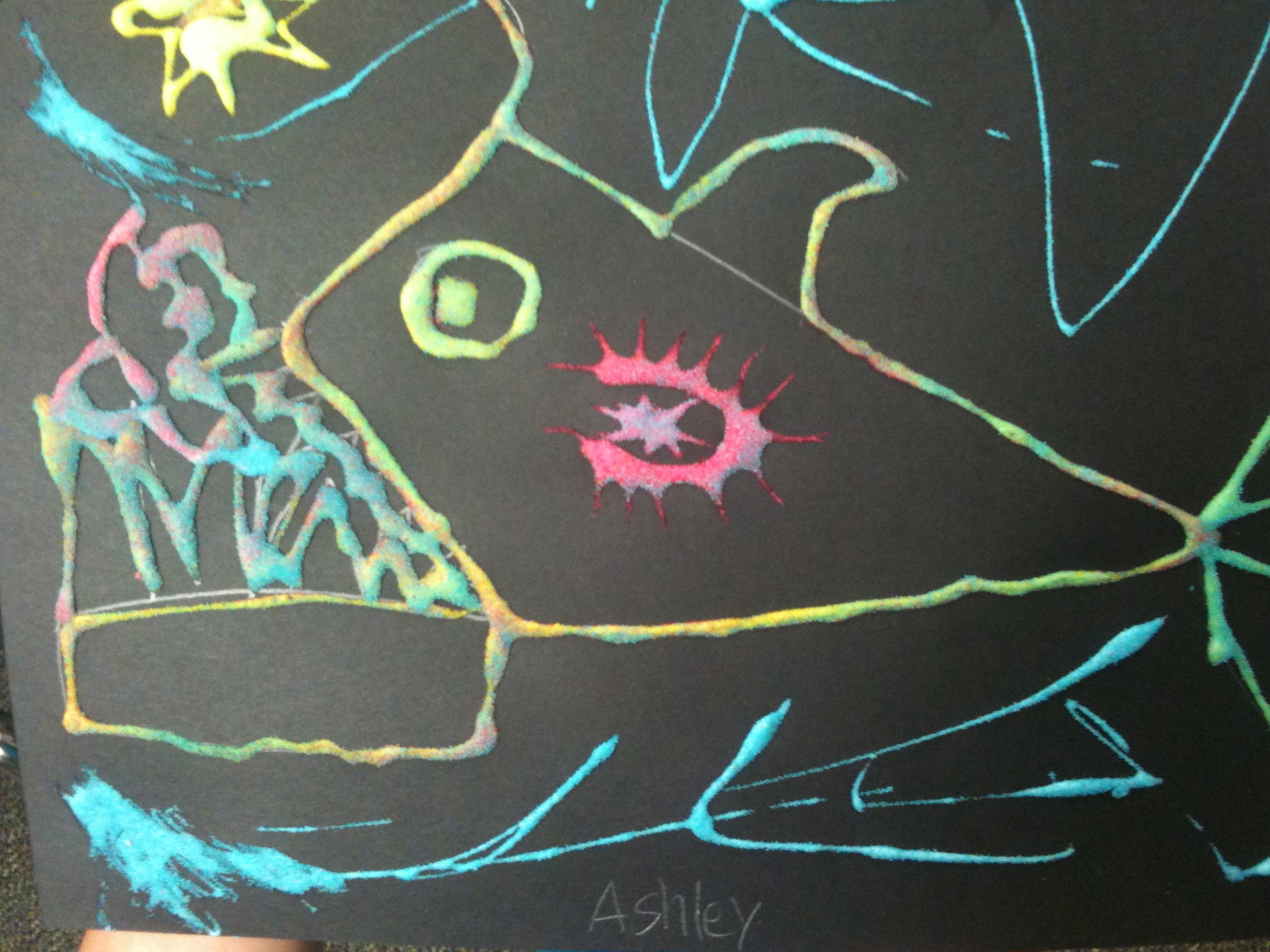
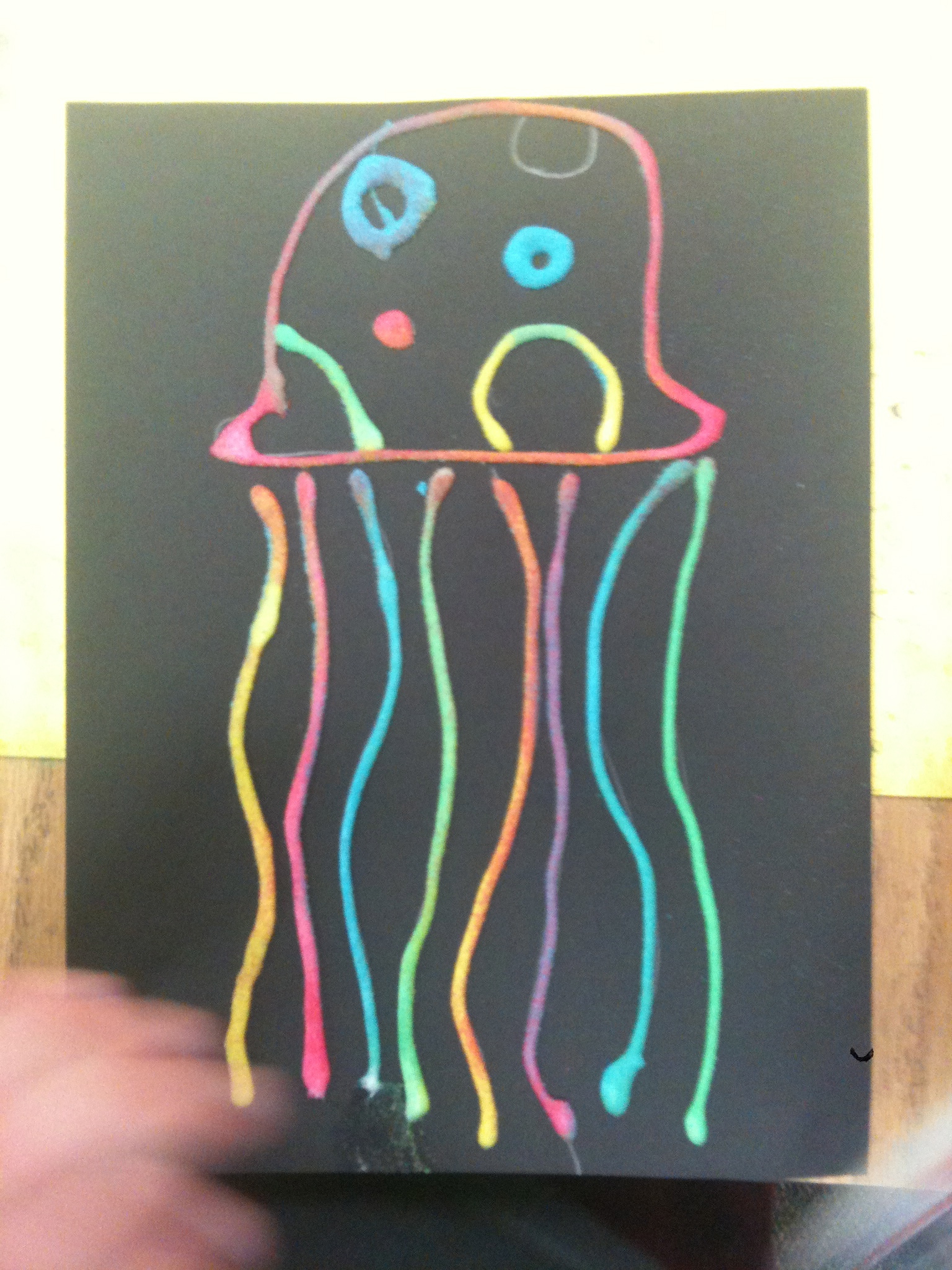
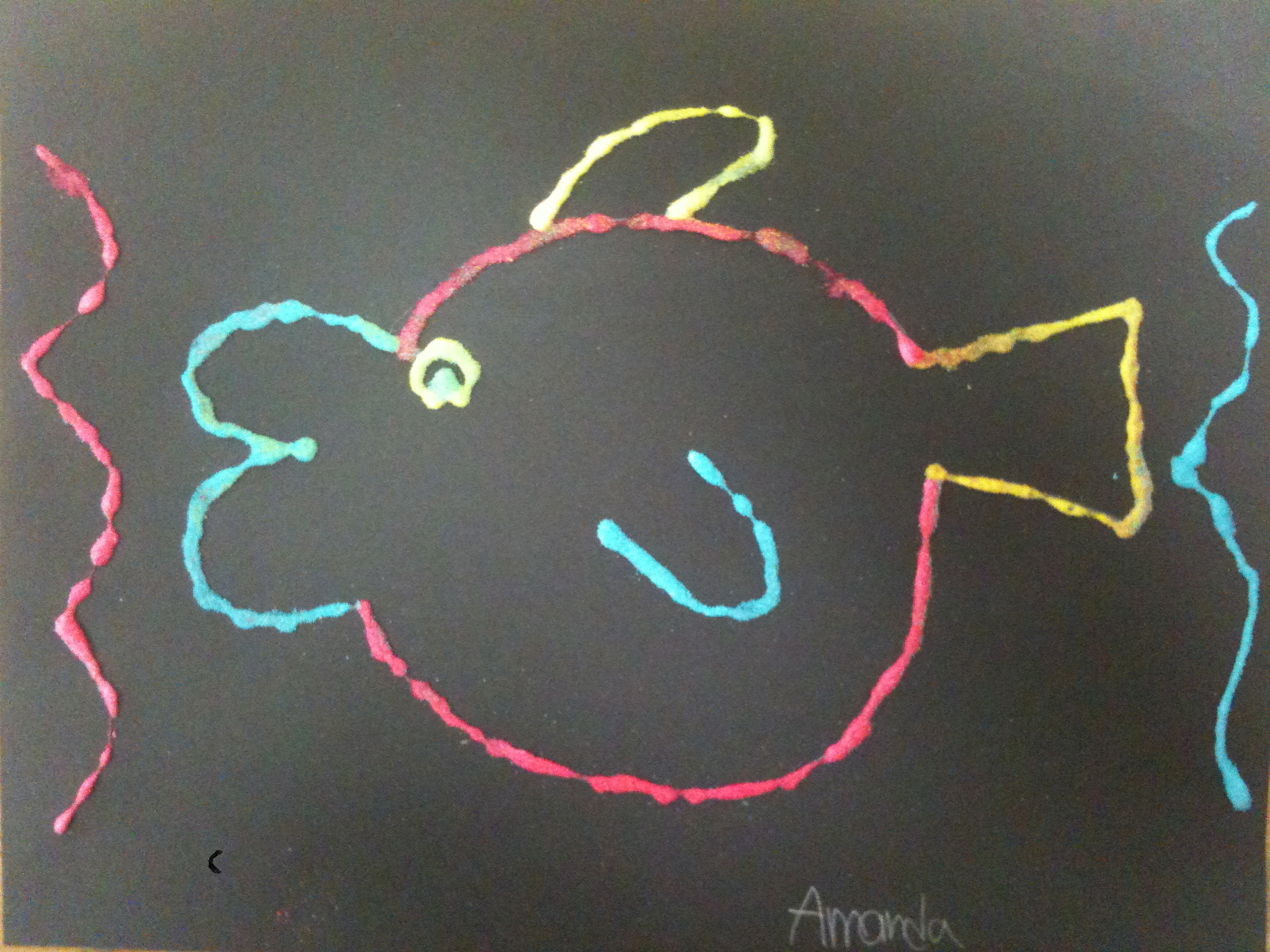
Summer is almost here. For our last project of the year, second graders made sea creature sand art. Allow two 40-minute sessions.

Materials:

  • white glue in squeeze bottles
  • colored sand (I used four different colors) in shallow trays
  • bamboo skewers
  • black construction paper, 9″x12″
  • pencils and sketch paper
  • reference photos of sea creatures for sketching

Day 1:

Students sketch various sea creatures using pencil and paper.

Day 2:

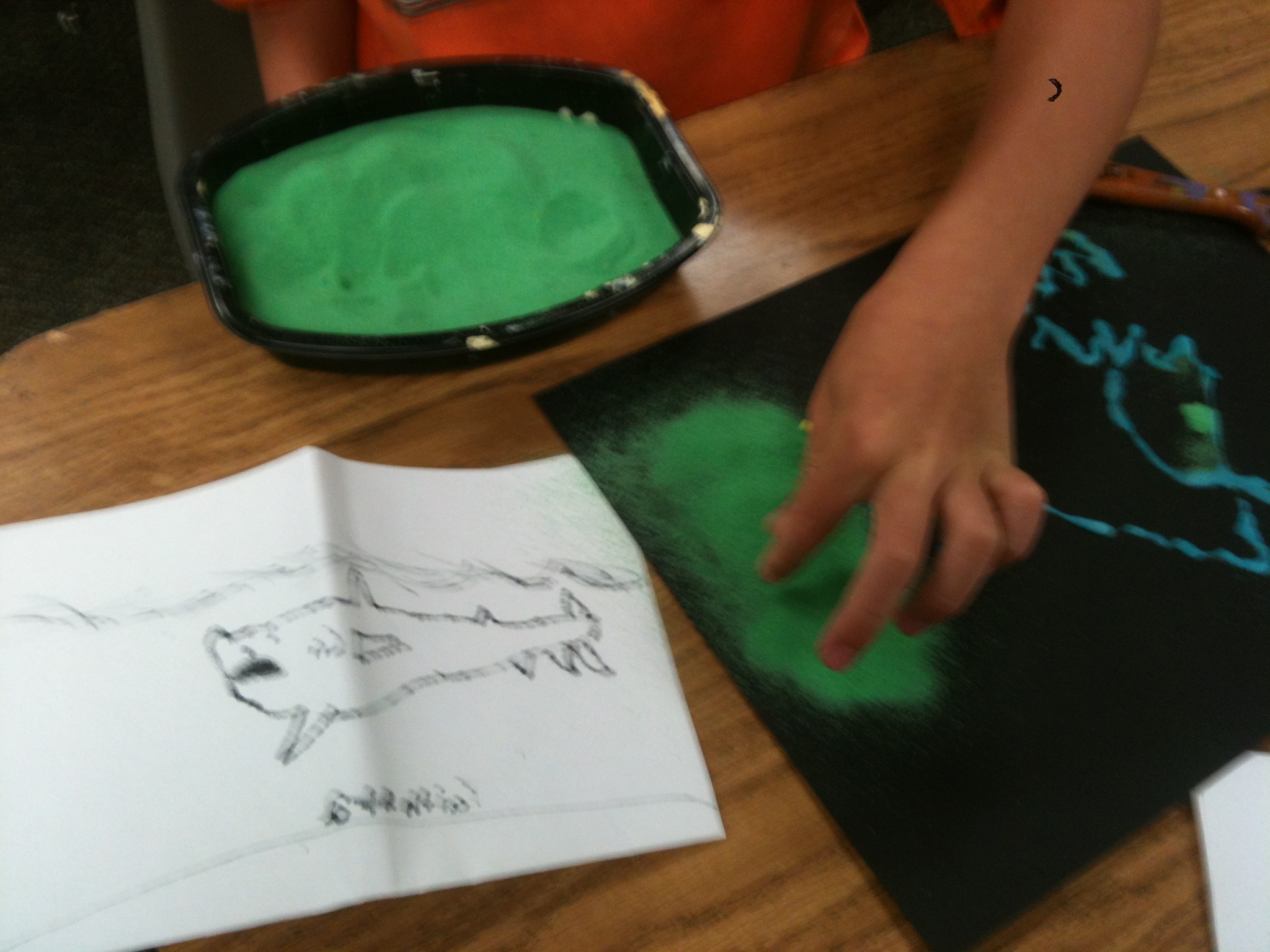
Each student picks a favorite sketch and draws it on black construction paper. Encourage kids to make simpler, larger designs.

Trace pencil lines with glue.
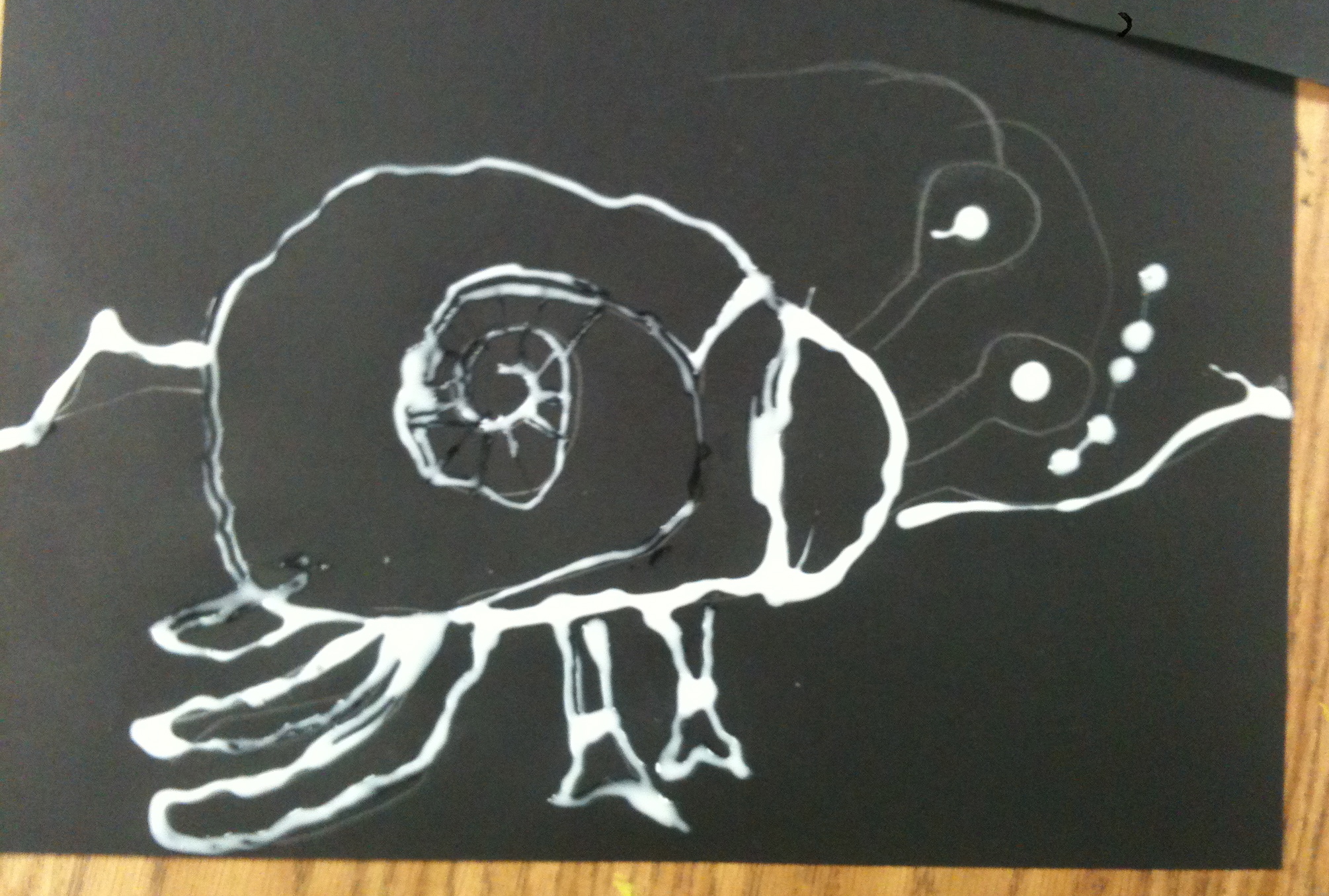
If kids make a glue mistake, they can try moving the glue around with a skewer.
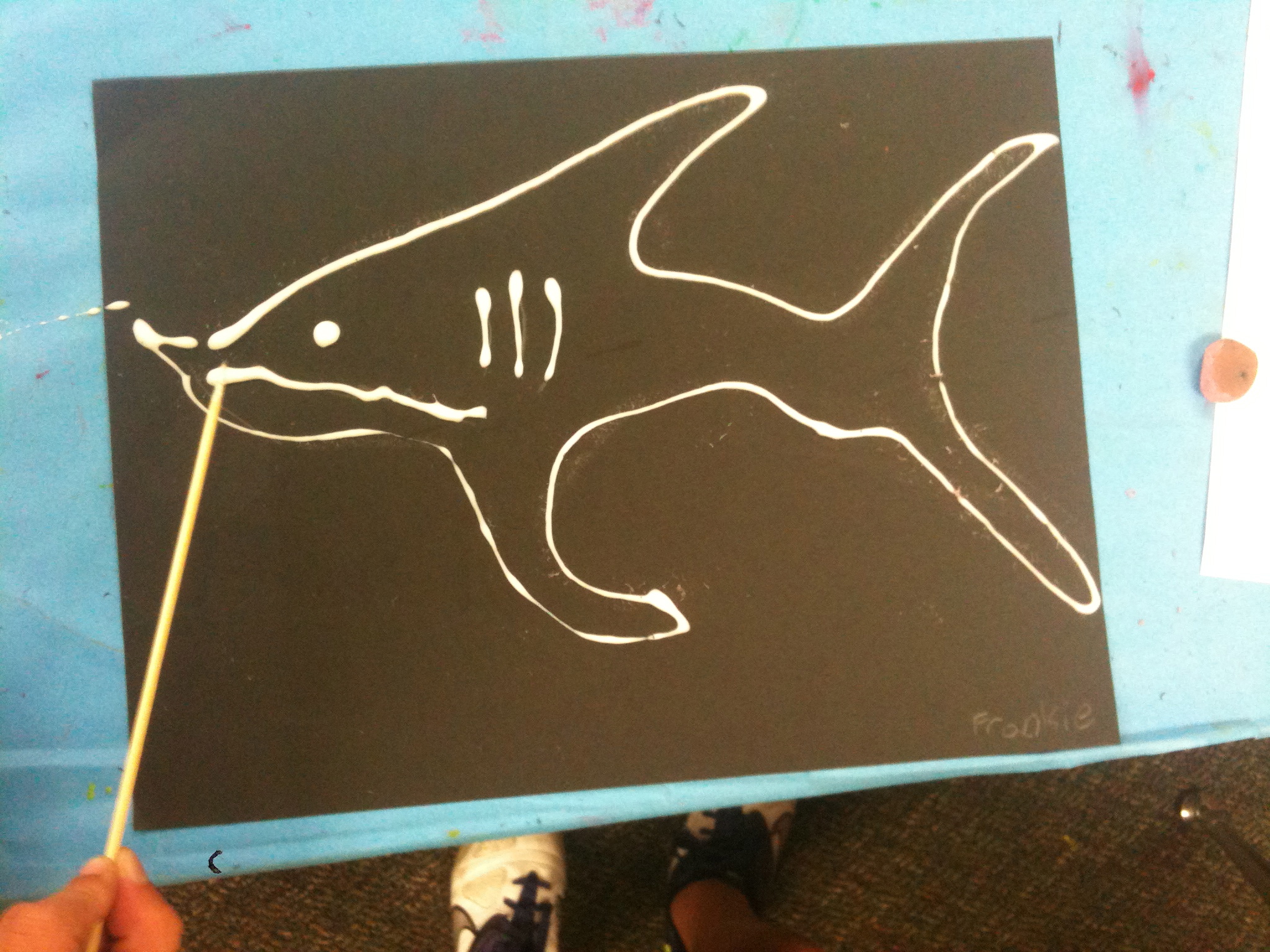
Sprinkle on one color of sand at a time.
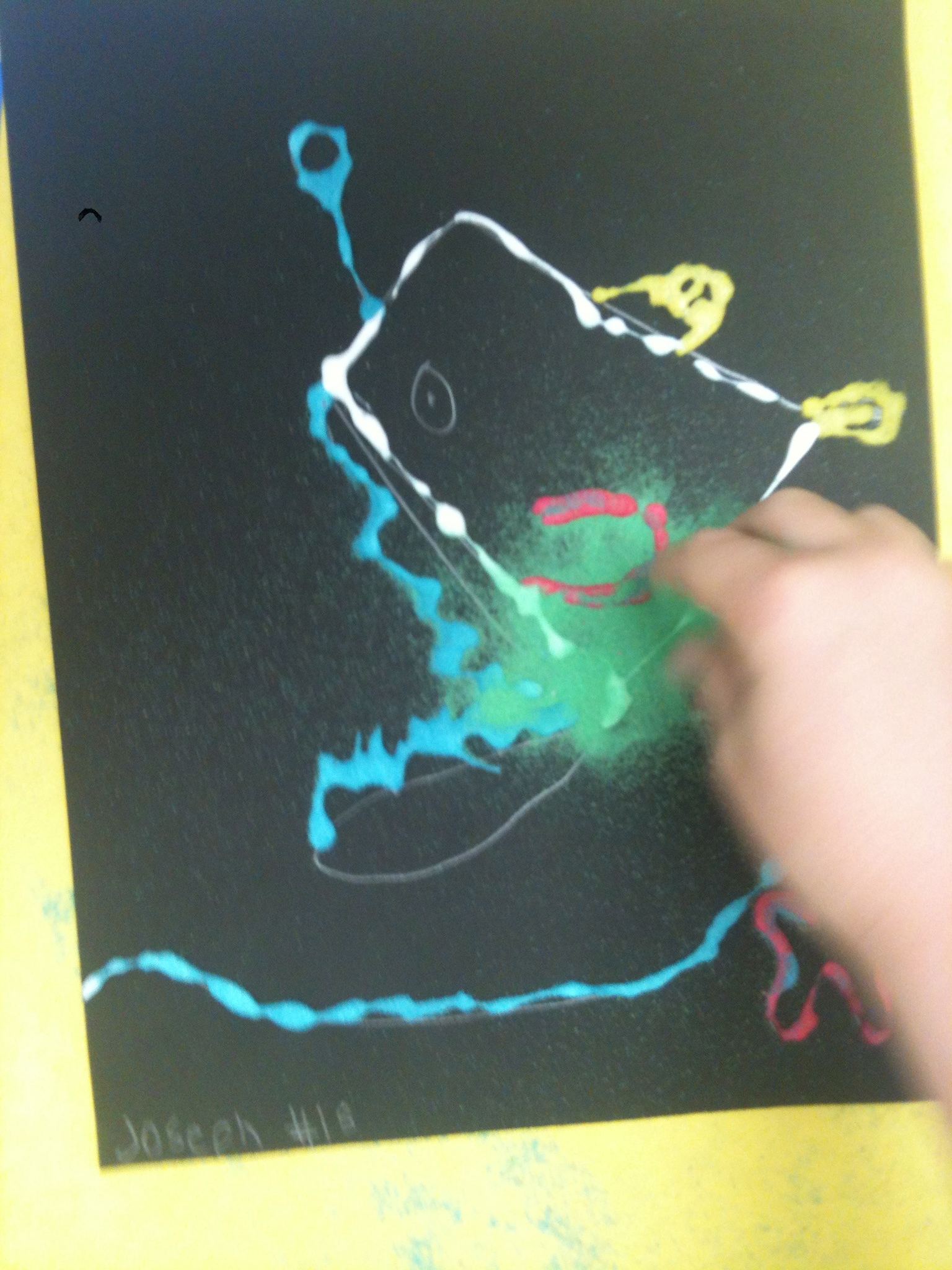
Then tap excess sand back into the tray.

When kids spill sand on the table….a house paint brush makes clean up easy.
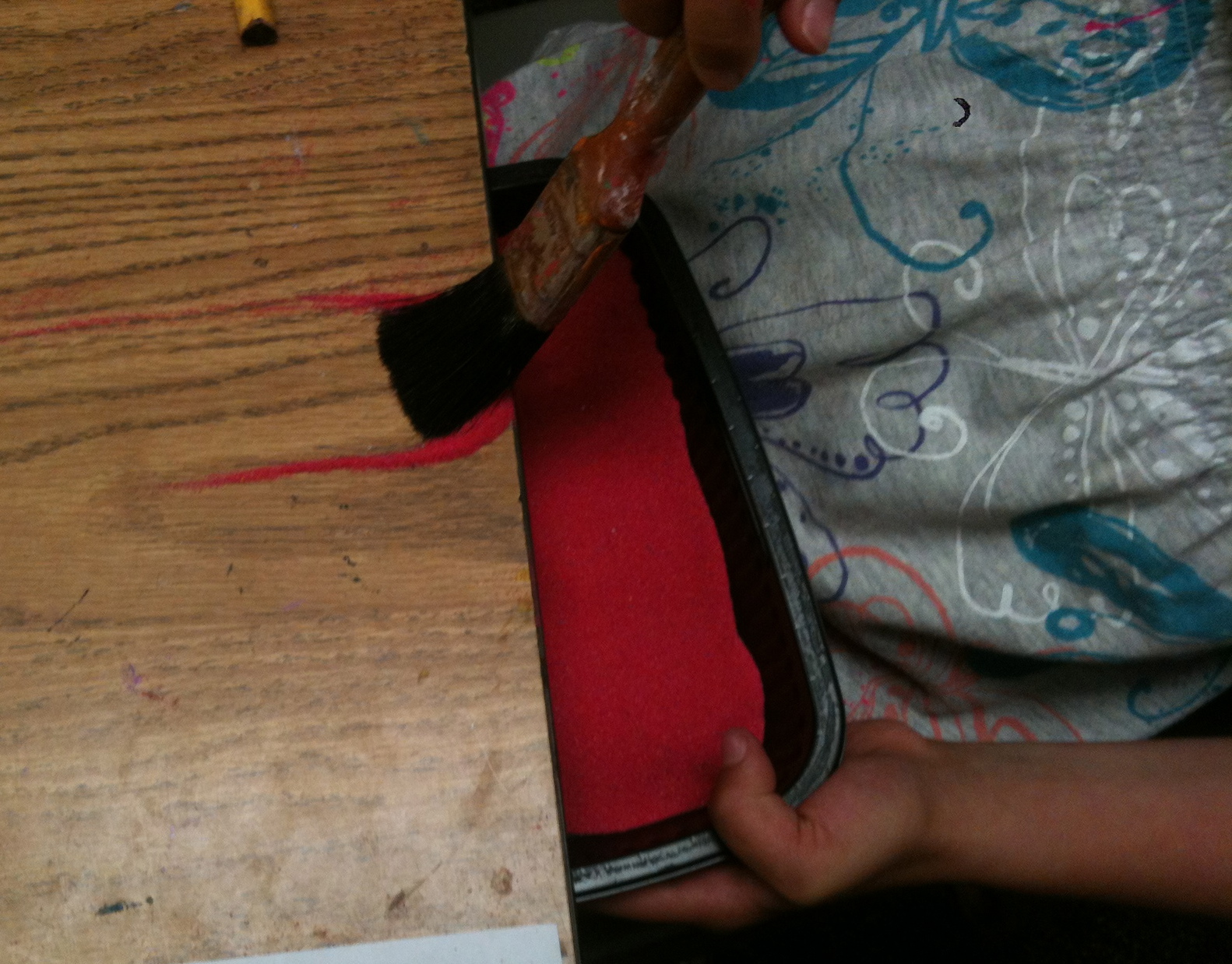
Kids love to clean up sand with a large paintbrush.

Completed work:
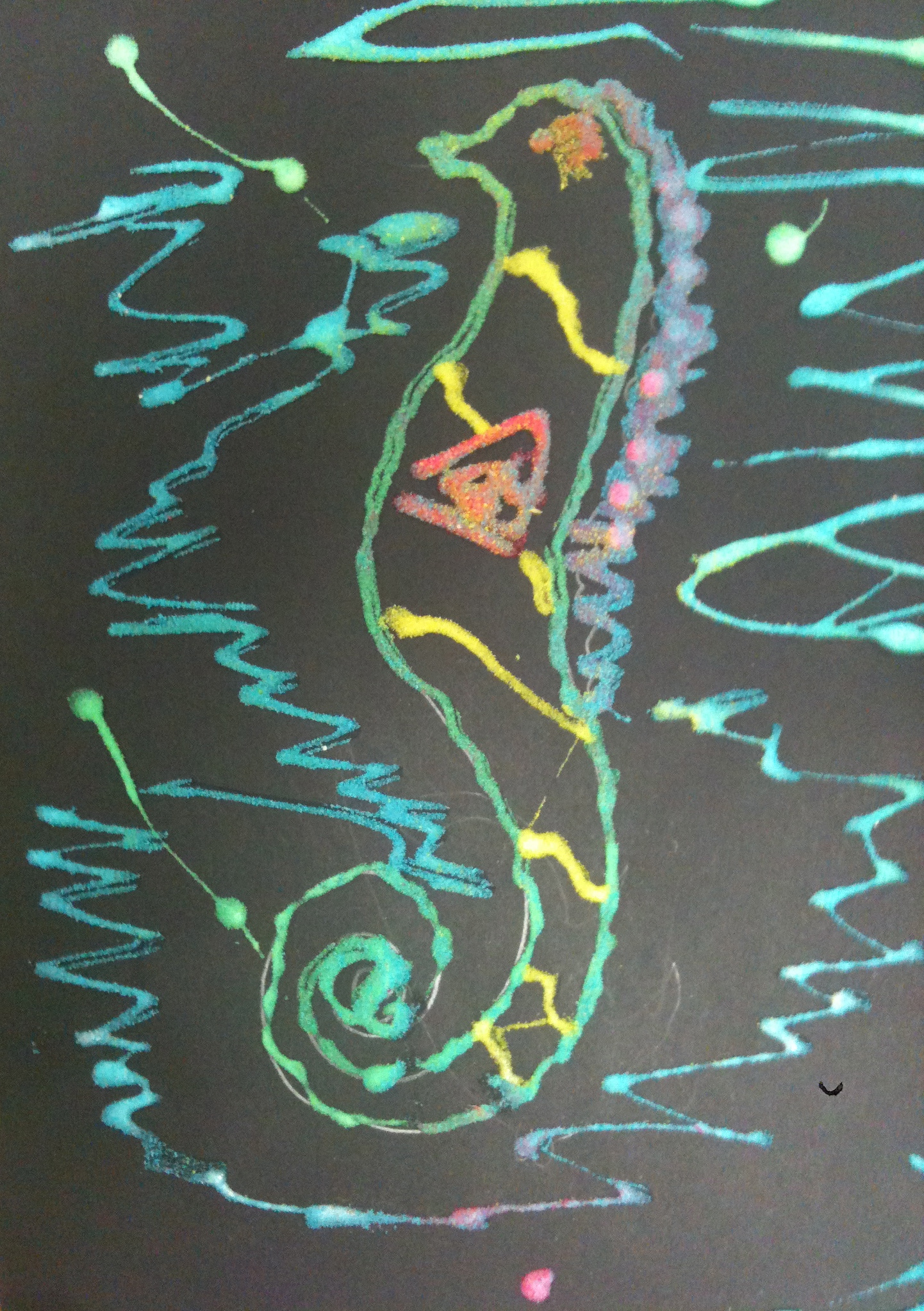
 

Clean up:

I store leftover sand in old apple juice jugs. At the end of class, I put a funnel in each jug and let the kids pour in their sand.

Seriously fun! This would also be a fun summer camp or vacation art project.

‘Under the Sea’ Bottle Cap Art

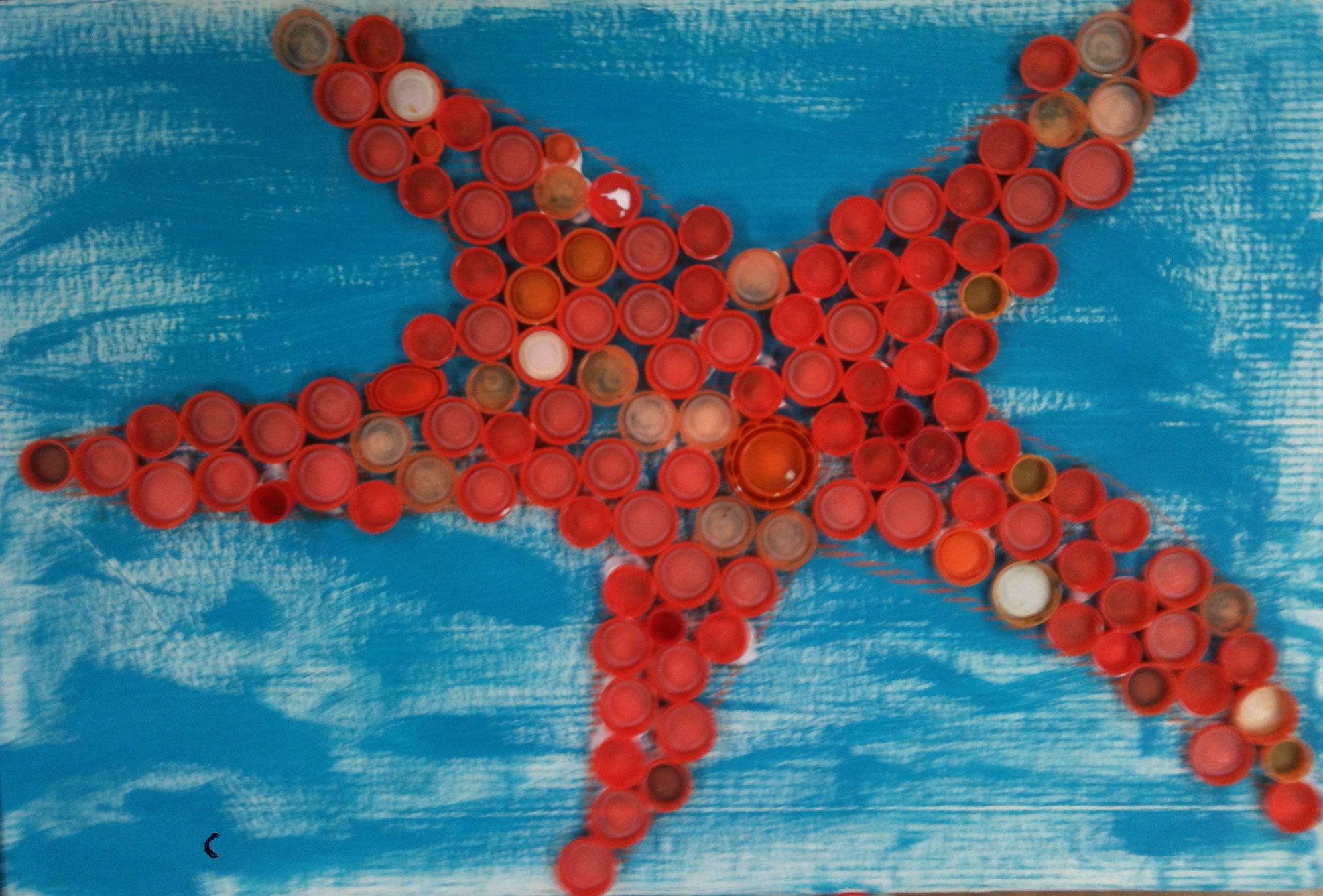
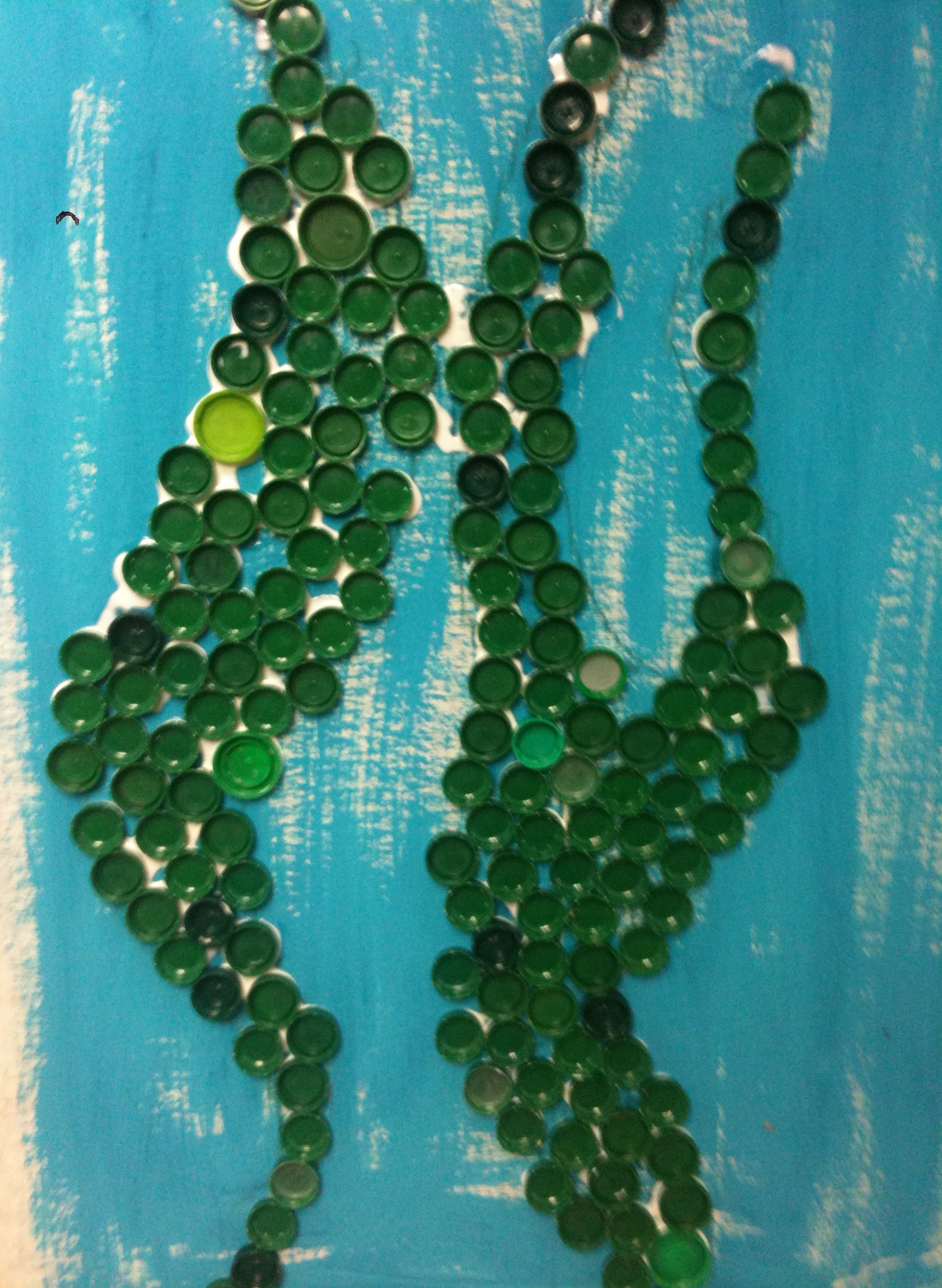
Bottle caps are abundant, colorful and free – a perfect art supply! Second graders worked in small groups to create bottle cap mosaics. We used an under sea theme to tie into our whole-school ocean education program. The art will be displayed in the school lobby.

Prep:

Paint foam core or cardboard if desired (I painted all the boards the same color – no matter how they are arranged, they will make a unified design).  Sort bottle caps by color. Lay out overall design on prepared board (I used a paper template or chalk for this step).

Assembly:

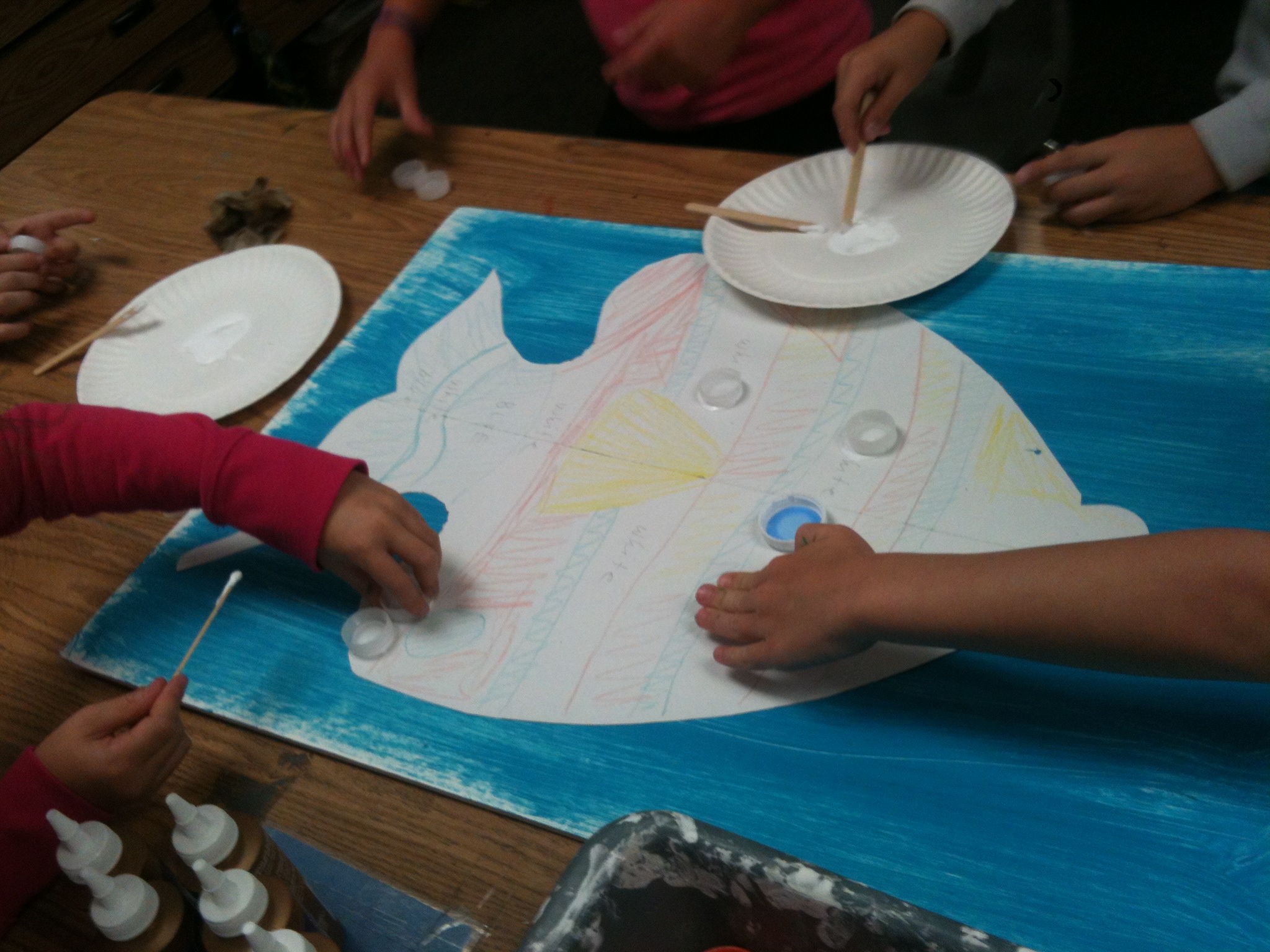
We used Aleene’s Tacky Glue to attach the caps to the painted cardboard. I squeezed out the glue onto paper plates and the kids applied it using popsicle sticks. Kids worked in groups of 6-7 to complete their murals.

Second graders glue bottle caps to mural.

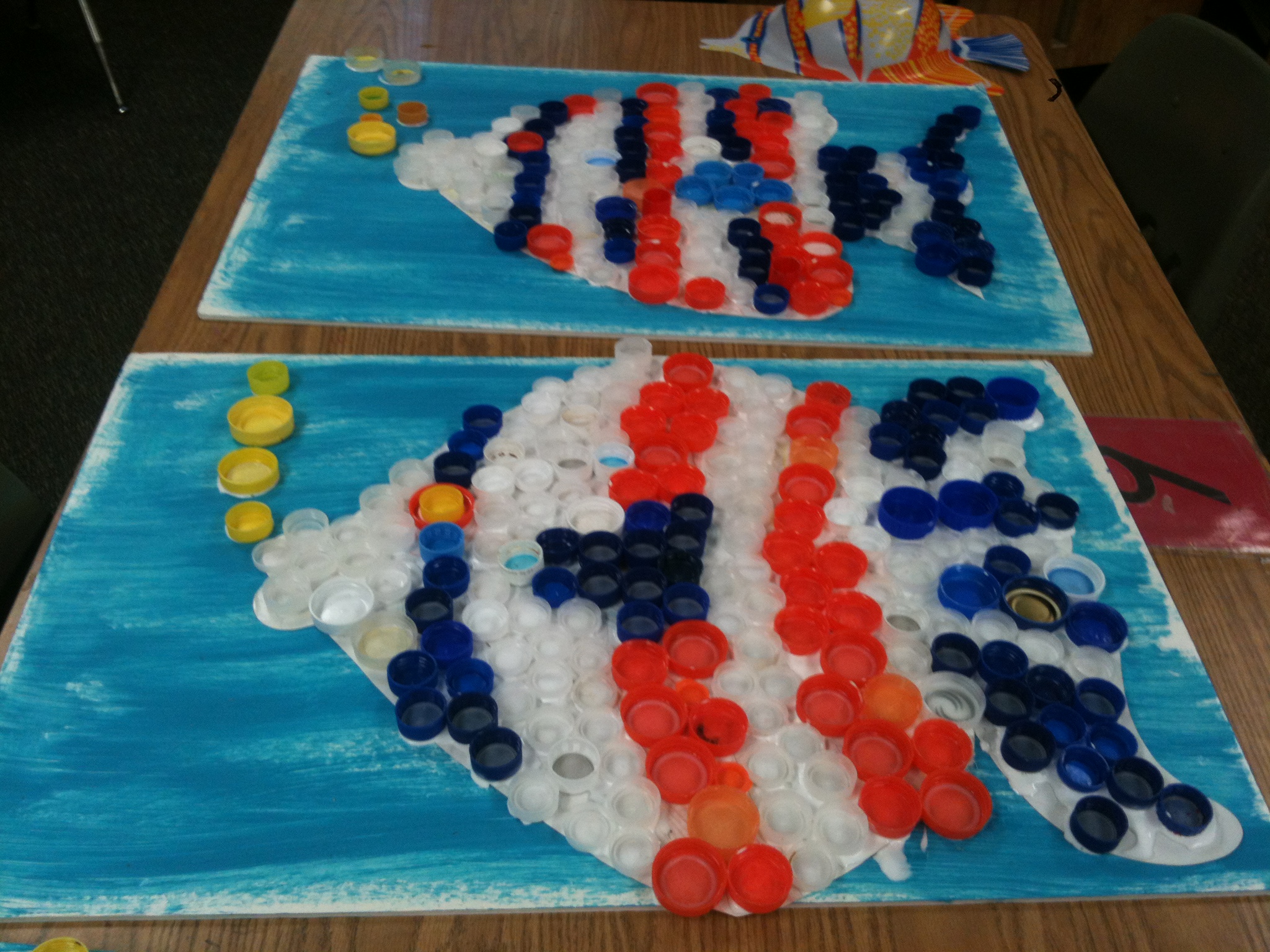
Each class had a unique design.

Each mural panel was made by a table of 6 second graders.

I planned the color scheme based on the most popular bottle caps colors. We had lots of water, soda and Gatorade caps in white, green, red, dark blue and orange. The least common colors were yellow and purple  – we had to use these rare colors as accents only (my dream of a giant purple octopus mural was out).

Are you looking for a permanent bottle cap mural? I bought the book, Bottle Cap, Little Bottle Cap by artist Michelle Stitzlein. The book has detailed directions for creating murals using boards, electric drills and special screws. Parents at our school are preparing outdoor art using this method right now, and I will post their photos next week.

Inspiration for this project comes from Adventures of an Art Teacher and Art With Mr. E. Thanks!

Modigliani Mother’s Day Portraits

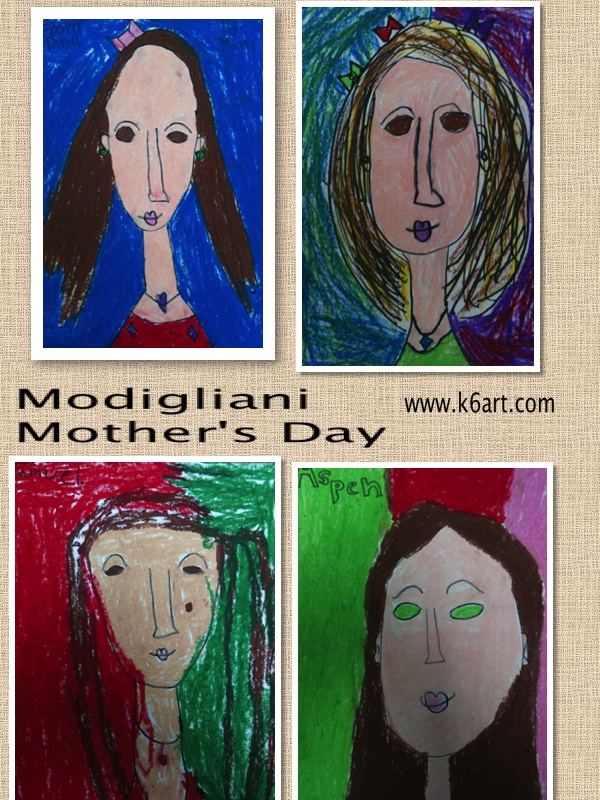
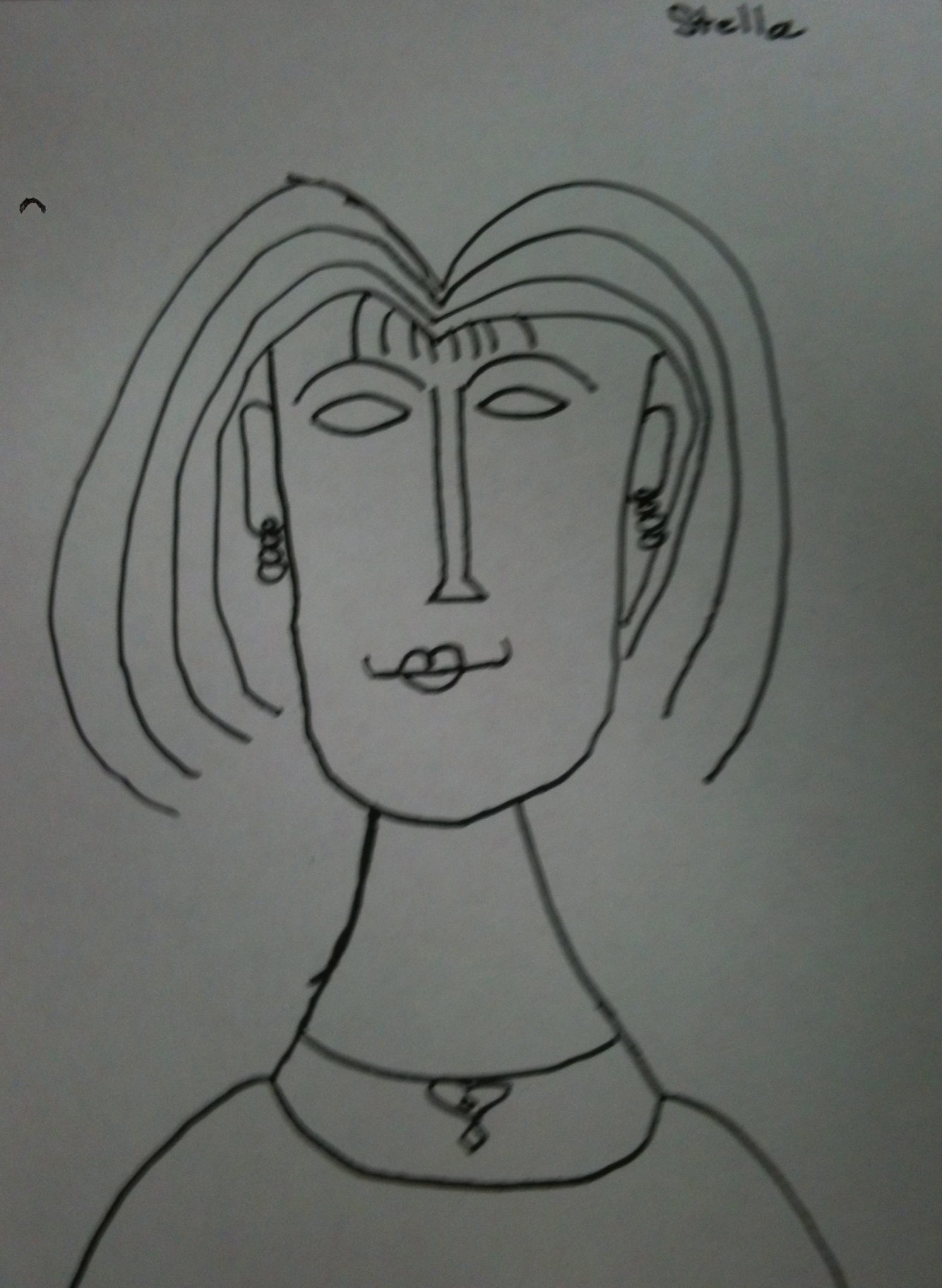
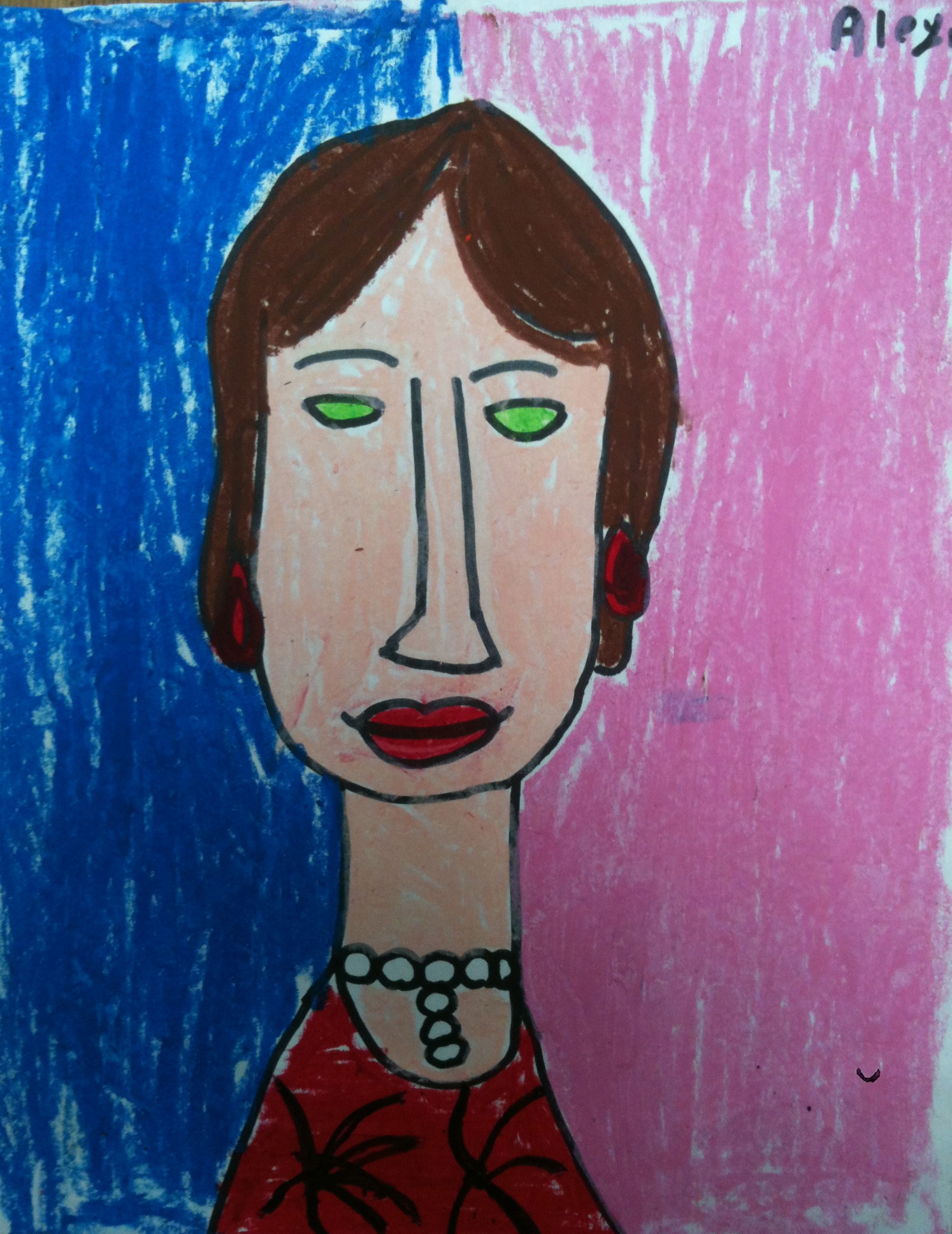
First grade students made Modigliani portraits with a twist! Instead of a self-portrait, we made portraits of our mothers. We began by viewing images of Modigliani’s portraits and talked about his distinct artistic style, specifically:

  • long neck
  • long, thin nose
  • blank, almond-shaped eyes
  • small, closed mouth

One of Modigliani's many portraits of Jeanne Hebuterne

I prepared this Modigliani PowerPoint, which you may find helpful.

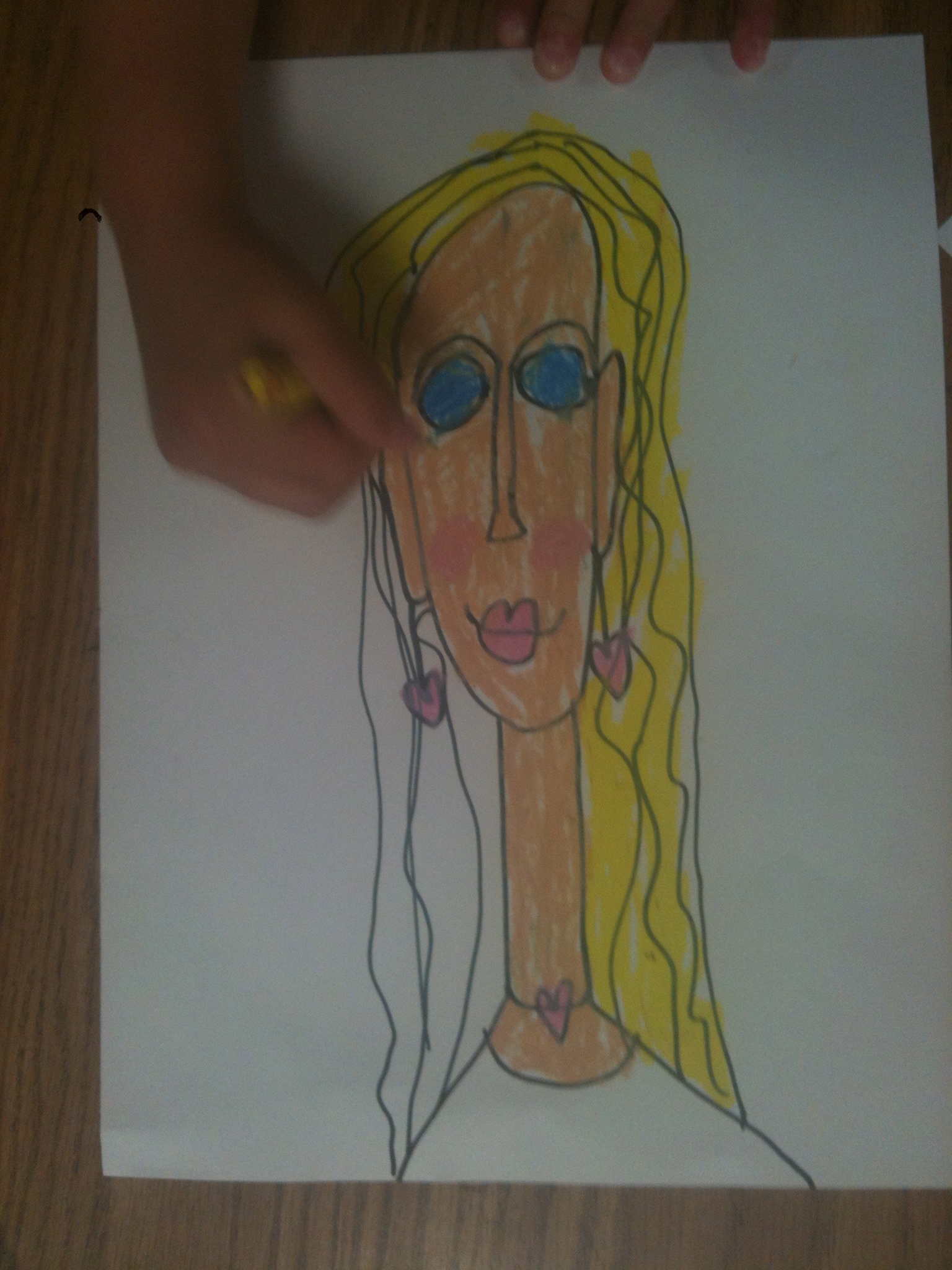
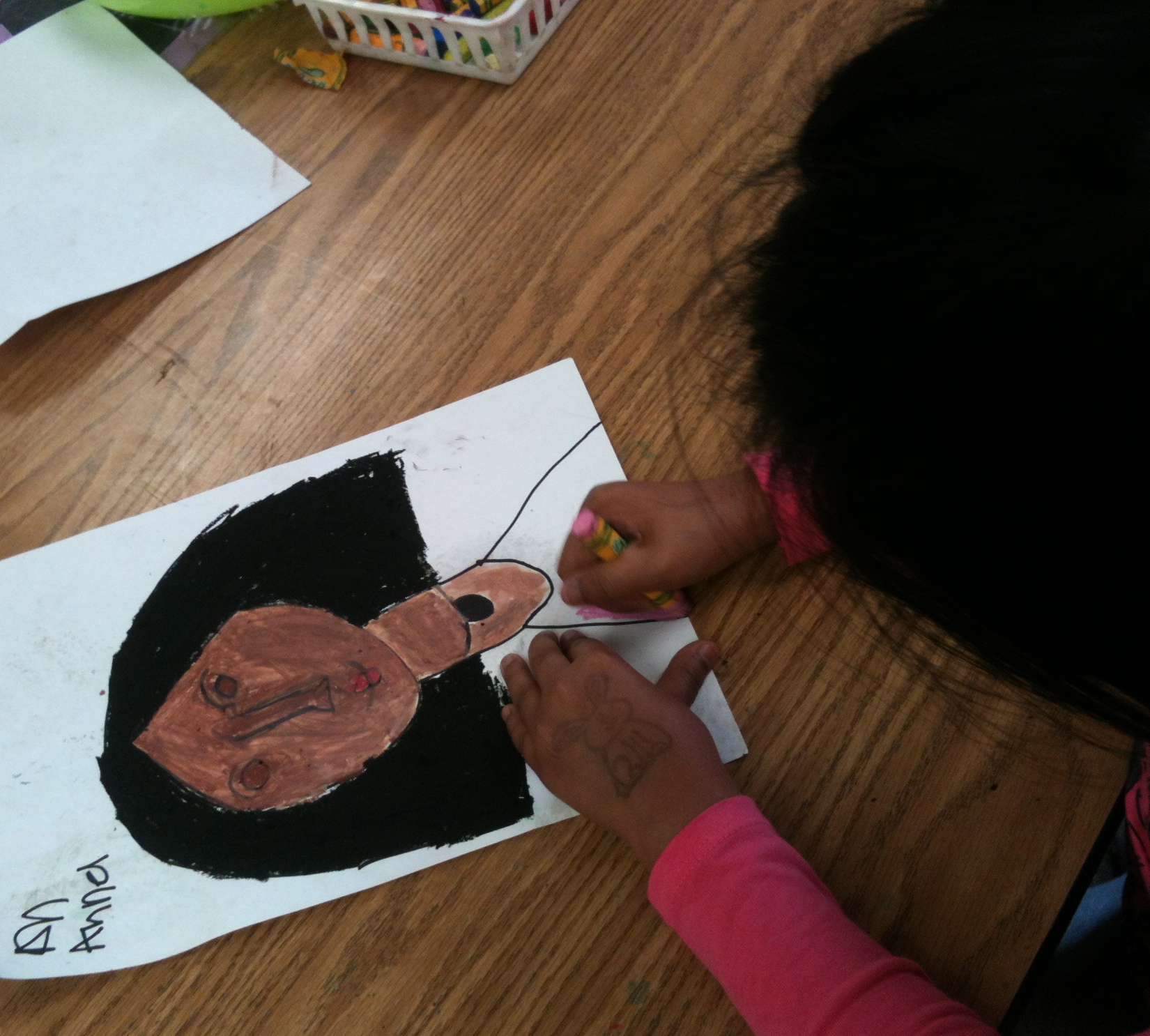
Students began the portrait using Sharpie on white paper, then colored with oil pastels. The portraits are distinguished by hair style and color, eye color, skin color and jewelry. After drawing and coloring their mothers, students made a simple solid background.

First graders make portraits of their mothers in the style of Modigliani. Allow 2-3 40-minute sessions.


I have been teaching this project for years and the mothers love it! The first grade teachers hang the framed portraits in their classrooms for the annual Mother’s Day Tea.

I adapted this lesson from a project in the book Drawing Faces (see illustration on cover). I think it is out of print. It is available used, or may be available at your library.

‘Tie-Dye’ Butterfly

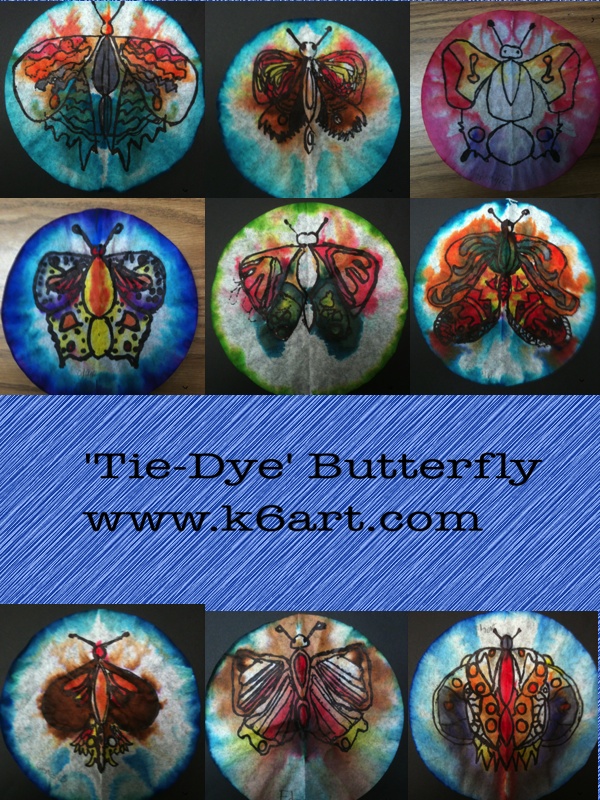
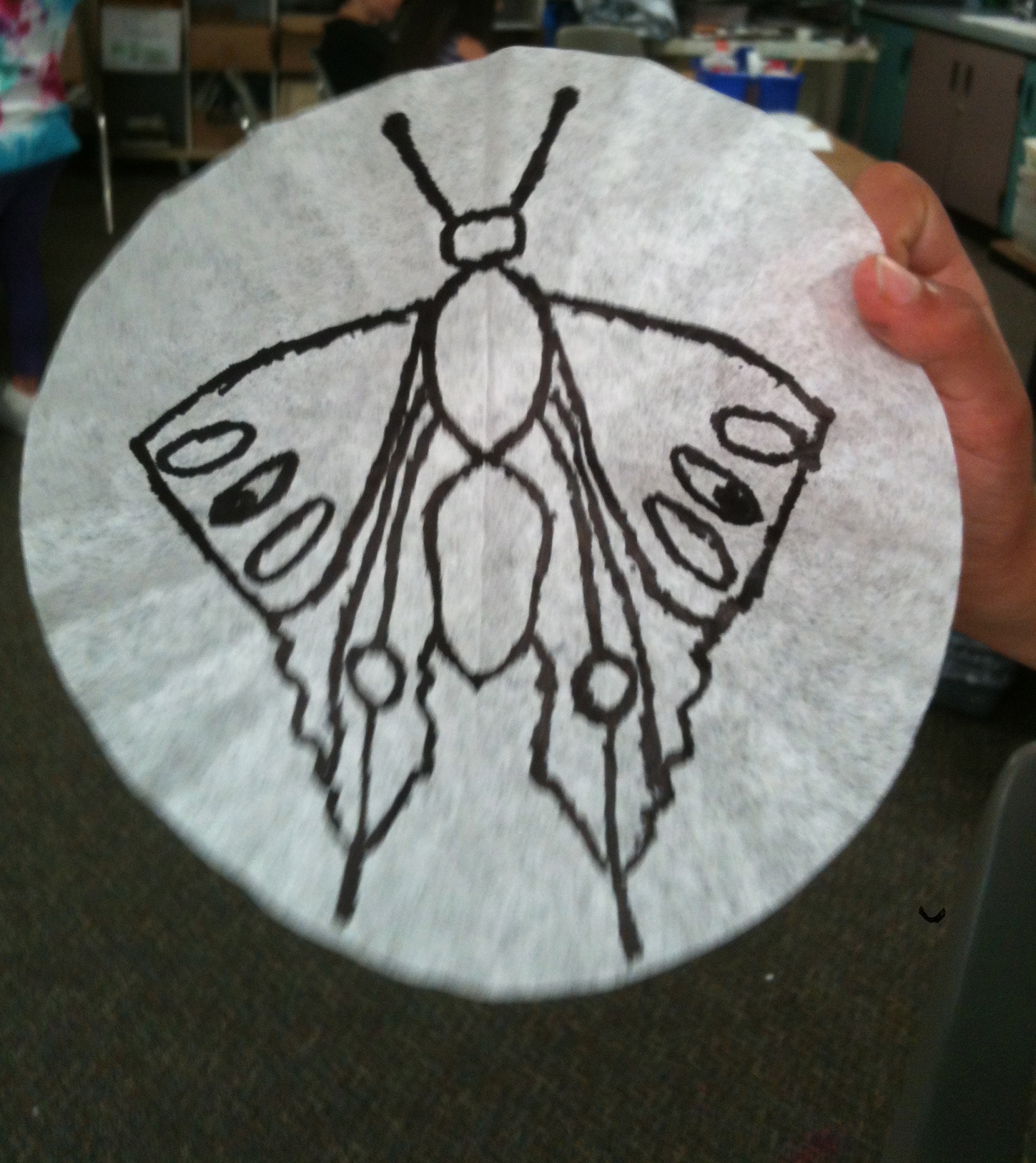
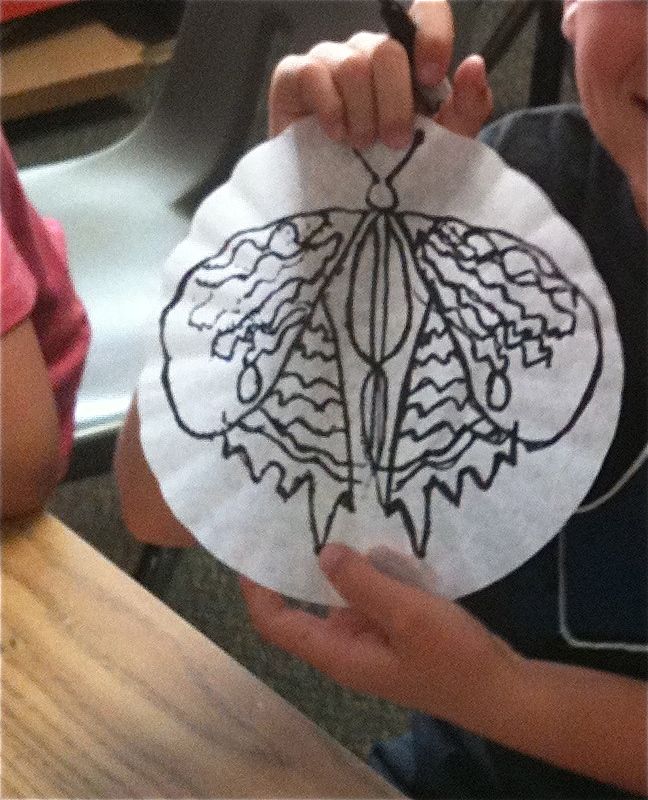
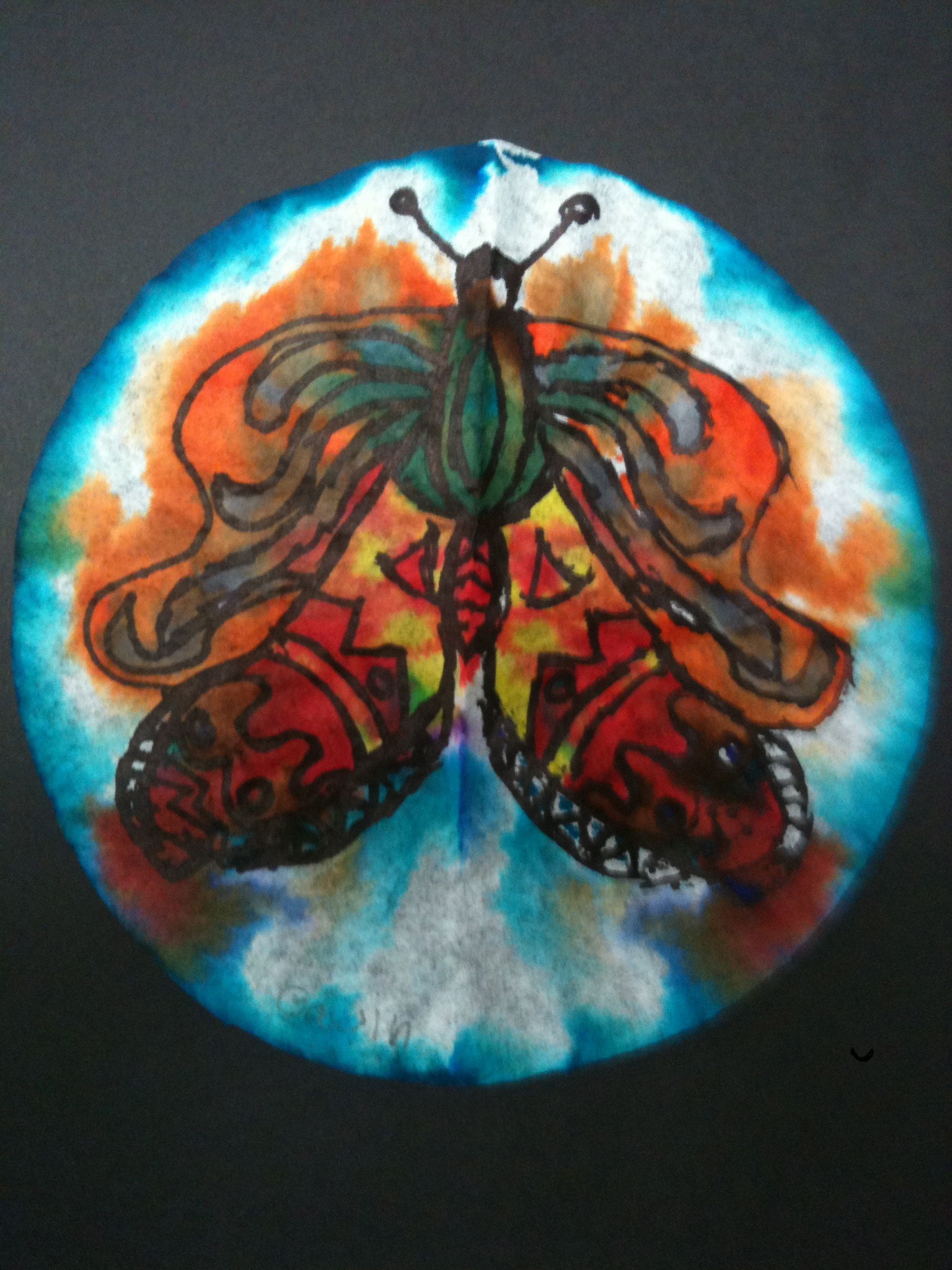
It’s spring! Time for a butterfly art project. How about a lesson that delivers perfect symmetry, color and fun in only one 40-minute session?

Materials:

  • round (basket) coffee filter paper, white (available at the dollar store)
  • Sharpies
  • watercolor markers (we used Crayolas)
  • pencils
  • spray bottle of water

Instructions:

  1. flatten coffee filter
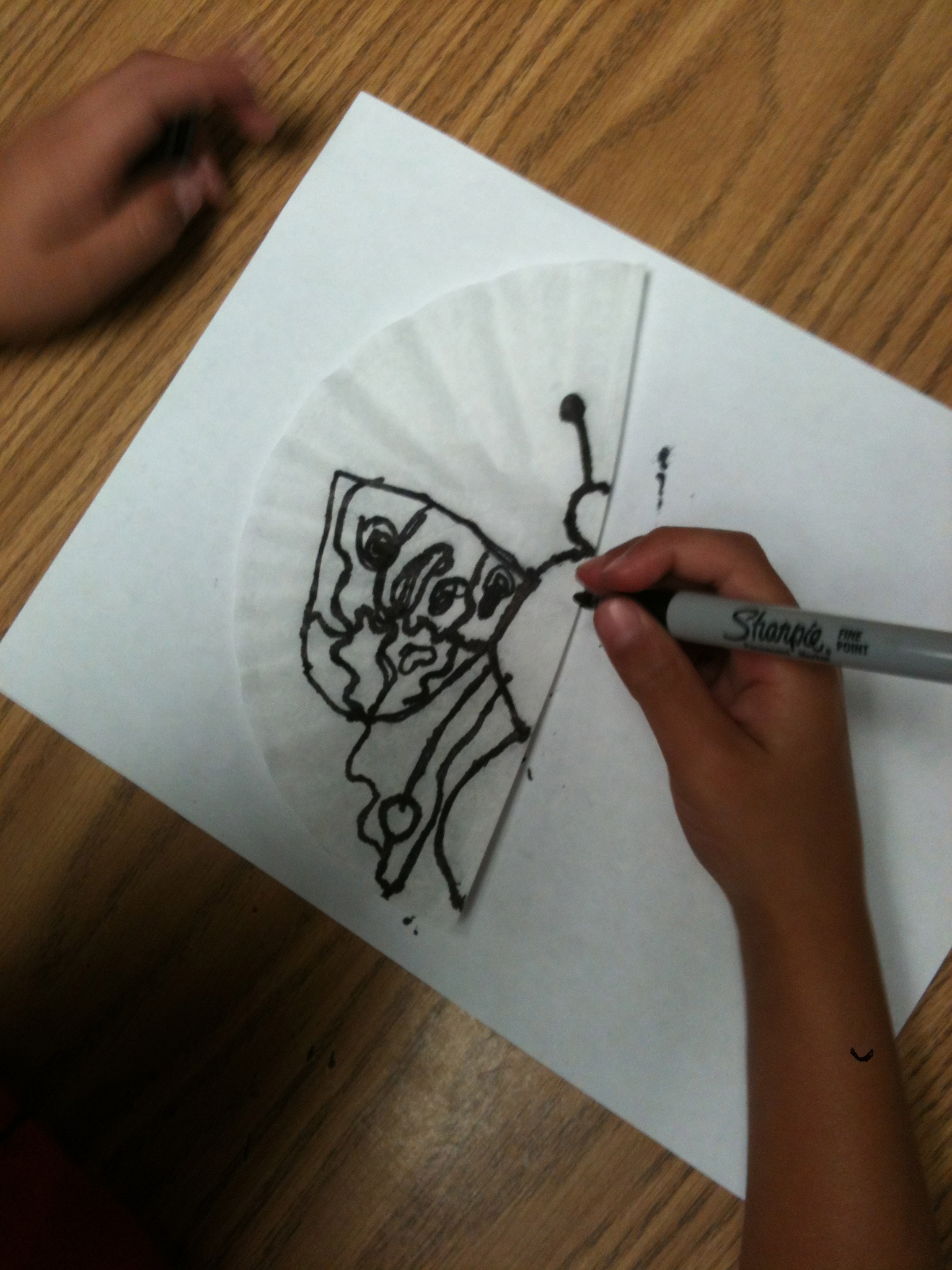
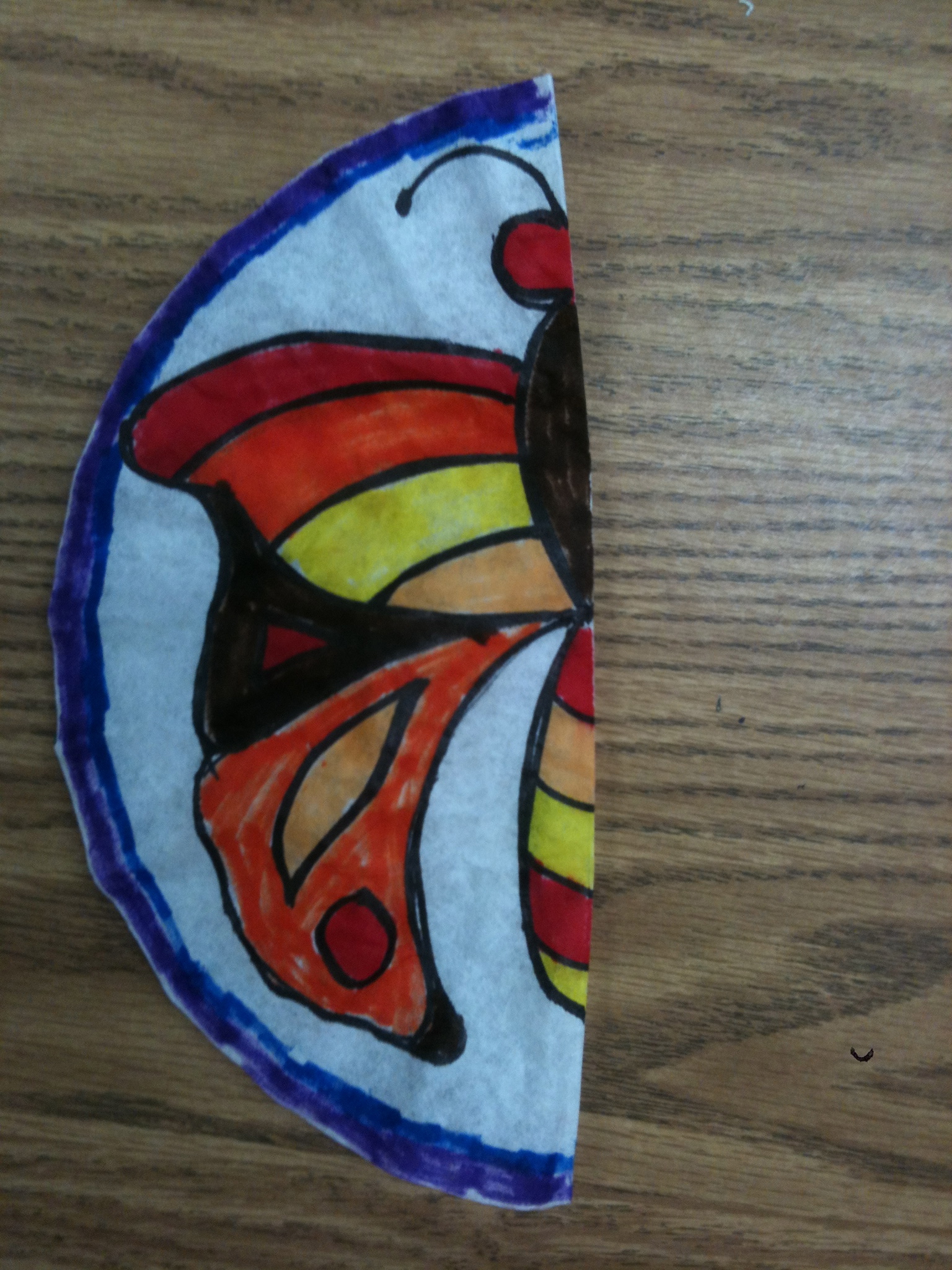
  2. fold filter in half.
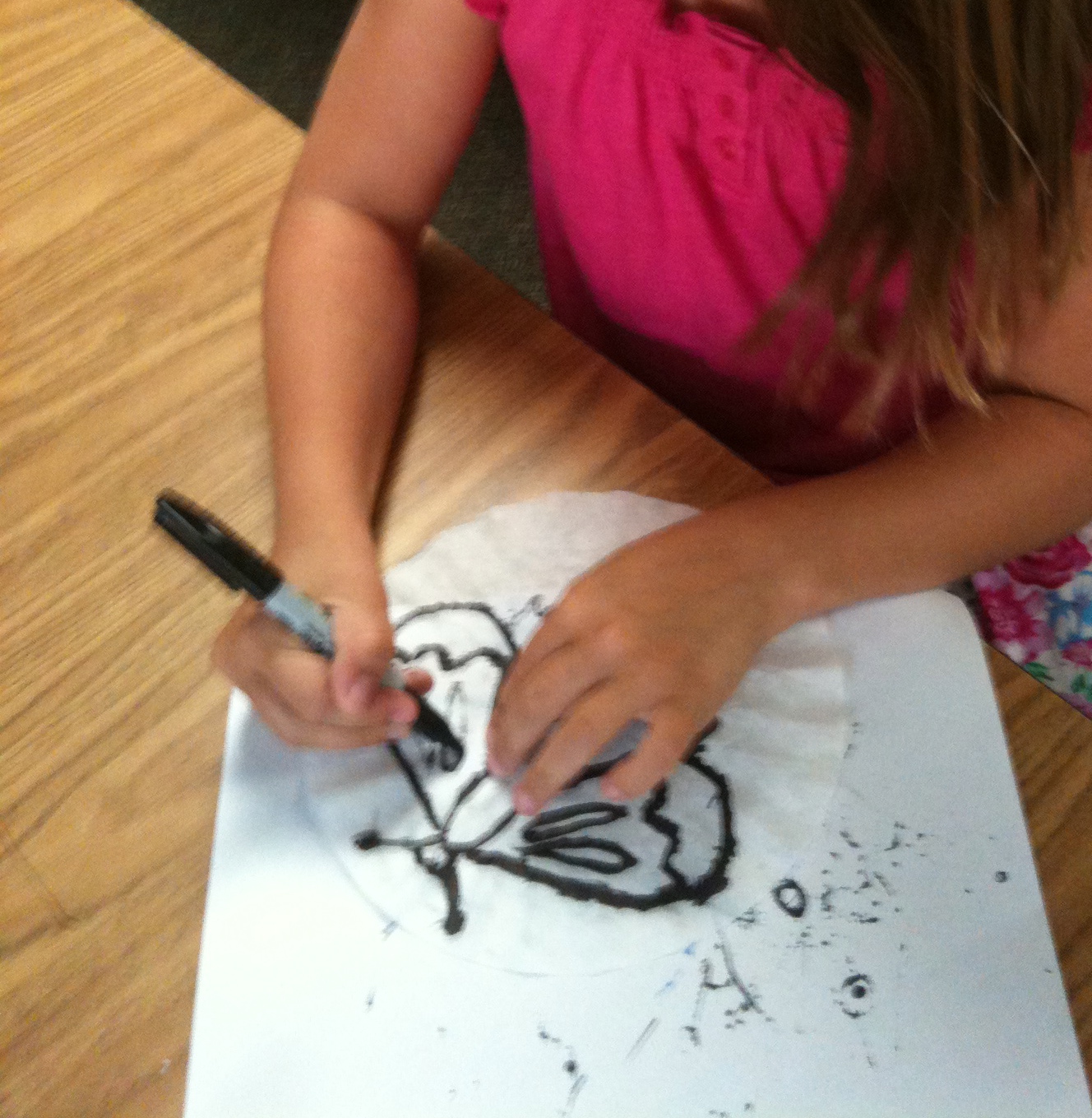
  3. use sharpie to draw 1/2 a butterfly on the folded paper.
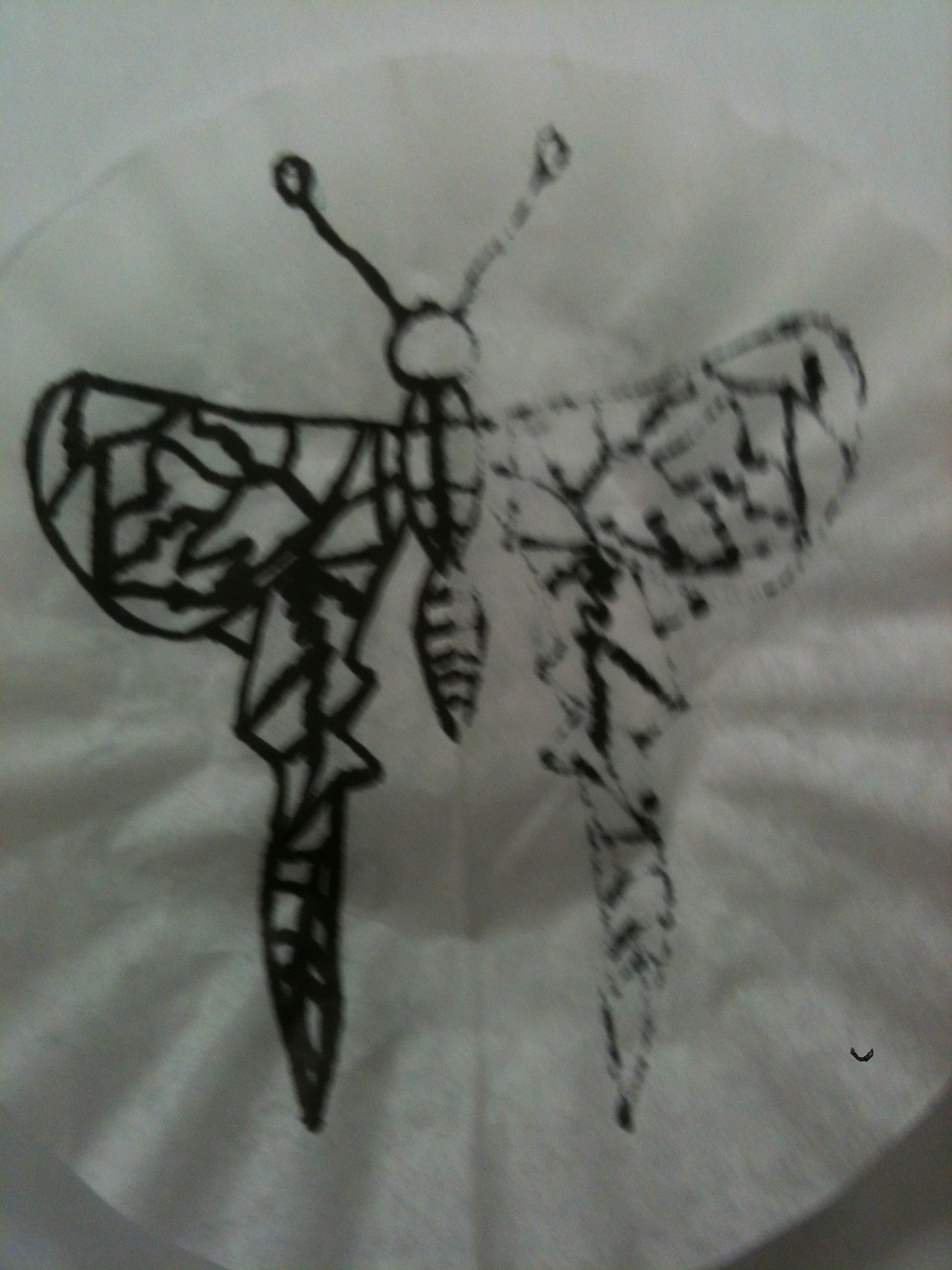
  4. Trace over all the Sharpie lines again (this helps transfer ink to the other half of the filter paper).
  5. Open the paper. 
  6. Retrace all the faint lines with Sharpie.
  7. Re-fold the paper into its original position.
  8. Color the folded paper using watercolor markers. We used warm and neutral colors for the butterfly, and cool colors for a band around the edge of the paper.
  9. Place folded filter paper on drying rack, colored side facing up.
  10. Spray with water. I try to saturate the paper (note: put some newspaper on the floor under your drying rack to catch the colored drips).
  11. Let dry before removing from rack.

I love the faux tie-dye effect created by the diffused color. I also love the round format. Bonus: coffee filters are available at the dollar store! So this project costs a couple of cents.

Second graders use Sharpie and crayola marker to make symmetric butterflies. Allow one 40 minute session.

Inspiration for the Sharpie/coffee filter/watercolor marker method goes to Kati Oetken at ARTASTIC!

More coffee filter art experiments on this post.

Thiebaud “Cakes” Mural (and more!)

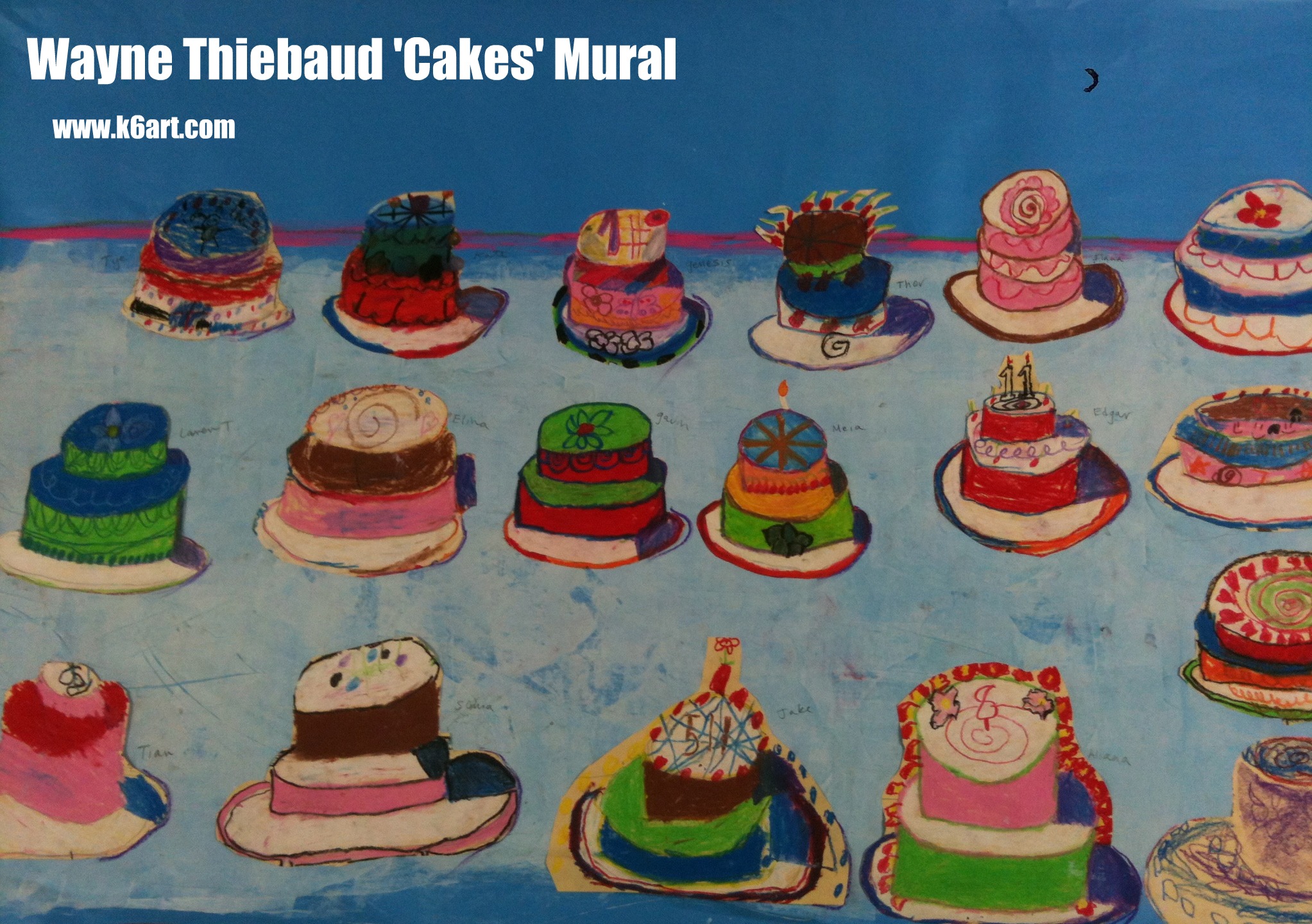
This is a universal truth:  kids love dessert.  Second grade recently completed their Wayne Thiebaud group art mural based on Thiebaud’s famous artwork, “Cakes”.

We began with my Wayne Thiebaud Powerpoint. We discussed repetition of simple shapes, variety, use of thick paint, horizon line and shadow. This year we also discussed halation – the vibrant lines of color Thiebaud uses to outline his work. If you are unfamiliar with halation read this excellent Thiebaud post on Art for Small Hands.

Next we watched a great 7-minute long Thiebaud video from CBS this Morning.  Here is the link.

Materials:

  • Drawing paper, 9″x12″
  • pencil and eraser
  • oil pastels
  • scissors
  • glue stick
  • bulletin board paper (allow 5 foot length for 22 students)
  • tempera

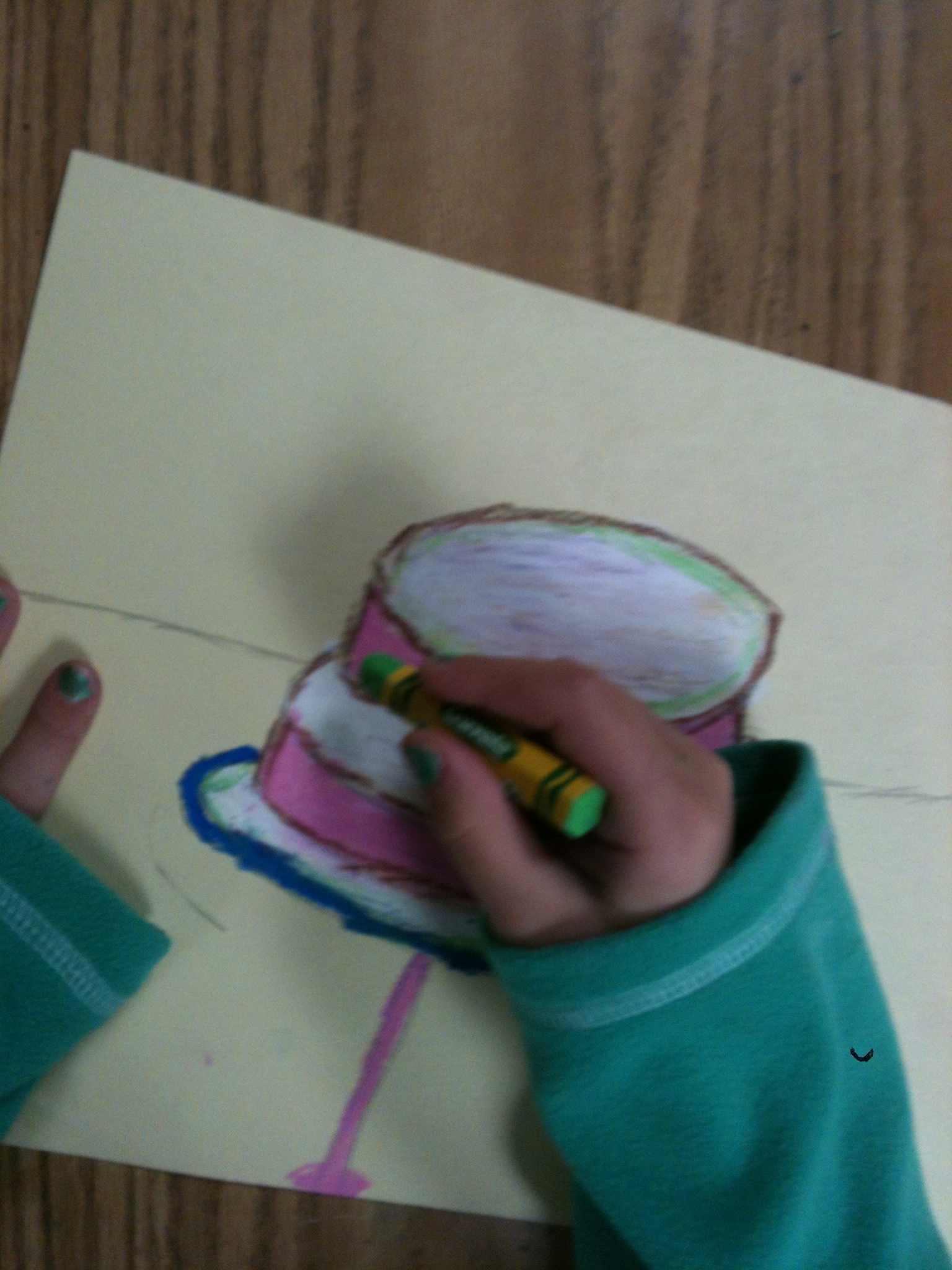
Students drew the basic cylinder cake first in pencil, then in oil pastel. We outlined in bright colors.  Because we were making a mural, for consistency students added purple shadows on the right side of their art.

The kids had a fabulous time ‘decorating’ their cakes, again with oil pastel. We had a ‘no words’ rule, but numbers were OK.

Students outline their cakes with vibrant colors

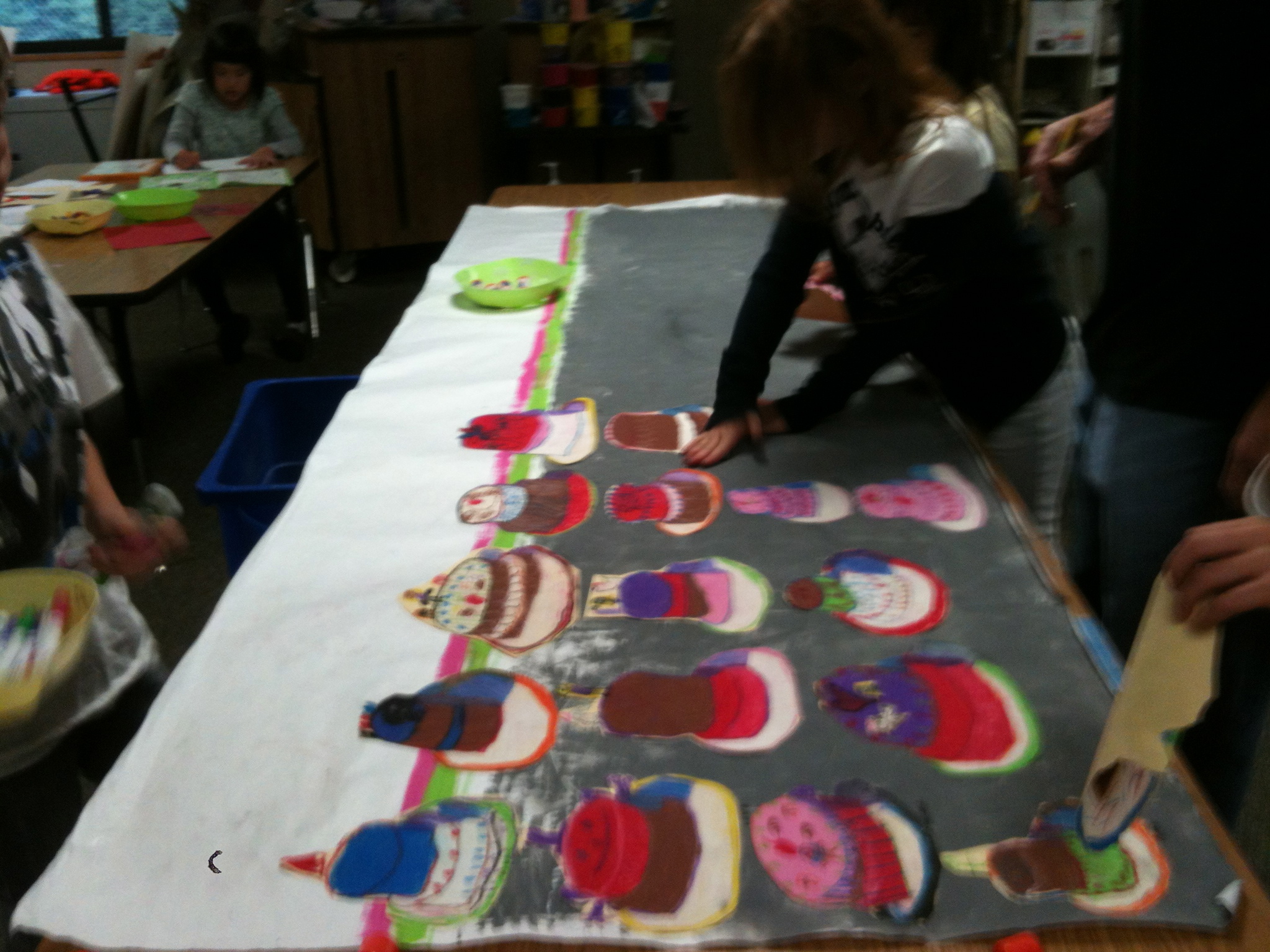
Students cut out their cakes and covered the backs with glue stick.  I arranged the cakes on painted bulletin board roll paper.

Assembling the mural

I made two murals: a 9 foot mural for 45 cakes, and a 5 foot mural for 22 cakes.  Next year I will make one 5-foot mural per class as the big one was beautiful but too unwieldy.

After the art show I will cut apart the mural. The second graders will trim and mount their cakes onto 12″x18″construction paper.

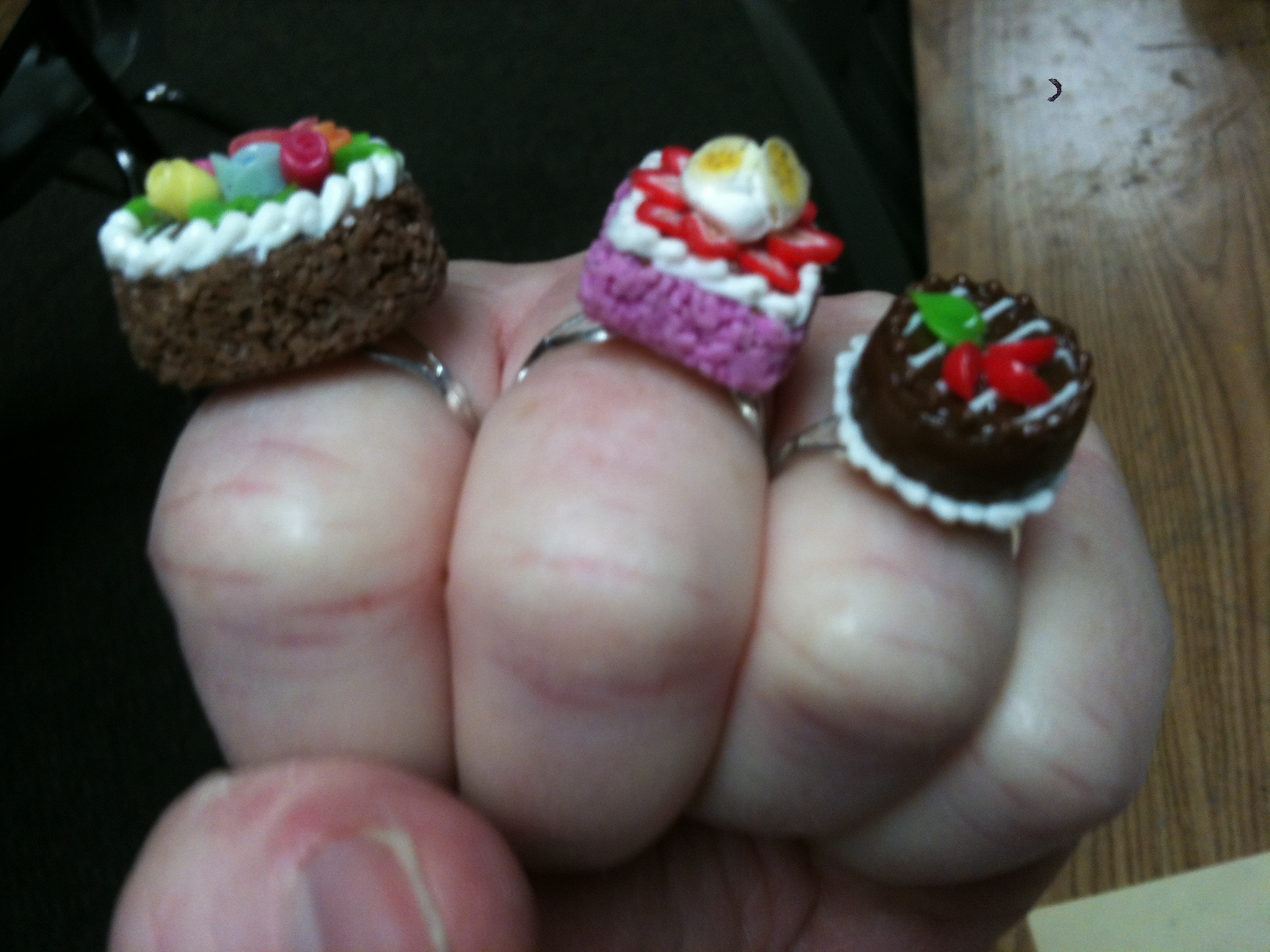
The perfect jewelry for any Thiebaud lesson 🙂

Have fun!

P.S. Want to try a digital Thibaud art activity? Try the National Gallery of Art’s

Thiebaud ‘cake maker’ interactive

UPDATE: NEW! Click here for my new lesson, Wayne Thiebaud Geometric Desserts. New video and Common Core connections.


Related Posts Plugin for WordPress, Blogger...