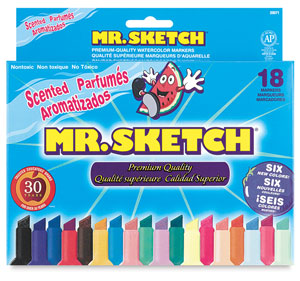
Grab your markers! Show this fabulous video from Handimania and your students will create beautiful 3D hand art. I will use chisel-tip markers (Mr. Sketch brand is good) and Crayola markers next time I teach this project.
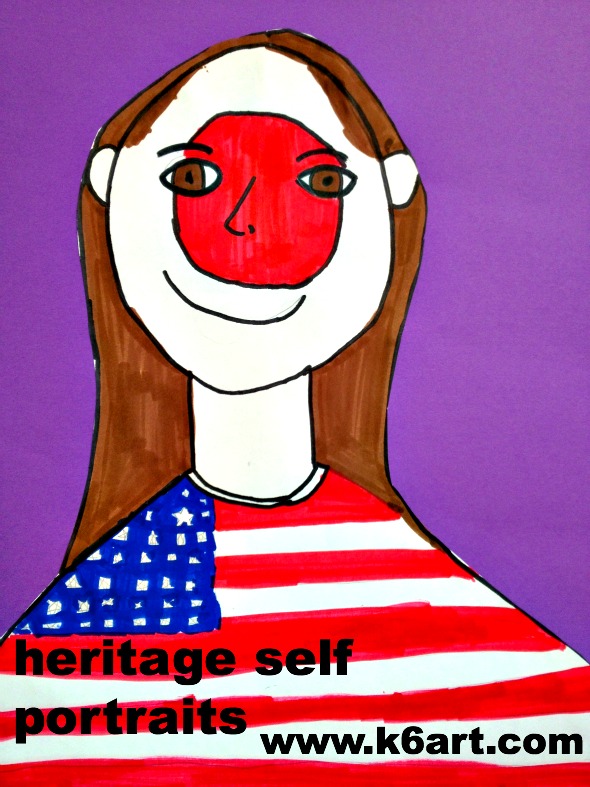
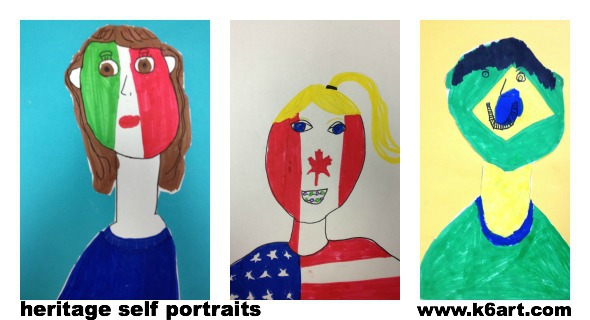
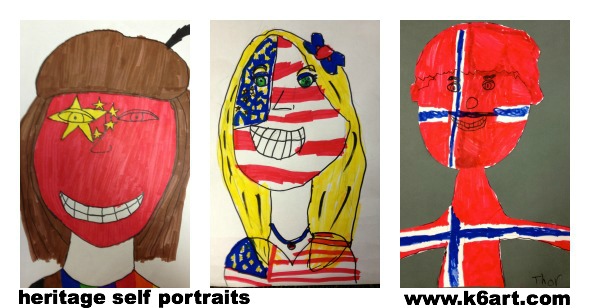
Thinking about a self-portrait project? This project starts as a basic self portrait but turns into a family ancestry art project when students add in national flag designs. This lesson uses basic materials and takes just two 40-minute classes. It comes straight from the wonderful Artisan Des Arts blog.
We began by looking at the great student examples on the Artisan Des Arts blog post. Then I asked the students, “Where does your family come from?” After a quick discussion, Next we looked at flags of the world. Then the students drew their portraits in pencil.
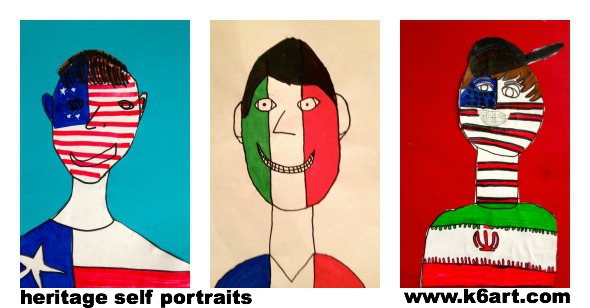
Because most of our students have mixed heritage, they had the option of using multiple flags in their design. It was up to them to figure out their own designs. The most common choice was to have one flag design on the face and a second on the shirt.
As a final touch, students had the option of cutting out their self-portraits and mounting them to construction paper.
I really look forward to our next art show. I think the parents will be THRILLED to see their heritage honored in this project.
What a fabulous lesson plan! I will definitely repeat next year. Thanks to Aly at Artisan des Arts for sharing this great project.
Do you have a special twist on a portrait project?
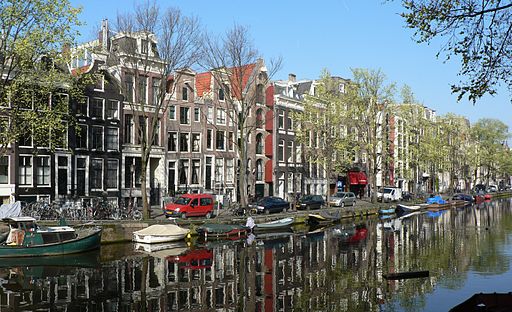
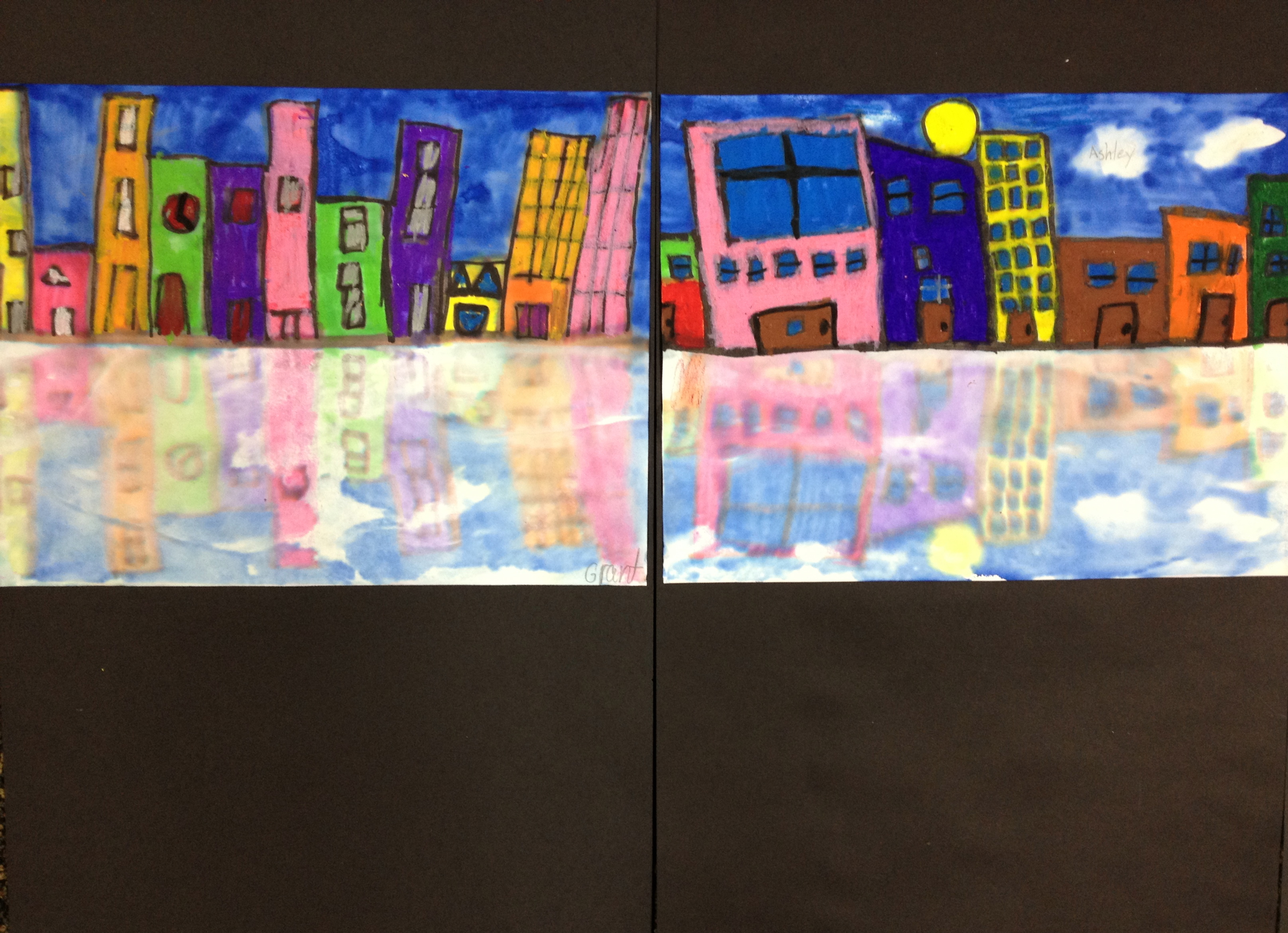
We looked at photos of canal homes in Venice, Italy and Amsterdam. The third graders were excited to see houses that had canals out front instead of streets! We looked at this photo of Amsterdam canal houses, and paid special attention to the reflection of the houses in the water.
Houses in Amsterdam reflected in canal. Photo source:
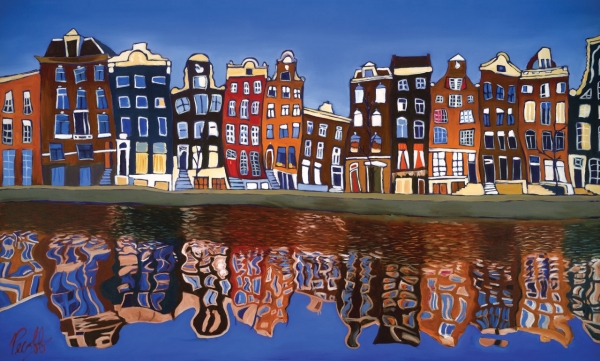
Then we looked at this beautiful artwork, ‘Canal Homes of Amsterdam’ by San Diego artist Grant Pecoff. Students noticed how the reflection was wavy, probably because of waves on the canal. They also noticed the roof tops were a little wavy as well!
Canal Homes of Amsterdam by San Diego artist Grant Pecoff.
Time for the art project!
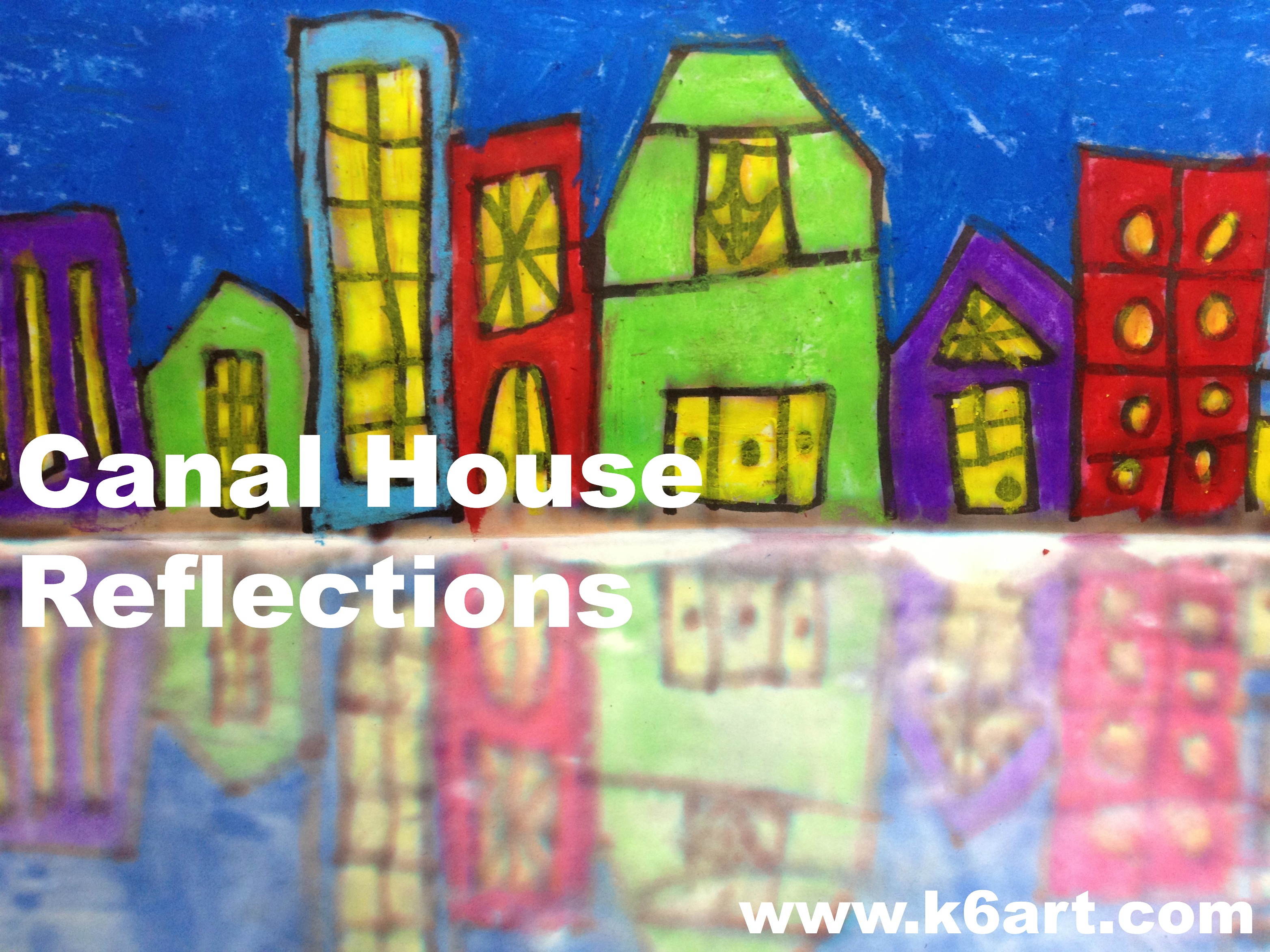
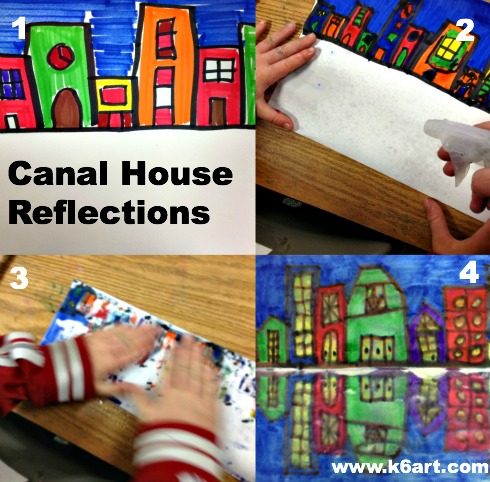
1. Fold paper ‘hot dog style’. On the upper half, make canal houses. Color the sky completely.
2. Take artwork to the printing station. Spray the lower half of their artwork with water.
3. Fold the colored half down and rub.
4. Open carefully. If the color didn’t transfer to the bottom half, spray a little more water and try again.
Let dry.
Day 2:
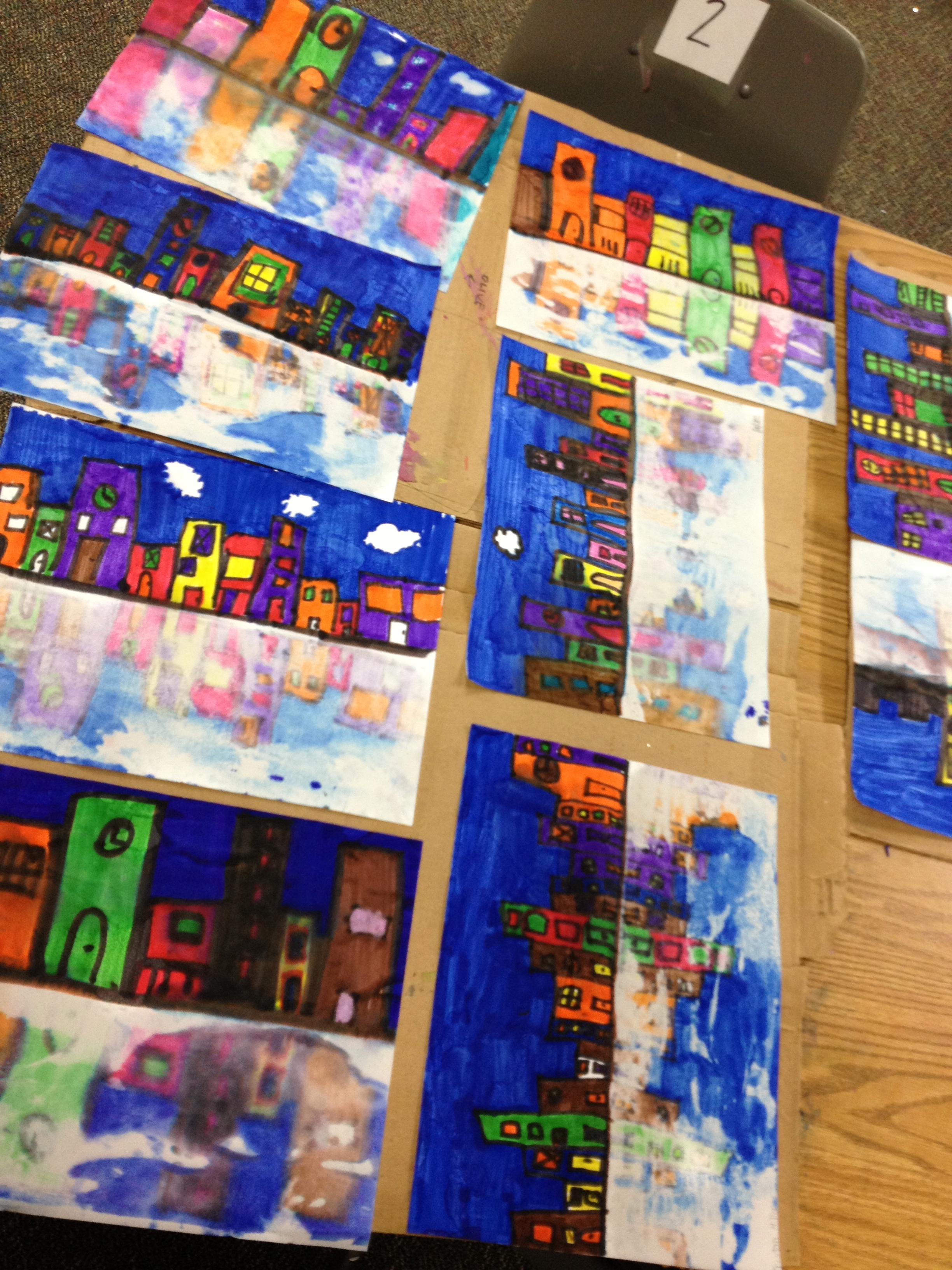
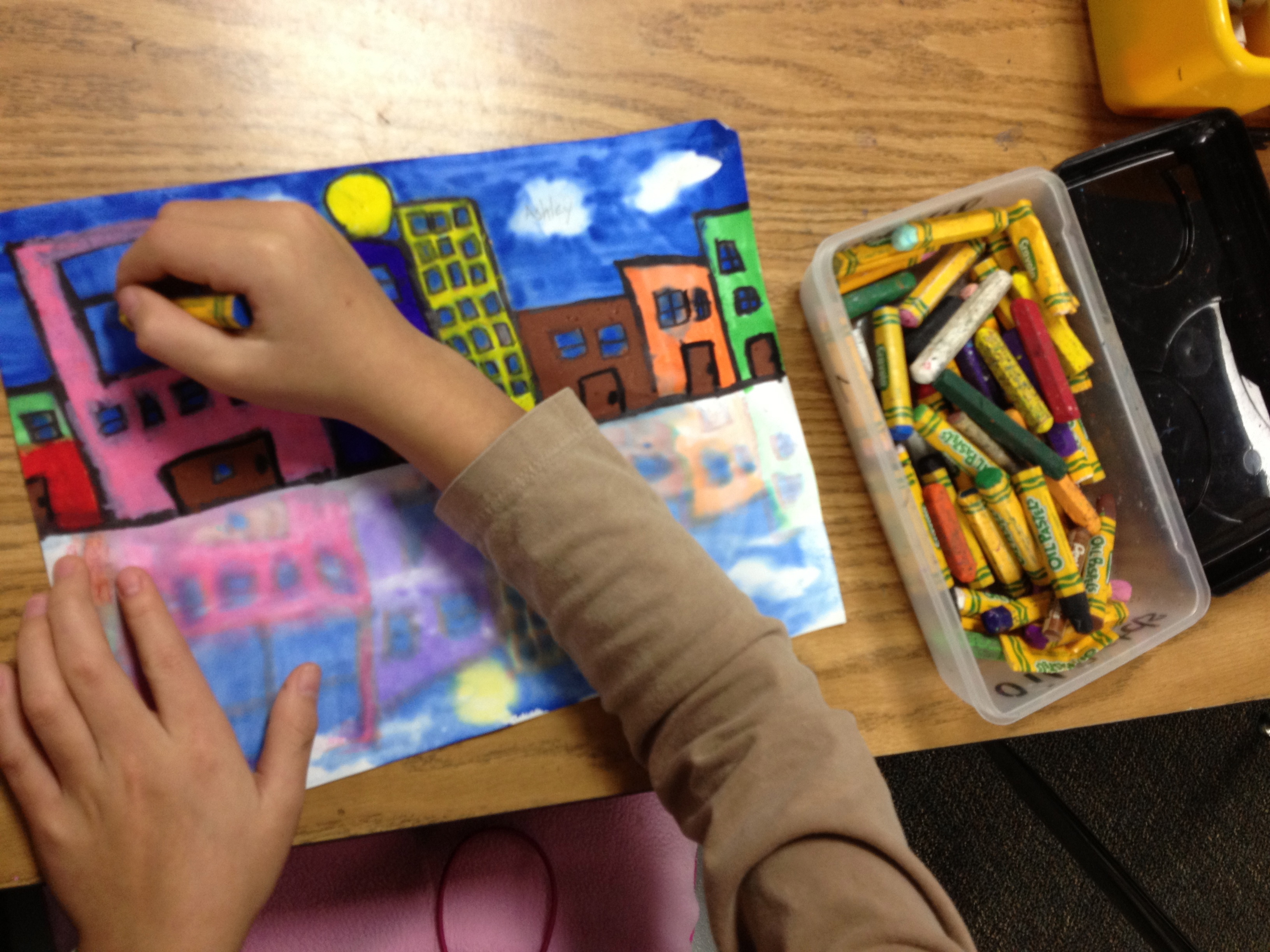
The dry artworks looked great. However, we noticed the top half was a little blurry after printing. The students re-outlined the buildings on the top half of their reflections. Then they re-colored the top half with matching oil pastels.
After the reflection has dried, re-outline top half and color in with matching oil pastels.
We mounted these without left and right borders so they can be displayed side by side, just like real canal houses!
This lesson was adapted from this fun lesson on the Fine Lines blog. To learn more about San Diego artist Grant Pecoff, and see more of his colorful artworks, please visit his website .
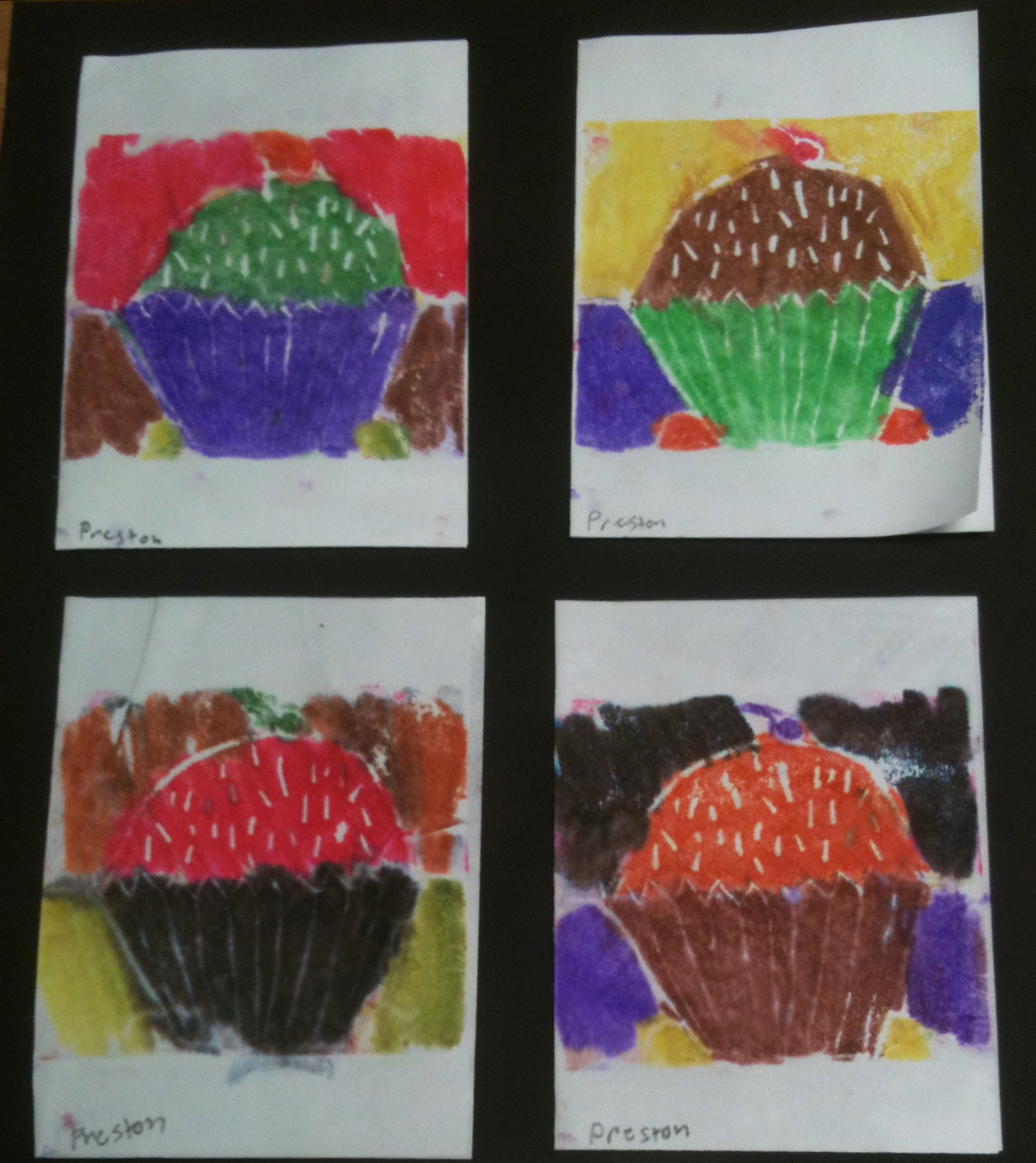
Maybe you have used scratch foam for printmaking in the art room. I’ve seen a lot of beautiful art work using scratch foam and printer’s ink applied with brayers. But did you know scratch foam prints can look like this?
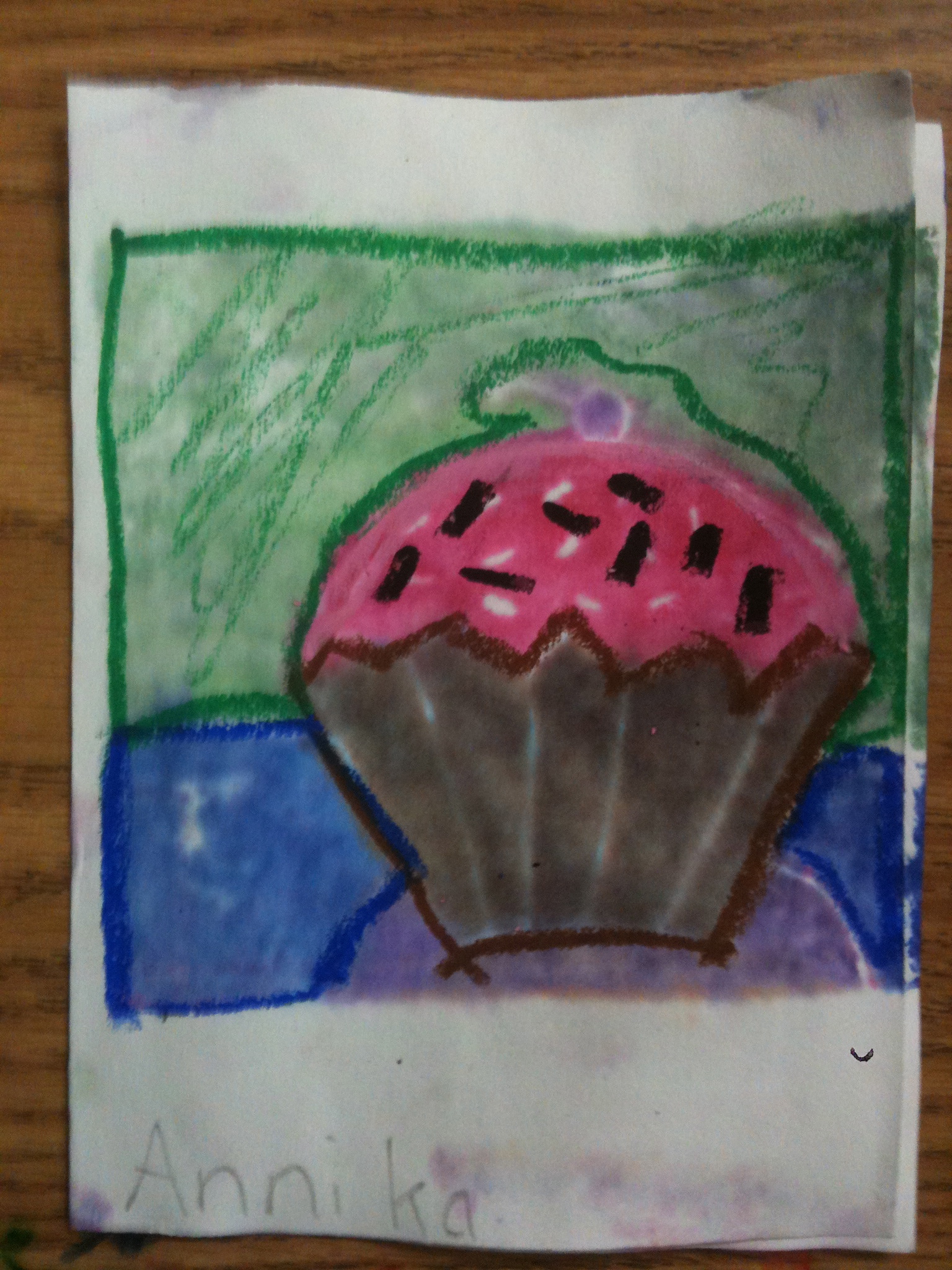
This set of four cupcake prints were all made from the same scratch foam plate during a single 40-minute class.
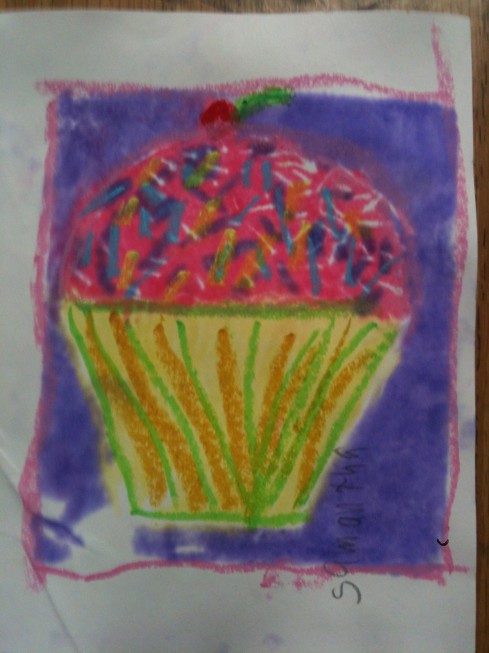
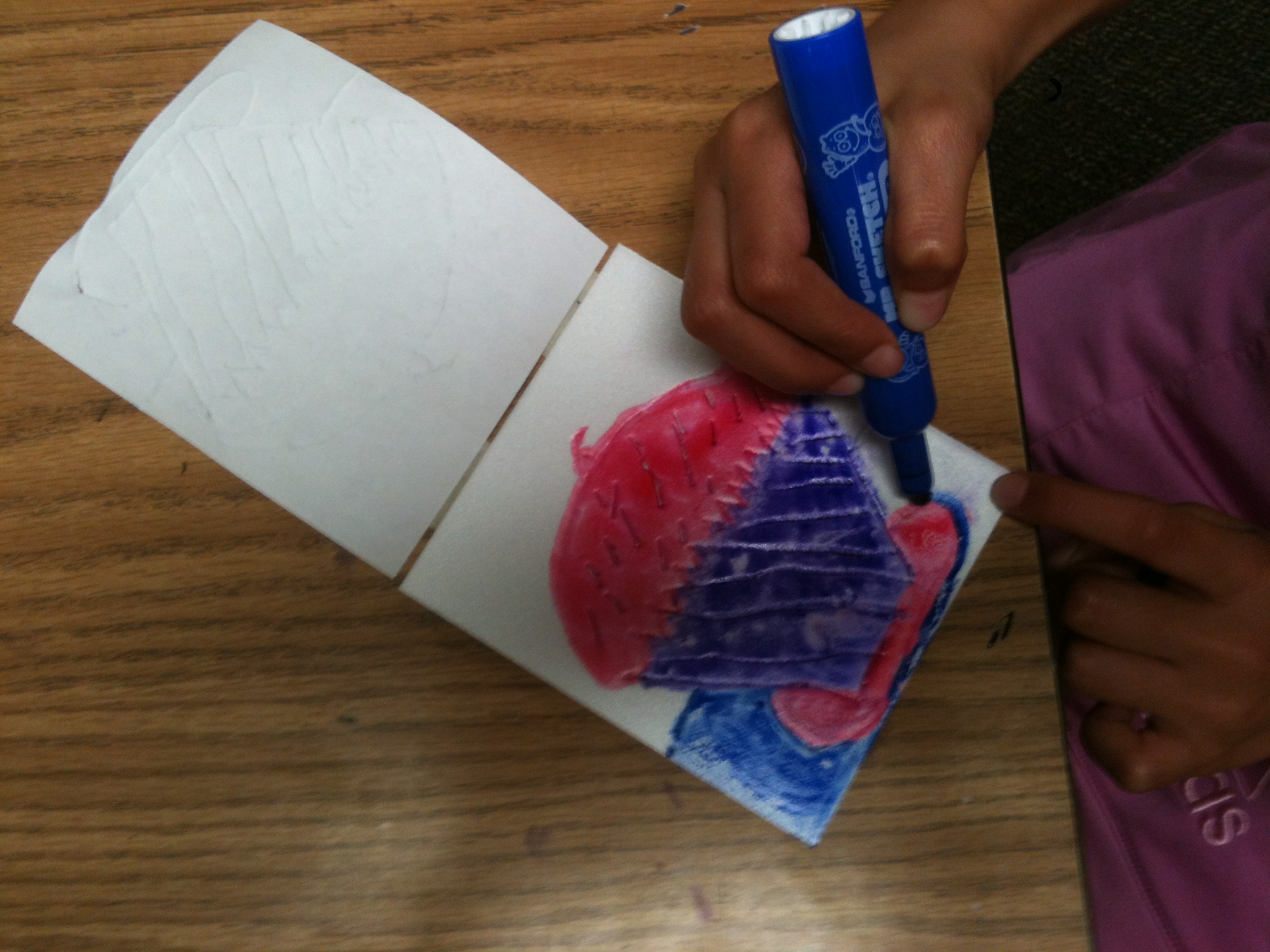
3rd graders used watercolor marker and scratch foam to create multiple prints. We did an easy directed drawing of a cupcake onto scratch foam, colored the foam with watercolor markers, and then printed the cards onto damp paper.
Materials:
Scratch foam, cut to desired size
sketch paper, cut to same size as foam
dull pencil
masking tape
watercolor markers in assorted colors (I use Mr. Sketch markers)
oil pastels or other embellishments (optional)
shallow tub (dishpan) of water
beach towel (several if you are teaching multiple or large classes)
plastic sleeve protectors for printing station
white construction paper for printing – cut larger than scratch foam
Prep:
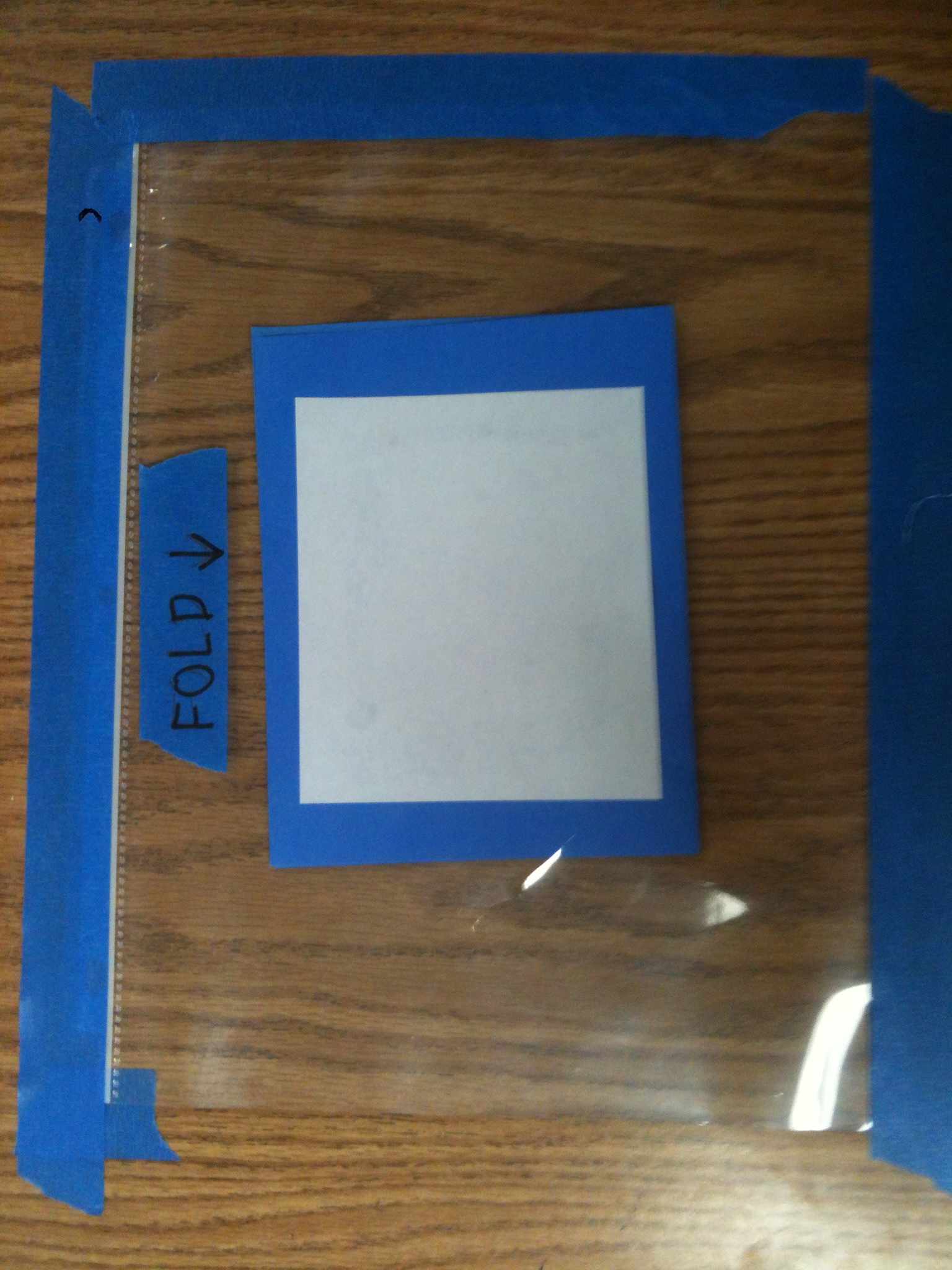
Set up a printing station. Fill tub with water depth of 2-3 inches. Set out a folded towel. Tape a sleeve protector to the table. Slide in an alignment sample (see below). Cut a stack of printing papers, enough for each student to make at least 3 prints. Think about drying space (always an issue when printing multiples). Drying rack? Clothes line?
Drawing
draw cupcake onto sketch paper. Click here for my step-by-step how to draw a cupcake instructions.
Remind students: NO LETTERS, NO WORDS, NO NUMBERS.
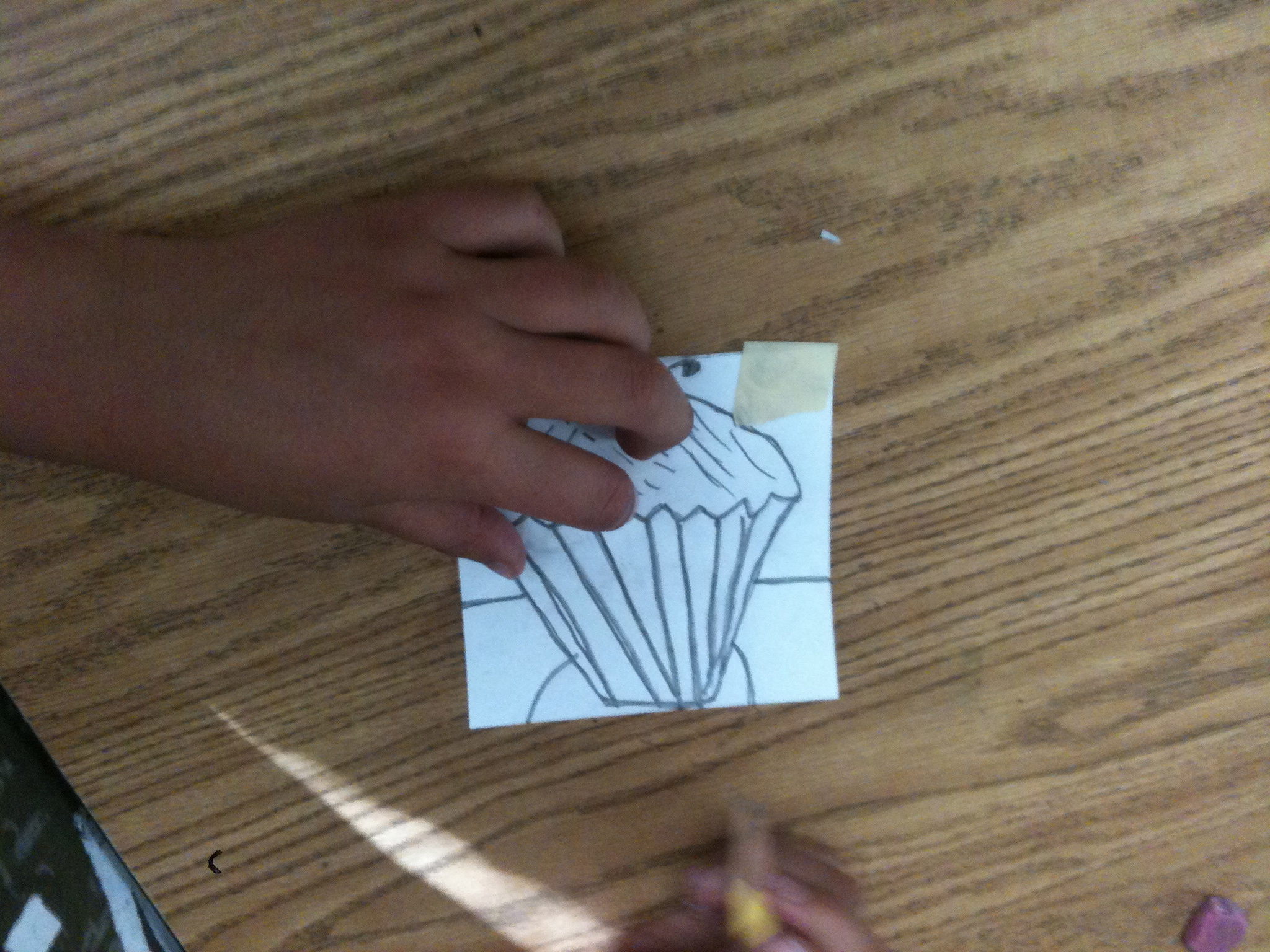
tape sketch paper on top of scratch foam.
go over cupcake sketch with a dull pencil. The lines should transfer to the scratch foam below.
pull up the paper. Drawing directly on the foam, go over any lines you missed with the pencil. You can also add sprinkles or other small lines at this time.
discard the sketch paper and tape.
Tape sketch on top of scratch foam. Go over lines with dull pencil to incise foam below.
Inking
use the watercolor markers to ink the scratch foam. Students should use multiple colors. Fill the scratch foam completely with color.
Color in the scratch foam with watercolor markers.
Printing
take your foam to the printing station.
write your name in small letters on white construction paper. Use pencil.
dip white construction paper in water
put wet paper in folded towel to blot
align inked scratch foam on sleeve protector INK SIDE UP
put damp white paper on scratch foam NAME SIDE UP (align using the sleeve protector)
rub paper firmly without wiggling
PULL THE PRINT
Printing station. Students align foam with white rectangle, damp paper with blue rectangle.
http://www.youtube.com/watch?v=sAY0pGj7c7g&rel=0
The third graders were amazed!!!! Vibrant colored cupcakes for their beautiful birthday cards.
ARE YOU READY FOR EVEN MORE FUN?????
Re-inking
Students re-ink the scratch foam plates using a different color scheme. It doesn’t matter if the plate still has a little color on it – go right over the plate with a different color.
Print again!
Students should carefully sign their name on the back of the foam plate WITH PENCIL. Write small.
A word of caution: as always, test this project out yourself before attempting with your students.
1) The degree of dampness of the printing paper is critical. Too dry and the ink won’t transfer to the paper. Too wet and the ink will bleed and blur as the paper dries. For blotting, a fresh beach towel is ideal. My towel was too damp by the third class of the day. I wish I had a couple of fresh dry ones with me. Next year!
2) Size of drawing matters. Tiny drawings the size of a thumbnail just won’t look good.
Day 2: Embellish Prints with Oil Pastels
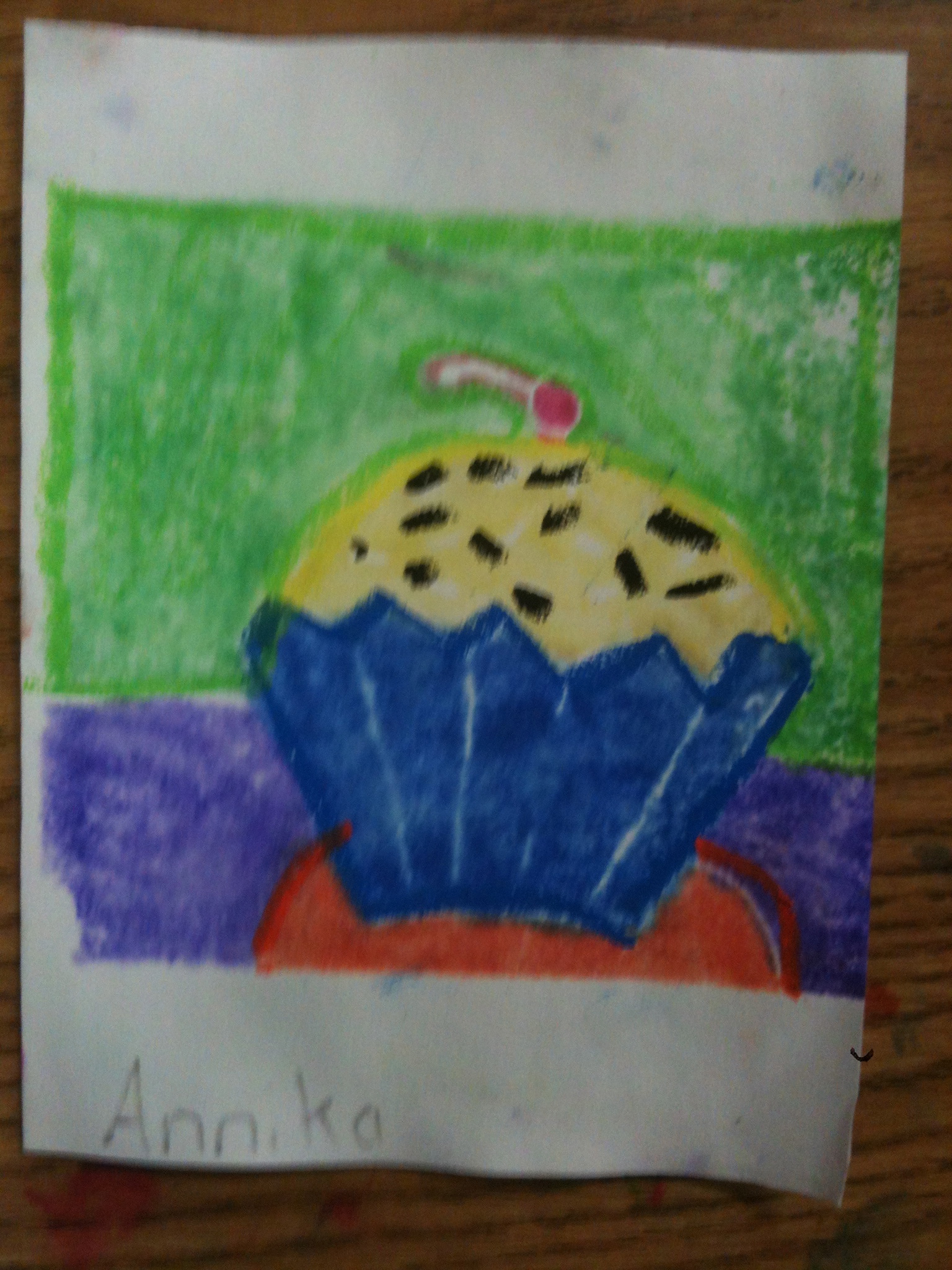
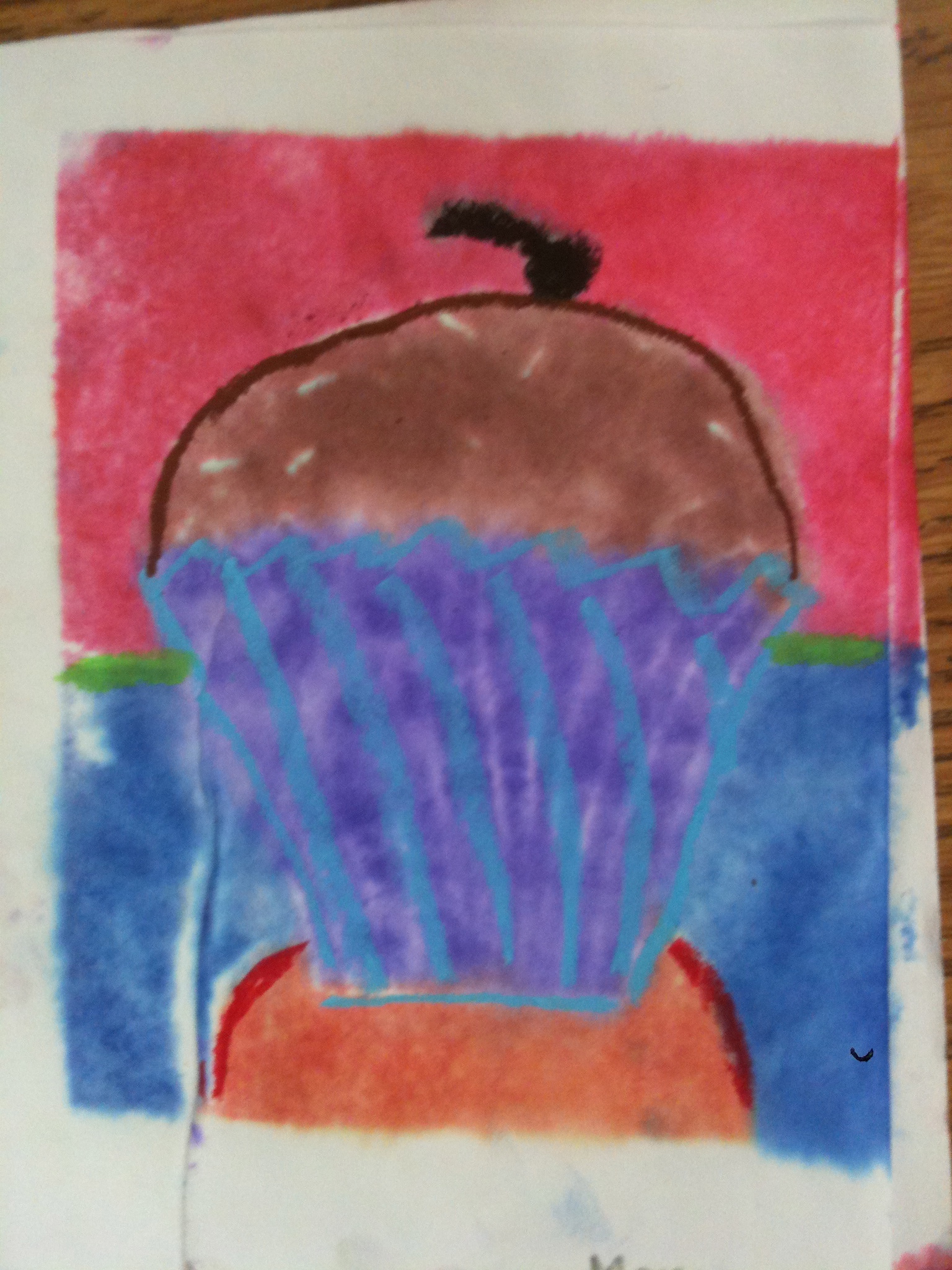
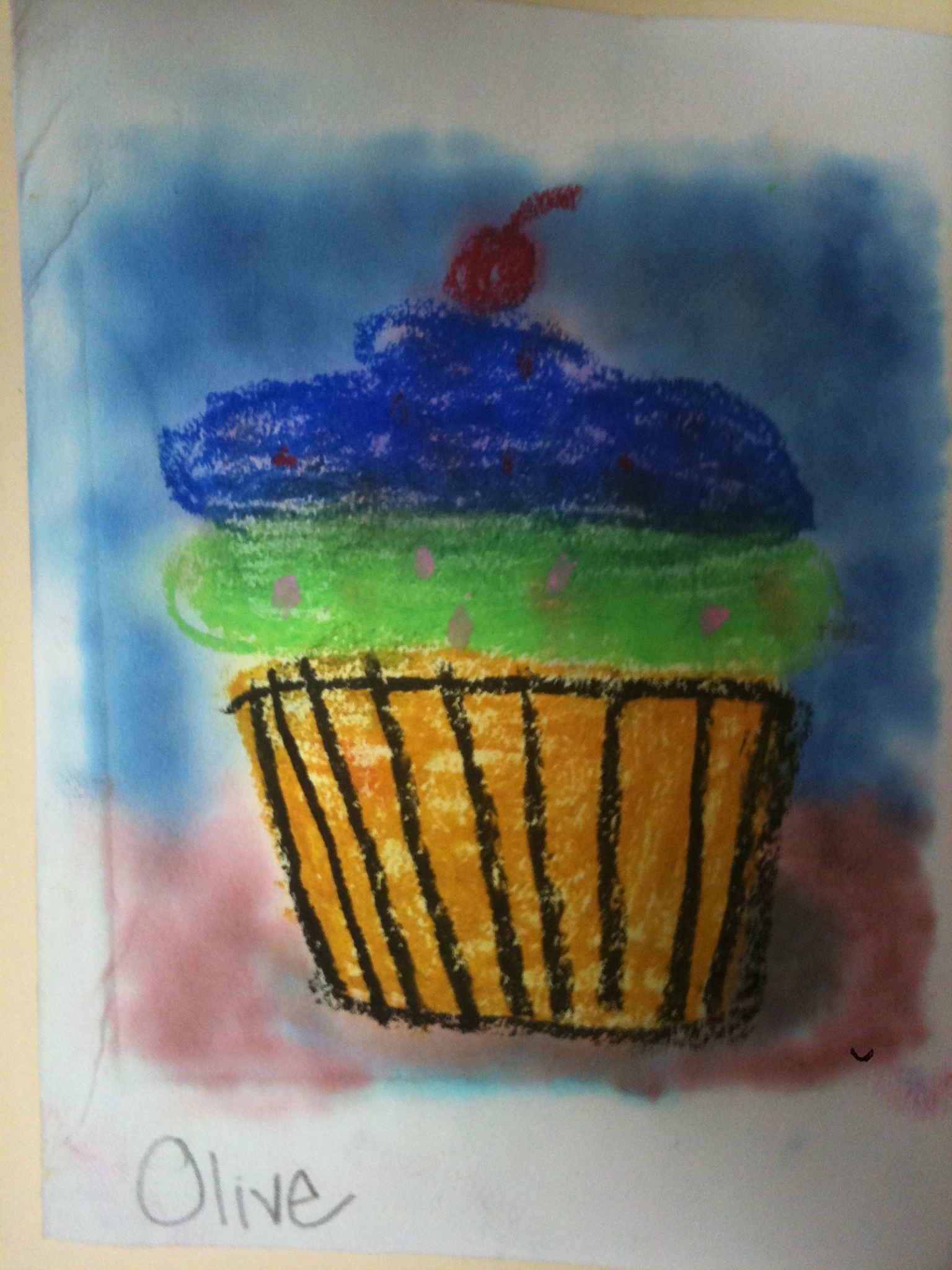
Students have the option of embellishing their dry prints. These cupcakes are decorated with oil pastel. This is a great way to rescue students less-than-perfect prints. Can you imagine these with a little clear glitter and/or a sequin?
Next we trim our cupcake prints and glue them onto colored construction paper. What fabulous birthday cards for all our family and friends.
Fun – colorful – successful – easy to clean up!
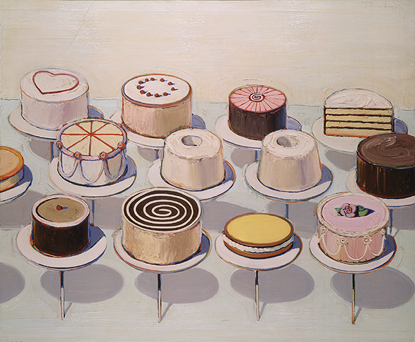
This would be a great Wayne Thiebaud lesson plan – it relates to his dessert paintings in terms of subject matter and repetition.
Wayne Thiebaud. Cakes. 1963
A huge thank you to Carol Catelano Webb, master art teacher, who taught this printing process at a San Diego Art Educators workshop back in 2005.
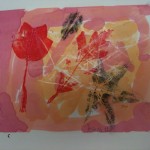
Second graders use watercolor markers to make colorful leaf prints. Allow two sessions.
The second graders just completed their annual fall leaf project. This year I used fall leaves to introduce second graders to the warm colors and printmaking in a two-part lesson.
Day 1: rub and paint
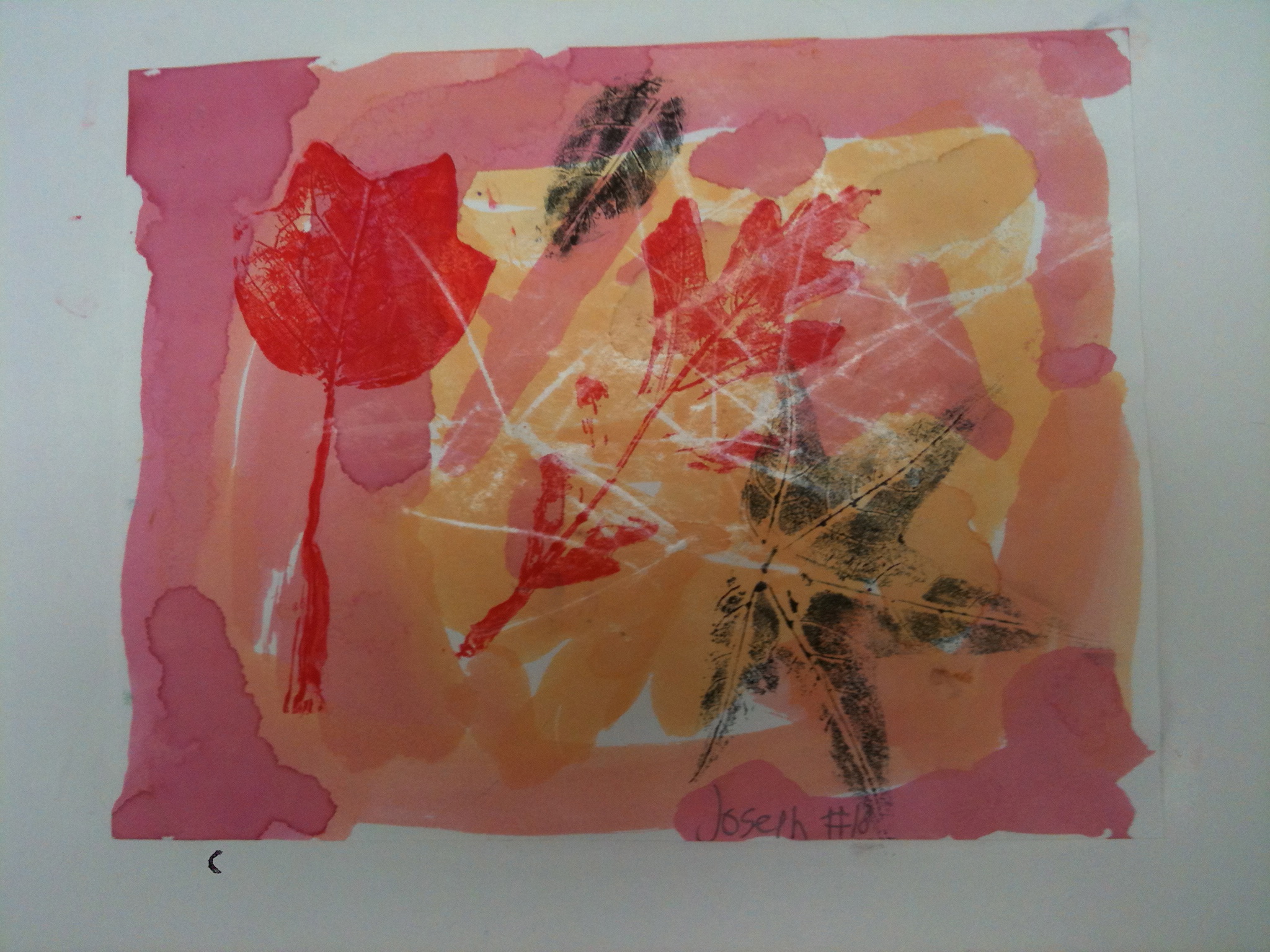
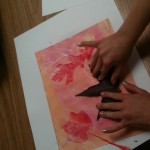
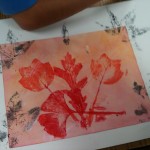
We discussed the warm colors and looked at some real fall leaves. Kids did leaf rubbings with real leaves and white crayons on white paper, and then painted over the paper with red, orange and yellow watercolors.
Day 2: watercolor marker printing
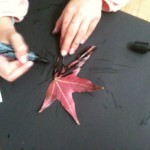
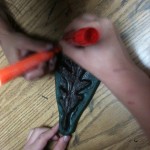
Today kids inked the backs of freshly fallen fall leaves with black watercolor markers and printed them on the colored paper. We used red and orange markers on rubber leaf stamps (similar to those used for gyotaku).
Allow time for extra time at the sink for hand washing.
What a hit! All the kids loved the printing process. The second grade teachers LOVE the completed art as well and are trying to nab it for Thanksgiving place mats.
If you’ve never tried printmaking with watercolor markers, give it a try. There is almost no prep time and minimal clean up. You’ll be thankful!